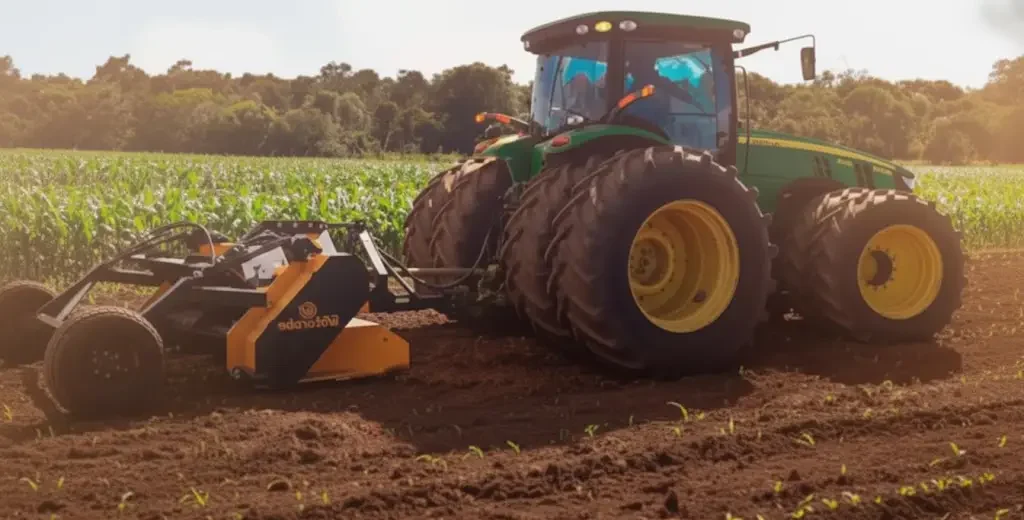
Het vermogen van de tractor is de allerbelangrijkste factor bij het kiezen van een steenbreker die bij uw werkzaamheden past. Te weinig vermogen en de machine heeft moeite met het verwerken van dichte steenmassa's, de rotor draait langzamer dan de ontwerpsnelheid en de kwaliteit van het breken neemt af – evenals de dagelijkse productie. Te veel vermogen voor de gekozen werkbreedte en u betaalt voor een te grote tractor voor een machine die ook door een tractor van de helft van dat formaat aangedreven zou kunnen worden.
Deze handleiding koppelt elk tractorvermogensbereik van 70 pk tot 400 pk aan de compatibele configuraties van steenbrekers, legt de rol van het aftakastoerental naast het vermogen uit en geeft specifieke modelaanbevelingen voor elk vermogensbereik. Voor een uitgebreidere introductie over de werking van steenbrekers, zie dit. Overzicht van steenbrekers.
De drie vermogensbereiken
540 tpm versus 1000 tpm aftakas
tractoren van 70–100 pk
tractoren van 100–150 pk
tractoren van 150–220 pk
tractoren van 200–280 pk
tractoren van 280–400 pk
Kun je ze overwinnen?
Veelgestelde vragen
Waarom pk's belangrijk zijn voor steenbrekers
Een steenbrekerrotor gebruikt kinetische energie om steen te verpulveren. Die energie komt van de massa van de rotor en de rotatiesnelheid – en die rotatiesnelheid wordt in stand gehouden door het aftakasvermogen van de tractor. Wanneer het tractorvermogen niet toereikend is voor de machine, vertraagt de rotor onder belasting. Een langzamer draaiende rotor heeft minder kinetische energie per tandslag, wat betekent:
De stenen zijn gebroken, maar niet volledig verpulverd. Grotere fragmenten blijven in de grond achter en blijven bij volgende werkzaamheden schade aan de apparatuur veroorzaken.
Bij een lagere rotorsnelheid absorberen de stenen meer impactenergie per tandslag in plaats van netjes te breken. Dit concentreert de slijtage op individuele tanden en verkort hun levensduur aanzienlijk.
Een combinatie met onvoldoende vermogen moet met een lagere voorwaartse snelheid werken om rotorstalling te voorkomen. Het aantal hectares dat per uur wordt bewerkt daalt, waardoor de kosten per behandelde hectare stijgen.
Het aanbevolen vermogen voor elk model is het minimale aftakasvermogen dat nodig is om de rotorsnelheid op het nominale toerental te houden in de voor de machine ontworpen bodemomstandigheden. Werk altijd binnen het aangegeven bereik en, als uw werkzaamheden te maken hebben met ongewoon harde of compacte stenen, gebruik dan het maximale vermogen van uw tractor.
De drie vermogensreeksen in één oogopslag
Het complete assortiment steenbrekers is onderverdeeld in drie series, elk gebouwd rond een andere rotordiameter en vermogensklasse:
| SPECIFICATIE | Licht gebruik | Middenklasse | Zwaar uitgevoerd |
|---|---|---|---|
| Vermogen en aandrijving | |||
| Tractorvermogen (pk) | 70 – 150 | 80 – 280 | 280 – 400 |
| PTO-snelheid | 540 of 1000 tpm (ST) / 1000 tpm (DT) | 540 of 1000 tpm (ST125) / 1000 tpm (overige) | 1000 toeren per minuut |
| Rotordiameter (mm) | 450 | 550 | 700 |
| Vermogen | |||
| Maximale versnipperingsdiameter (mm) | 150 | 300 | 500 |
| Maximale werkdiepte (mm) | 150 | 200 | 250 |
| Beschikbare werkbreedtes (mm) | 1.110 – 2.070 | 1.340 – 2.304 | 2080 – 2560 |
| Gewichtsbereik van de machine (kg) | 1.230 – 1.750 | 1.850 – 3.840 | 4.850 – 5.250 |
| Beste toepassing | |||
| Typisch gebruik | Wijngaarden, boomgaarden, kleine tot middelgrote akkerbouwbedrijven | Grootschalige akkerbouw, aannemerswerk, wegenbouw | Civiele werken, zware aanneming, landaanwinning |
540 tpm versus 1000 tpm aftakas — Maakt het verschil?
Het aftakastoerental en het tractorvermogen zijn verwante, maar afzonderlijke factoren. Een tractor kan 120 pk leveren bij een aftakastoerental van 540 tpm of 1000 tpm, maar de prestaties van de steenbreker zullen aanzienlijk verschillen tussen deze twee waarden, zelfs bij dezelfde tractor.
- Standaard op de meeste Europese tractoren van vóór 2000.
- Beschikbaar op de meeste moderne tractoren als een zuinige instelling.
- De rotor draait met een lagere snelheid → minder kinetische energie per tandslag
- Geschikt voor ST-varianten in lichte tot middelzware steenomstandigheden.
- Niet aanbevolen voor DT- of HP-varianten — onder de ontwerpdrempel.
- Standaard op moderne Europese tractoren vanaf 80 pk.
- Hogere rotorsnelheid → aanzienlijk meer kinetische energie
- Betere breekprestaties op hardere en dichtere stenen.
- Vereist voor alle DT- en HP-varianten
- Aanbevolen voor alle ST-varianten die op de tractor beschikbaar zijn.
Als uw tractor zowel een aftakas met 540 tpm als met 1000 tpm heeft, laat de steenbreker dan altijd op 1000 tpm draaien. Het verschil in rotorenergie tussen de twee snelheden is ongeveer 3,4 keer zo groot. Dit betekent dat een machine die op 1000 tpm draait, meer dan drie keer zoveel breekenergie per tandslag beschikbaar heeft in vergelijking met dezelfde machine op 540 tpm.
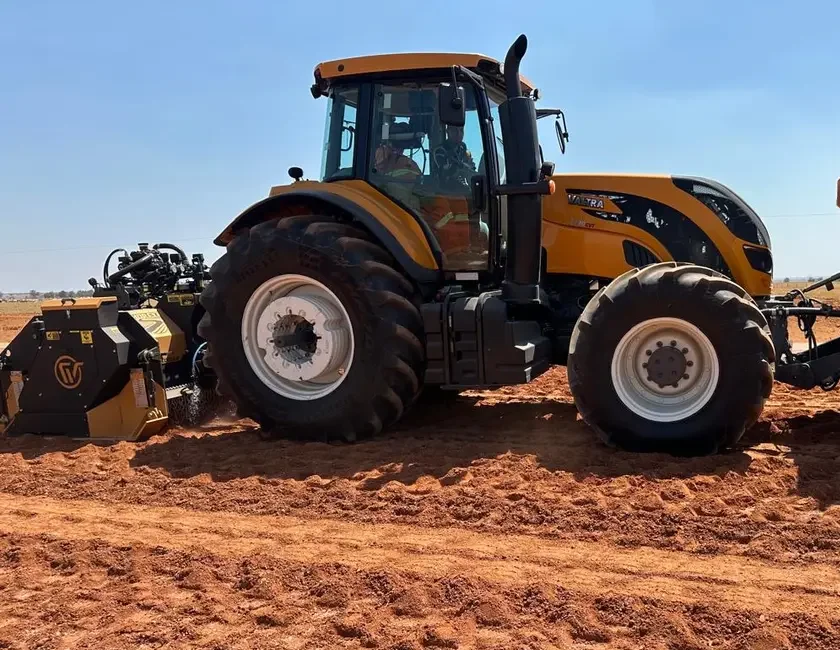
Tractoren van 70-100 pk: Wat kunnen ze aandrijven?
Tractoren in het vermogensbereik van 70-100 pk zijn de werkpaarden van kleine tot middelgrote Europese landbouwbedrijven, wijngaarden en gespecialiseerde loonwerkers. In deze vermogensklasse zijn twee lichte steenbrekerconfiguraties beschikbaar:
Het smalste model in het assortiment met een werkbreedte van 1.110 mm – de juiste keuze voor het vrijmaken van rijen in wijngaarden en boomgaarden, en voor kleine boerderijen met oudere tractoren van 70-80 pk die draaien op een aftakas van 540 tpm. De compatibiliteit met zowel 540 als 1000 tpm zorgt voor een brede tractorcompatibiliteit.
Met een breedte van 1350 mm is dit de meest populaire configuratie voor wijngaarden en kleine landbouwbedrijven. Vanaf 80 pk met een aftakas van 540 of 1000 tpm is dit model geschikt voor een breed scala aan compacte tractoren die veelvuldig worden gebruikt in de tuinbouw in Nederland, België en het Verenigd Koninkrijk.
Aan de onderkant van dit vermogensbereik (70-80 pk) moet u met een lagere voorwaartse snelheid werken – ongeveer 1,0-1,5 km/u – om de rotorsnelheid in steenachtige omstandigheden te behouden. Bij lagere steenconcentraties kan de snelheid worden verhoogd. De STCL/ST 100 en ST 125 zijn beide ontworpen voor dit vermogensbereik en zullen betrouwbaar presteren binnen hun nominale parameters.
Tractoren van 100-150 pk: meer mogelijkheden beschikbaar
Met een vermogen van 100-150 pk hebt u toegang tot het volledige assortiment lichte voertuigen en het instapmodel voor de middenklasse. Er zijn vier uitvoeringen voor lichte voertuigen en één instapmodel voor de middenklasse beschikbaar:
| MODEL | STCL/ST 150 | STCL/ST 175 | STCL/DT 175 | STCL/DT 200 | STCM/ST 125 |
|---|---|---|---|---|---|
| Specificaties | |||||
| Motorvermogen (pk) | 90–120 | 100–120 | 100–150 | 120–150 | 80–110 |
| PTO (rpm) | 540–1000 | 540–1000 | 1000 | 1000 | 540 of 1000 |
| Werkbreedte (mm) | 1,590 | 1,830 | 1,830 | 2,070 | 1,340 |
| Maximale versnipperingsdiameter (mm) | 150 | 150 | 150 | 150 | 300 |
| Maximale werkdiepte (mm) | 150 | 150 | 150 | 150 | 200 |
| Gewicht (kg) | 1,440 | 1,570 | 1,600 | 1,750 | 1,850 |
In deze vermogensklasse kunt u kiezen tussen een bredere, lichte machine (maximaal 150 mm steen, tot 150 mm diepte) of de STCM/ST 125, een instapmodel in het middensegment (maximaal 300 mm steen, tot 200 mm diepte). Als uw stenen consistent kleiner zijn dan 150 mm en uw akkers open akkerland zijn, biedt de STCL/DT 200 met een werkbreedte van 2070 mm de maximale capaciteit. Als u grotere stenen heeft of dieper moet werken, is de STCM/ST 125 de juiste volgende stap – zelfs met een smallere werkbreedte van 1340 mm.
Tractoren van 150–220 pk: Middensegment
Dit is de standaard beugel voor professionele akkerbouwers en grote landbouwbedrijven in Noord-Europa. Er zijn vier standaard STCM-configuraties beschikbaar:
| MODEL | STCM 150 | STCM 175 | STCM 200 | STCM 225 |
|---|---|---|---|---|
| Specificaties | ||||
| Motorvermogen (pk) | 150–220 | 160–220 | 170–220 | 180–220 |
| PTO (rpm) | 1000 | 1000 | 1000 | 1000 |
| Werkbreedte (mm) | 1,584 | 1,824 | 2,064 | 2,304 |
| Maximale versnipperingsdiameter (mm) | 300 | 300 | 300 | 300 |
| Maximale werkdiepte (mm) | 200 | 200 | 200 | 200 |
| Gewicht (kg) | 3,000 | 3,250 | 3,550 | 3,800 |
Alle vier de modellen vereisen een aftakas met 1000 tpm. De werkbreedte neemt toe van 1584 mm tot 2304 mm en is direct gekoppeld aan het toenemende tractorvermogen. Stem de werkbreedte af op het beschikbare vermogen van uw tractor, niet op het maximumvermogen van de serie. Een tractor van 160 pk die de STCM 225 met een werkbreedte van 2304 mm gebruikt, bereikt de limiet van zijn vermogen. Door deze te combineren met de STCM 175 met een werkbreedte van 1824 mm krijgt u een betere werkmarge en een hogere continue dagelijkse productie.
Tractoren van 200–280 pk: Krachtige varianten uit het middensegment
Bij een vermogen van 200–280 pk komen de STCM/HP (High Power) varianten beschikbaar. Deze hebben dezelfde werkbreedte als de standaard STCM 200 en 225, maar zijn gebouwd met versterkte rotoronderdelen en een grotere doorvoercapaciteit voor langdurig gebruik bij hogere vermogens en onder zwaardere bodemomstandigheden.
Versterkt voor gebruik met krachtige tractoren. Dezelfde werkbreedte van 2064 mm als de standaard STCM 200, maar gebouwd voor een continu vermogen van 200-280 pk – geschikt voor veeleisende akkerbouwwerkzaamheden en lichte werkzaamheden aan de fundering van wegen.
De breedste configuratie in het middensegment met een werkbreedte van 2304 mm – het maximale dagelijkse vermogen voor krachtige tractoren in de open akkerbouw of loonwerk. Met 200-280 pk voldoet dit model aan de vermogenseisen van professionele Europese loonwerkers zonder dat ze hoeven over te stappen naar de zware serie.
Als uw tractor een vermogen heeft tussen de 170 en 220 pk, dan is de standaard STCM 200 of 225 de juiste keuze. De HP-varianten zijn specifiek ontworpen voor een continu vermogen van 200 tot 280 pk en zijn overgedimensioneerd voor tractoren aan de onderkant van dat vermogensbereik. Neem contact op met ons team en geef uw exacte vermogen door, dan bevestigen wij het juiste model voor u.
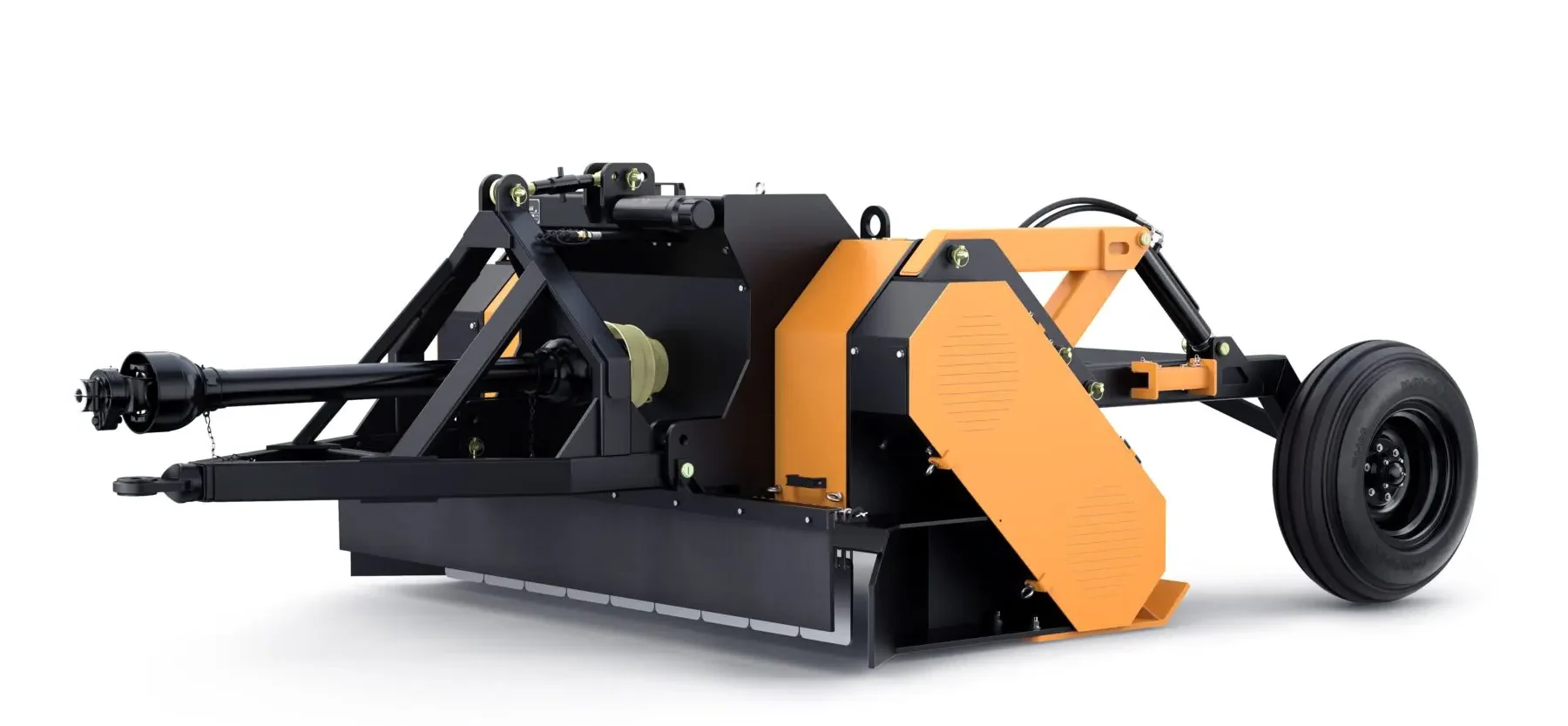
Tractoren van 280–400 pk: Zware uitvoeringen
Met een vermogen van 280–400 pk is de robuuste STCH-serie beschikbaar. Drie configuraties bestrijken werkbreedtes van 2.080 mm tot 2.560 mm, waarbij de grootste rotor in het assortiment een diameter van 700 mm heeft en geschikt is voor het verwerken van stenen tot 500 mm en een werkdiepte van 250 mm.
| MODEL | STCH 200 | STCH 225 | STCH 250 |
|---|---|---|---|
| Specificaties | |||
| Motorvermogen (pk) | 280–400 | 280–400 | 280–400 |
| PTO (rpm) | 1000 | 1000 | 1000 |
| Werkbreedte (mm) | 2,080 | 2,320 | 2,560 |
| Maximale versnipperingsdiameter (mm) | 500 | 500 | 500 |
| Maximale werkdiepte (mm) | 250 | 250 | 250 |
| Gewicht (kg) | 4,850 | 5,050 | 5,250 |
| Nee. tanden | 50+4+4 | 56+4+4 | 62+4+4 |
Alle drie de STCH-modellen werken uitsluitend met een aftakas van 1000 tpm en zijn ontworpen voor achterhefinrichtingen van categorie 3, die standaard zijn op krachtige Europese tractoren. Voor gebruikers met een vermogen van 280-320 pk biedt de STCH 200 (2080 mm) een goede vermogen-breedteverhouding met voldoende werkhoogte voor veeleisende bodemomstandigheden. Bij 320-400 pk kunnen de STCH 225 of STCH 250 op volle werkbreedte worden gebruikt zonder dat dit ten koste gaat van de werksnelheid.
Kun jij een steenbreker overwinnen?
Ja, en het is een reëel risico dat kopers soms over het hoofd zien. Het laten draaien van een steenbreker met een tractor die een aanzienlijk hoger vermogen levert dan het nominale vermogen van de machine, creëert twee problemen:
Een machine met een maximaal vermogen van 150 pk die wordt aangedreven door een tractor van 250 pk, zal koppelinputs en schokbelastingen ondervinden die de ontwerpspecificaties overschrijden. Aandrijfriemen, versnellingsbakonderdelen en de rotorbevestigingsstructuur zijn allemaal gedimensioneerd voor het nominale vermogensbereik. Overschrijding hiervan leidt tot voortijdige slijtage van deze onderdelen, wat doorgaans niet onder de garantie valt.
Een krachtige tractor die een lichte machine aandrijft, kan geneigd zijn de rijsnelheid te verhogen tot boven de nominale werksnelheid van de machine. Een te hoge rijsnelheid vermindert het aantal tandslagen per meter grond, waardoor stenen gedeeltelijk worden verpulverd en een oneffen oppervlak ontstaat.
Blijf binnen het nominale vermogensbereik van het model (±20%) voor optimale prestaties en een langere levensduur van de machine. Als u van plan bent uw tractor binnenkort te upgraden, overweeg dan nu alvast de volgende serie te specificeren. Dit geeft u meer speelruimte en resulteert vaak in minder slijtage van de tandwielen per uur bij uw huidige vermogen.
Veelgestelde vragen
Ja, maar met een paar kanttekeningen. Werken op het minimale vermogen betekent dat de tractor bijna op maximale aftakasbelasting werkt. In zeer stenige of harde grond moet u mogelijk de rijsnelheid verlagen om te voorkomen dat de rotor afremt. In lichtere steenachtige omstandigheden is het minimale vermogen voldoende. Tractoren aan de onderkant van het nominale vermogensbereik hebben er vaak baat bij om, indien mogelijk, op 1000 tpm aftakas te draaien – dit houdt de rotorsnelheid bij lagere rijsnelheden effectiever op peil dan 540 tpm.
Met 130 pk hebt u twee goede opties. Als uw stenen consistent kleiner zijn dan 150 mm en een werkdiepte van 150 mm voldoende is, bieden de STCL/DT 175 of DT 200 (1.830 mm of 2.070 mm werkbreedte) maximale prestaties binnen het lichte segment. Als u grotere stenen tot 300 mm hebt of een werkdiepte van 200 mm nodig hebt, is de STCM/ST 125 (1.340 mm, nominaal vermogen 80-110 pk) met 130 pk niet geschikt. Neem contact op met ons team om te bevestigen of een model uit het middensegment compatibel is met uw specifieke tractor met dat vermogen.
Het aftakasvermogen (PTO-pk) drijft de rotor aan, maar wordt in de meeste Europese tractorspecificaties doorgaans als motorvermogen (pk) vermeld. Het aftakasvermogen is meestal 10–151 pk lager dan het motorvermogen vanwege verliezen in de aandrijflijn. De pk-waarden die in de specificaties van steenbrekers worden vermeld, verwijzen naar het bruto motorvermogen zoals vermeld in de specificaties van de tractor. U hoeft geen aanpassingen te maken; gebruik gewoon het motorvermogen uit het specificatiedocument van uw tractor.
Ja, dit is de meest voorkomende aanvraag voor een voorbestelling die we ontvangen. Neem contact met ons op via [email protected] en vermeld het merk en model van uw tractor, het motorvermogen, de aftakas-toerentalopties, de categorie van de achterhefinrichting en een beschrijving van de steenomstandigheden. Wij bevestigen dan de juiste serie en werkbreedte, controleren de compatibiliteit van de achterhefinrichting en geven u een offerte voor levering naar uw locatie in Europa.
Vind de juiste steenbreker voor uw tractor (pk).
Vertel ons het merk, model en vermogen van uw tractor — ons team bevestigt de juiste serie, werkbreedte en aftakasconfiguratie en stelt vrijblijvend een offerte op voor levering in heel Europa.