When planning a land preparation or road construction project, many European farmers and contractors face the same question: do you need a stone crusher, a soil stabilizer, or both? The two machines look similar at a glance — both mount on a tractor, both use a powered rotor, and both work the ground. But their functions are fundamentally different, and choosing the wrong tool leads to wasted time, damaged equipment, and poor results. This guide explains exactly what each machine does, which scenarios call for which, and how the two work together in demanding projects.
The Core Difference: What Each Machine Actually Does
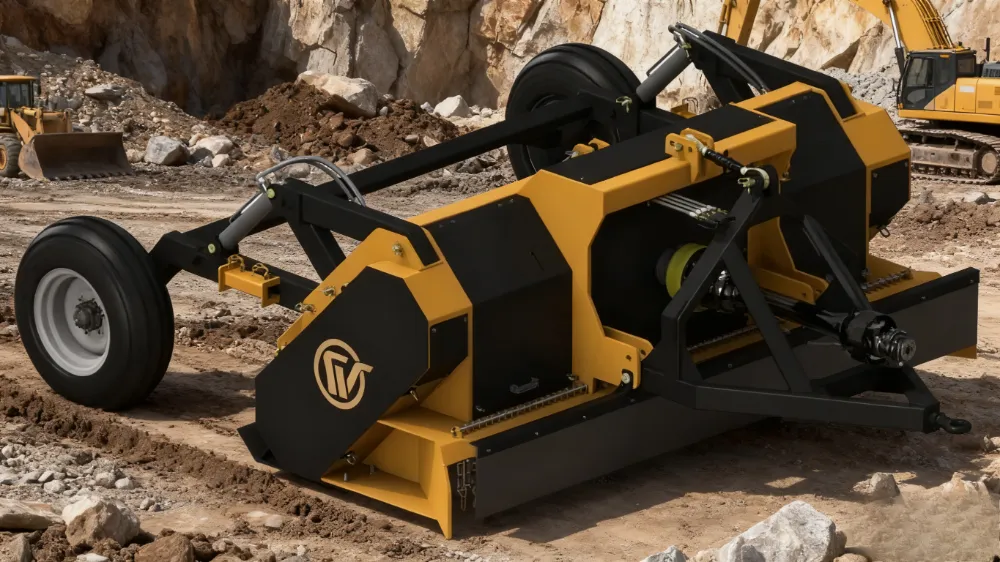
A stone crusher is a mechanical attachment that breaks down rocks, stones, and debris into smaller fragments using a high-speed rotor fitted with hardened carbide teeth. As the machine advances, the spinning rotor impacts and shatters material into fine aggregate, which is distributed evenly across the surface. The output is a cleared, stone-free or stone-reduced layer of ground ready for cultivation, seeding, or further infrastructure work.
A soil stabilizer performs a fundamentally different task. Rather than breaking stones, it mixes a binding agent — cement, lime, or foam bitumen — directly into existing soil at a precise depth. The mixing rotor pulverizes the soil layer and homogeneously incorporates the binder, chemically and mechanically transforming weak ground into a load-bearing structural layer. No material is added from outside; the machine works with what is already there.
In short: a stone crusher removes or reduces obstacles; a soil stabilizer transforms the ground into a structural base. These are complementary operations, not competing ones.
How a Stone Crusher Works
The stone crusher connects to the tractor via a Category 2 or 3 three-point hitch and is driven by the power take-off (PTO) at 540 or 1000 rpm. A hydraulically driven or belt-driven rotor spins at high speed inside an armoured crushing chamber. As the tractor moves forward, the rotor teeth attack stones from below, shattering material through a combination of impact and shear force.
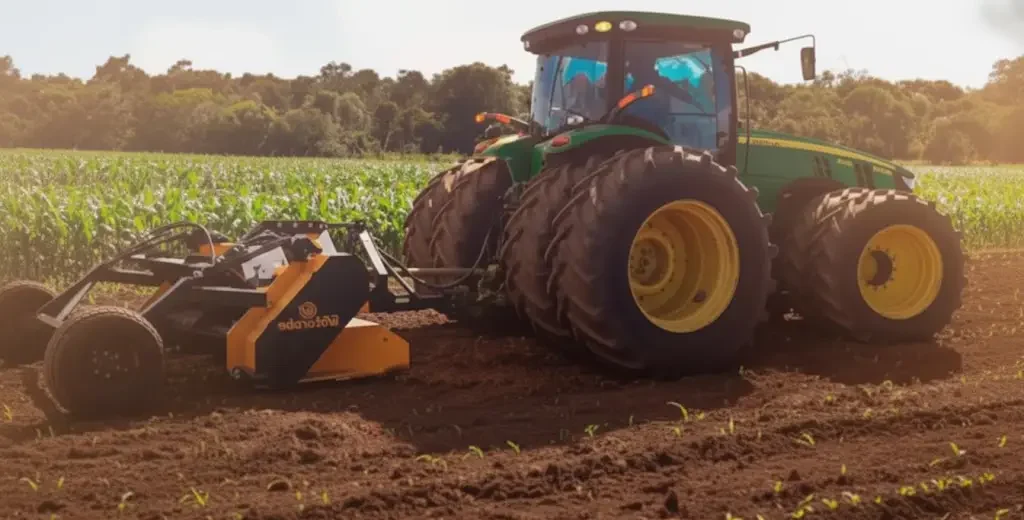
Key operating parameters that define performance:
| Parameter | Light-Duty (70–150hp) | Mid-Range (80–280hp) | Heavy-Duty (280–400hp) |
|---|---|---|---|
| Max Stone Diameter | 150 mm | 300 mm | 500 mm |
| Working Depth | 150 mm | 200 mm | 250 mm |
| Rotordiameter | 450 mm | 550 mm | 700 mm |
| Typical Application | Vineyard, orchard, small arable | Arable land, farm roads | Infrastructure, forestry, highway |
The crushed material remains on site, eliminating the cost of excavation and aggregate removal. For a more detailed breakdown of the full range, see the Watanabe Netherlands tractor stone crusher machine page.
How a Soil Stabilizer Works
A soil stabilizer mounts on a high-power tractor (typically 300–500 hp) via the rear three-point hitch. The machine carries a large rotor — in the case of the THOR ST, 1400 mm in diameter fitted with up to 184 carbide tools — which penetrates the ground to a set depth and rotates to pulverize the existing soil layer into a homogeneous mass.
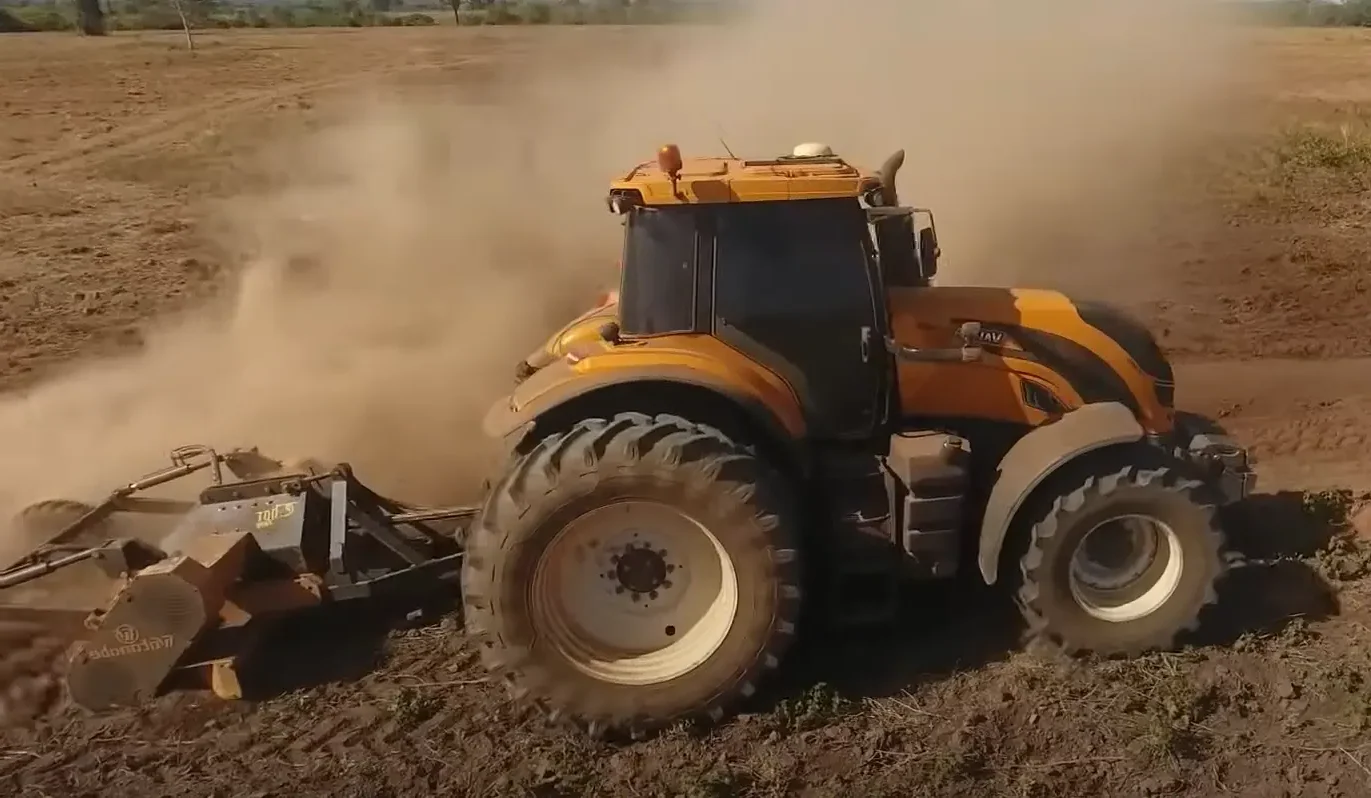
Simultaneously, an integrated binder spreading system doses the chosen stabilising agent — cement, quicklime, or foam bitumen — directly onto the rotor with precision control from the tractor cab. The rotor mixes binder and soil in a single, continuous pass. The result is a chemically modified, structurally improved sub-base layer ready for compaction and final surfacing.
The THOR ST achieves working depths of up to 500 mm — the deepest available in any tractor-mounted stabilizer on the European market — at working speeds of 8–10 m per minute. For full technical specifications, visit the THOR ST tractor soil stabilizer machine page.
When to Use a Stone Crusher
A stone crusher is the right tool whenever the primary problem is the physical presence of stones that prevent or damage other operations. Choose a stone crusher for the following scenarios:
Agricultural land preparation
Fields with emerging surface stones that damage tyres, harvesting equipment, and planting machinery. A single pass eliminates the risk of costly implement damage during harvest season.
Vineyard and orchard row clearing
Narrow vine rows and steep terraces with limestone or granite fragments. Light-duty configurations with 1.1 m working width fit between rows without disturbing root systems.
Forestry site reclamation after logging
Large rock fragments and buried debris left after tree clearing. Heavy-duty configurations handle stones up to 500 mm and penetrate to 250 mm depth to restore ground integrity for reforestation.
Pre-stabilization processing on construction sites
When a soil stabilizer will follow, any oversized stones must be reduced first. Running a stabilizer rotor into large boulders causes catastrophic mechanical failure. The stone crusher processes the material to a suitable gradation in advance.
When to Use a Soil Stabilizer
A soil stabilizer is the right tool when the primary problem is inadequate bearing capacity or structural weakness of the ground itself — not the presence of stones. Choose a soil stabilizer for:
Motorway and highway base layer rehabilitation
Full-depth reclamation of existing road bases that have failed structurally. Binder incorporation at 400–500 mm depth transforms old asphalt and weak subgrade into a new structural layer in a single pass.
Airport apron and taxiway sub-base strengthening
High-clay subgrade with insufficient CBR values. Lime incorporation reduces plasticity and increases bearing capacity by 35% or more, enabling heavier aircraft operations ahead of schedule.
Rural road network upgrading for municipalities
Unpaved access roads that wash out seasonally. Cement or foam bitumen stabilization at 300–400 mm depth produces durable surfaces that handle heavy agricultural traffic without imported gravel.
Railway track bed preparation
Sub-ballast layers requiring precise bearing capacity over long distances. Homogeneous binder mixing at consistent depth eliminates differential settlement and ensures track geometry stability.
The Professional Standard: Using Both Machines Together
On demanding road construction and site development projects, the stone crusher and soil stabilizer are not alternatives — they are sequential steps in the same workflow. Experienced European contractors consistently follow a two-stage process:
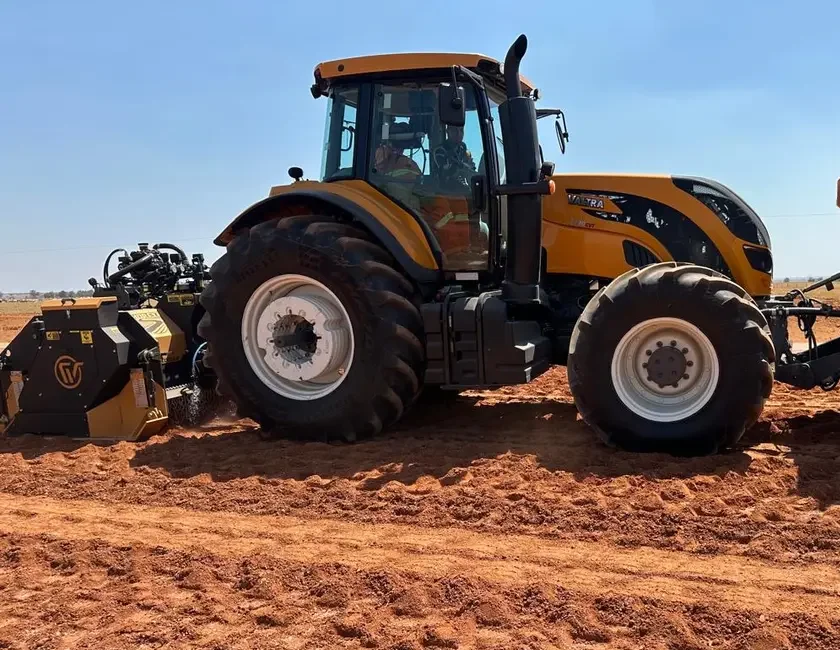
Two-Stage Ground Preparation Workflow
Steenbrekerpas
The crusher processes existing stones, old asphalt fragments, or rubble into fine aggregate. This protects the stabilizer rotor from impact damage and ensures the final soil-binder mix achieves the correct gradation for maximum compaction density.
Soil Stabilizer Pass
The stabilizer follows immediately, incorporating binder into the pre-processed material at the target depth. With stones already reduced to an appropriate size, the rotor achieves homogeneous mixing across the full working width without mechanical stress.
Compaction and Finishing
A roller compacts the homogeneous stabilized layer to design Proctor density. Plate load tests are conducted before final surfacing proceeds. Projects using this sequence consistently pass load-bearing requirements on the first attempt.
This combined approach was demonstrated clearly in the A12 motorway widening project in the Netherlands, where a 420 hp tractor with the THOR ST achieved a uniform 400 mm stabilized layer in a single pass — 12 days ahead of schedule — after prior stone processing had prepared the sub-base. On a Belgian airfield service road extension, the same two-stage method reduced aggregate imports by 40%. For further technical context, the SSJ Group has published a detailed overview of stone crusher principles and applications that provides useful background reading for contractors evaluating ground preparation workflows.
Quick Decision Guide: Which Machine for Which Project?
| Project Type | Steenbreker | Bodemstabilisator | Both |
|---|---|---|---|
| Vineyard / orchard clearing | ✓ | ✗ | ✗ |
| Arable field stone removal | ✓ | ✗ | ✗ |
| Forestry site reclamation | ✓ | ✗ | ✗ |
| Rural road base strengthening | ✗ | ✓ | ✗ |
| Airport / motorway sub-base | ✗ | ✓ | ✗ |
| New road on rocky ground | ✗ | ✗ | ✓ |
| Full-depth reclamation with rubble | ✗ | ✗ | ✓ |
Why Watanabe Netherlands Supplies Both
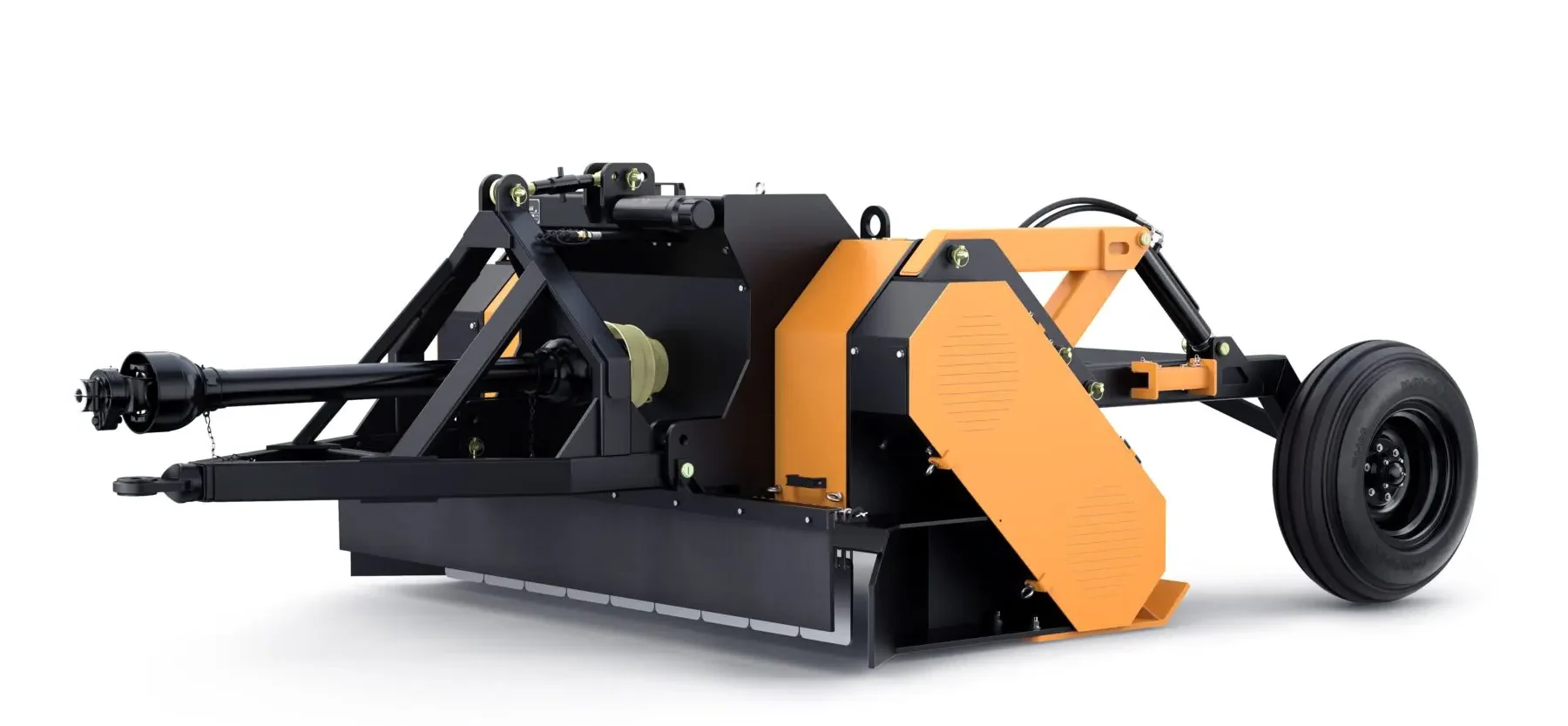
Watanabe Netherlands is one of the few European suppliers that holds stock of both tractor stone crushers and tractor soil stabilizers from a single Dutch warehouse. For contractors and farmers undertaking projects that require both machines, this eliminates the complexity of sourcing from multiple suppliers with separate lead times, different spare parts networks, and different technical support teams.
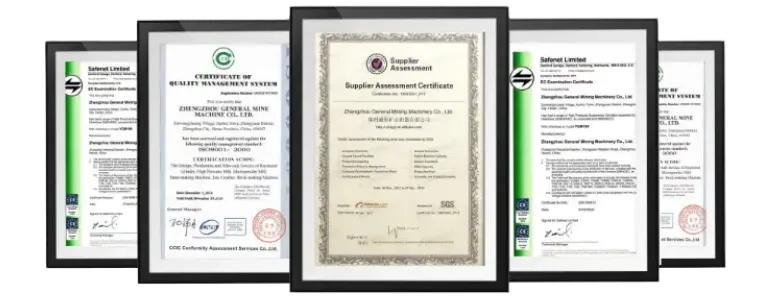
All equipment is CE certified and tested at the Netherlands facility before delivery. Genuine wear parts — hammers, carbide bits, belts, bearings — are held in stock and shipped within 48–72 hours to most EU destinations. Technical support is available in Dutch, English, German, and French for the lifetime of the machine.
Whether you need a stone crusher for a 90 hp vineyard tractor or a soil stabilizer for a 450 hp infrastructure machine, the THOR range covers the full spectrum. The THOR 2.4 AR is the most popular configuration for European agricultural and light construction applications, covering the 180–220 hp range with a 2.4 m working width.
Summary: The Right Machine for the Right Job
The choice between a stone crusher and a soil stabilizer comes down to one question: is the problem stones in the ground, or the structural quality of the ground itself? If stones are preventing cultivation or damaging equipment, a stone crusher resolves the issue in a single cost-effective pass. If the ground lacks the bearing capacity required for road traffic, infrastructure loads, or aviation operations, a soil stabilizer delivers the structural transformation that no amount of stone removal can achieve.
For projects that involve both challenges — rocky terrain that also needs a robust structural base — the two machines work in sequence as part of a proven professional workflow. Watanabe Netherlands supplies both, with European stock, CE certification, and dedicated local technical support.
Not Sure Which Machine Fits Your Project?
Tell us your tractor horsepower, site conditions, and project goals — our Netherlands team will recommend the right solution and provide a tailored quotation within 24 hours.