如何为您的拖拉机选择合适的碎石机


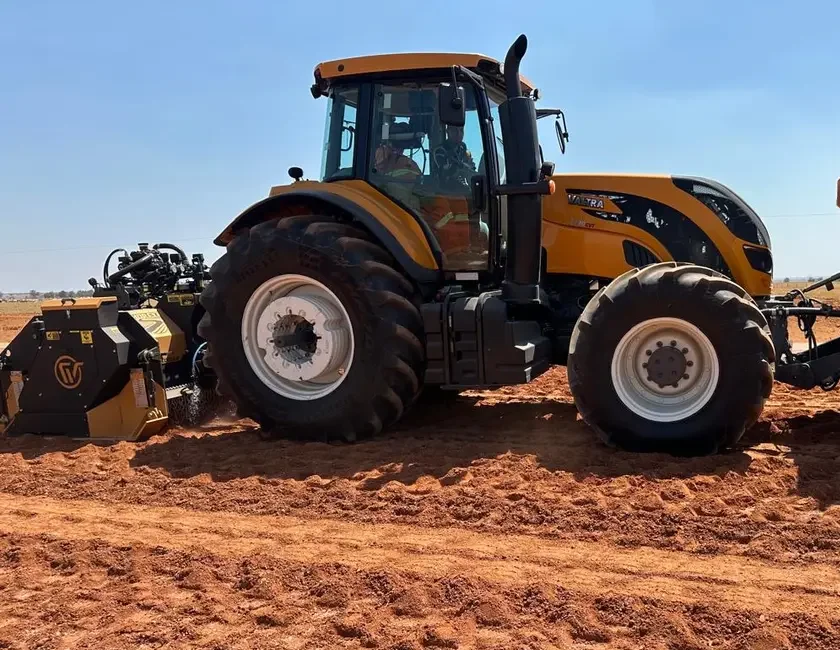
Tractor stone crusher machine working in field — choosing the right model for your tractor

Buying the wrong stone crusher for your tractor is an expensive mistake. Underpower the machine and it will stall or work inefficiently on harder ground. Overspecify it and you pay for capacity your tractor cannot deliver. Choose the wrong working width and you either leave stones untreated or damage the machine through overloading.

This guide walks you through the four key decisions every buyer needs to make before choosing a tractor stone crusher — horsepower and PTO speed, working width, stone size and depth, and linkage capacity — and explains which series and configuration fits each combination.

In This Guide
Step 1 — Tractor HP & PTO speed
Step 2 — Working width
Step 3 — Stone size & depth
Step 4 — Linkage capacity
Series comparison
ST vs DT explained
常问问题

Why the Wrong Stone Crusher Costs You Money

A stone crusher that is too light for your ground conditions will struggle through dense stone concentrations, overheat the rotor drive, and leave partially crushed stones that still cause problems for following operations. A machine that is too wide for your tractor’s power output will run the engine at excessive load, accelerating wear on both tractor and crusher.

Getting the specification right means understanding four variables and matching them to the available range. For an overview of the different types of stone crushers and how they are classified, this stone crusher reference guide provides useful background before you start the selection process.

⚠️ Too Light

Rotor stalls on large stones. Incomplete crushing leaves stones that damage following operations. Excessive rotor tooth wear from repeated impact on oversized material.

⚠️ Too Wide

Tractor runs at maximum engine load across the full pass. Increased fuel consumption, accelerated tractor wear, and reduced working speed reduce daily output.

⚠️ Wrong PTO Speed

Running a 1000rpm-only machine at 540rpm reduces rotor speed below the design threshold, cutting kinetic energy and crushing capacity significantly.

Step 1 — Know Your Tractor Horsepower and PTO Speed

Tractor horsepower determines which series you can run. PTO speed — either 540rpm or 1000rpm — determines which specific configuration within that series is compatible with your machine. Both must be confirmed before selecting a model.

70 – 150hp

Light-duty series (STCL). Six configurations from 1,110mm to 2,070mm working width. ST variants accept 540–1000rpm; DT variants require 1000rpm. Starting point for small farms, vineyards, and orchards.

80 – 280hp

Mid-range series (STCM). Seven configurations from 1,340mm to 2,304mm. ST/125 accepts 540 or 1000rpm; all others require 1000rpm. Covers most professional arable and contracting operations.

280 – 400hp

Heavy-duty series (STCH). Three configurations from 2,080mm to 2,560mm. All require 1000rpm PTO. For large-scale civil contracting, road preparation, and land reclamation.

💡 PTO Speed Note

If you are unsure of your tractor’s PTO speed, check the tractor’s specification sheet or look for the rpm marking stamped on the PTO stub shaft. Older European tractors (pre-1990) commonly have 540rpm only. Most tractors from 100hp upward offer both 540 and 1000rpm outputs — but always confirm before ordering.

Step 2 — Determine Your Required Working Width

Working width determines your daily output per tractor hour and — in restricted spaces like vineyards — whether the machine will physically fit in the row. Here is how to match working width to your operation:

Vineyard / Orchard
Row spacing typically 1.2–1.5m. Select working widths of 1,110mm or 1,350mm (STCL/ST 100 or ST 125) to fit cleanly within the row without damaging vine infrastructure or root zones.
Small Arable Farm
Headland constraints and field access tracks determine practical width. Working widths of 1,590–1,830mm (STCL/ST 150 or ST 175) suit most smaller plots without excessive overlap or turning circle issues.
Medium–Large Arable
Where daily output is the priority, working widths of 2,064–2,304mm (STCM 200 to STCM 225) maximise hectares per hour. These widths require 170–220hp tractors to sustain working speed.
Civil / Road Contracting
Road and infrastructure projects demand maximum throughput. Heavy-duty models at 2,080–2,560毫米 (STCH series) are specified for these applications, requiring 280–400hp tractors.
💡 Output Tip

As a rough guide: at 1.5 km/h working speed, a 2,000mm working width covers approximately 0.3 hectares per hour. At 3 km/h with the same width, that doubles to 0.6 ha/hr. Wider working width and higher sustainable speed are both limited by tractor power — do not exceed the recommended HP range for your chosen model.


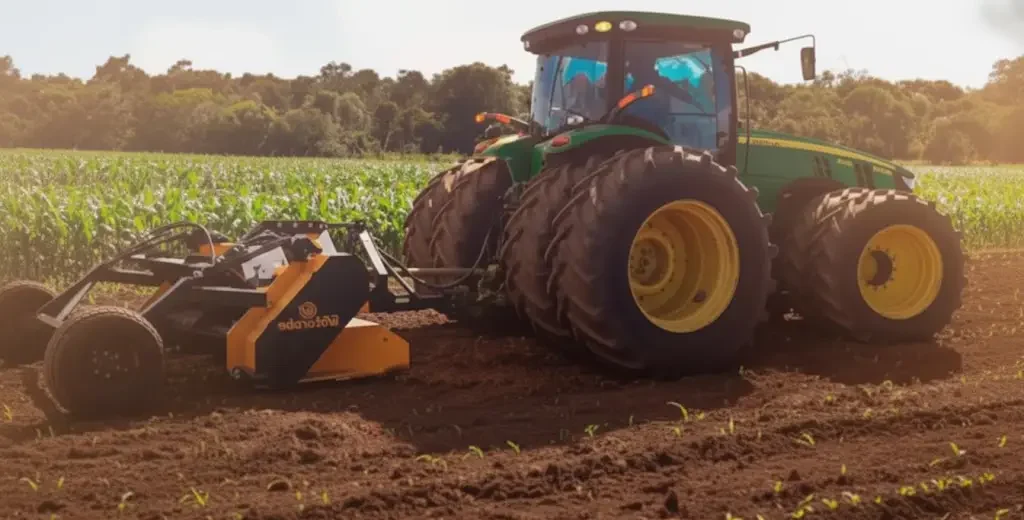
Stone crusher working in field — stone size and working depth assessment

Step 3 — Assess Your Stone Size and Required Working Depth

The maximum shredding diameter and working depth of the machine must match or exceed the stone sizes and depths present in your soil. Using a machine rated for 150mm stones on ground containing 300mm rocks will cause rotor damage and incomplete crushing.

SERIESLight-duty (STCL)Mid-range (STCM)Heavy-duty (STCH)
Crushing Capability
最大切碎直径150毫米300毫米500毫米
Max working depth150毫米200mm250mm
Rotor diameter450mm550mm700mm
Soil Type Guidance
Typical soil / applicationPost-agricultural soil, vineyards, light arable — stones generally surface-level and under 150mmMixed arable, road sub-base, heavier contracting — stones up to 300mm, depth to 200mmRocky terrain, civil groundworks, former quarry land — large embedded rocks, depth to 250mm
⚠️ Important

If you are unsure of the maximum stone size present in your soil, always specify up. Occasional stones larger than the rated shredding diameter will cause rotor tooth breakage and in some cases rotor housing damage — both costly to repair. When in doubt, contact our team and describe your soil conditions — we will advise the safe minimum specification for your ground.

Step 4 — Check Your Rear Linkage Lift Capacity

Stone crushers are significantly heavier than most other rear-mounted implements. Before ordering, confirm that your tractor’s rear linkage lift capacity meets or exceeds the machine weight — particularly for mid-range and heavy-duty models, which start at 1,850kg and reach 5,250kg.

Light-duty (STCL)
1,230–1,750kg
Machine weight range
Mid-range (STCM)
1,850–3,840kg
Machine weight range
Heavy-duty (STCH)
4,850–5,250kg
Machine weight range
💡 Linkage Check

Your tractor’s rear linkage lift capacity is listed in the operator manual under “three-point hitch specifications.” For mid-range and heavy-duty crushers, also check rear axle load ratings — the machine weight applied at the rear linkage pivot point adds to the rear axle load figure. If you share your tractor make and model with our team, we can confirm compatibility before you order.

Light / Mid / Heavy-duty — Which Range Fits You?

Use this summary to identify the right starting range, then confirm the specific model with the working width that matches your tractor power and field requirements:

Light-duty — STCL Series
70–150hp · 540 or 1000rpm · 1,110–2,070mm

Best for: vineyard and orchard stone clearing, small-to-medium arable farms, farm track maintenance. Stone sizes up to 150mm, working depth to 150mm. Lightest machine weights in the range — accessible for smaller tractors.

6 configurations available →
Mid-range — STCM Series
80–280hp · 540 or 1000rpm · 1,340–2,304mm

Best for: large arable farms, professional contracting, light road sub-base preparation. Stone sizes up to 300mm, working depth to 200mm. The most versatile series — seven configurations cover the widest range of tractors and applications in the lineup.

7 configurations available →
Heavy-duty — STCH Series
280–400hp · 1000rpm · 2,080–2,560mm

Best for: civil infrastructure, road construction, land reclamation, high-output professional contracting. Stone sizes up to 500mm, working depth to 250mm. Largest rotor in the range at 700mm — built for the most demanding European groundwork applications.

3 configurations available →


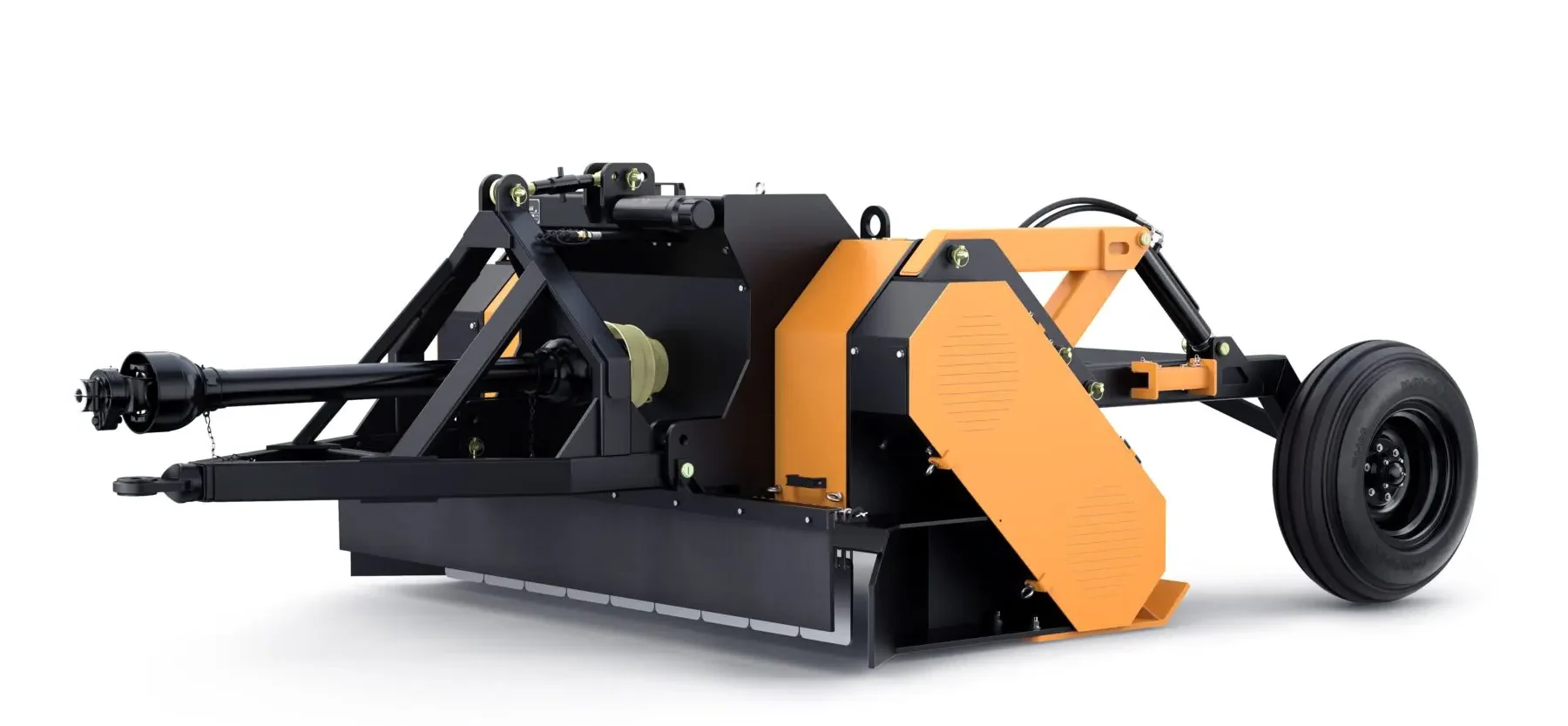
THOR 2.4 AR tractor stone crusher — Watanabe Netherlands product range

ST vs DT — What Is the Difference?

Within the light-duty STCL series, models are designated either ST (single-speed input) or DT (dual-speed input). This distinction affects PTO compatibility and typical application:

ST Models (ST 100–175)
  • Accept both 540rpm and 1000rpm PTO inputs
  • Widest tractor compatibility — older and newer fleets
  • Working widths: 1,110mm to 1,830mm
  • Power range: 70–120hp
  • Best for: general farm use, vineyards, older tractors
DT Models (DT 175–200)
  • Require 1000rpm PTO input only
  • Higher rotor speed at equivalent tractor rpm
  • Working widths: 1,830mm and 2,070mm
  • Power range: 100–150hp
  • Best for: harder ground, larger plots, consistent high-speed output

Browse the Full Range & Compare Configurations

Frequently Asked Questions

Can I run a stone crusher on a 70hp tractor?
Q

Yes. The STCL/ST 100 is designed for tractors from 70hp, with a 1,110mm working width — the compact entry point to the range. At 70hp you will want to work at a lower forward speed and avoid the hardest ground conditions, but the machine is rated and designed for this power range.

My tractor has both 540rpm and 1000rpm PTO — which should I use?
Q

For ST models, always use 1000rpm where your tractor offers it. Higher PTO speed means greater rotor speed, higher kinetic energy, and better crushing performance. Use 540rpm only if your tractor does not offer 1000rpm output, or if the model is specifically rated for 540rpm only.

How do I know if my stones are within the machine’s rated shredding diameter?
Q

Walk your field and physically measure the largest stones you can find — a rough tape measure or boot-length comparison is sufficient. The shredding diameter is the maximum dimension across the stone, not its weight. If you have occasional stones significantly larger than the rated maximum, always specify a machine from the next series up.

Is a wider stone crusher always better?
Q

Not necessarily. A wider machine requires proportionally more tractor power to maintain working speed — and if your tractor is underpowered for the width selected, daily output and crushing quality will both suffer. The best working width is the widest your tractor can run at its recommended working speed within its power rating. Contact our team with your tractor HP and we will confirm the maximum appropriate width.

Can Watanabe Netherlands advise on which model fits my tractor before I buy?
Q

Yes — this is exactly what our team is here for. Share your tractor make, model, horsepower, PTO speed, rear linkage category, working width requirement, and a description of your soil and stone conditions. We will confirm the right series and configuration and provide a delivery quotation to your location across Europe.

Watanabe 荷兰

Not Sure Which Stone Crusher Fits Your Tractor?

Tell us your tractor horsepower, PTO speed, working width requirement, and stone conditions — our team will confirm the right model and provide a no-obligation delivery quotation to your location across Europe.

📧 [email protected]

您可能想知道

使用拖拉机式碎石机进行道路路基准备

道路路基准备是任何碎石机都面临的最严峻挑战之一。地面条件——压实的石层、大小不一的嵌岩以及坚硬的路基材料——对机器的运行提出了极高的要求,而这通常是其他破碎机难以胜任的。

葡萄园用碎石机:如何选择合适的葡萄藤行清理机

葡萄园土壤中的石块是欧洲葡萄种植者面临的最棘手、成本最高的管理难题之一。它们会损坏机械收割机,磨损葡萄藤下的耕作设备,降低耕作速度,严重时甚至会导致葡萄藤死亡……

拖拉机式碎石机需要多大的马力?

拖拉机马力是选择适合您作业的碎石机时最重要的因素。动力不足会导致机器难以处理高密度石料,转子转速低于设计转速,破碎质量下降,日产量也会降低……

欧洲农民和承包商的动力输出轴式碎石机选购指南

对于任何欧洲农场或承包企业来说,购买一台动力输出轴式碎石机都是一项重大投资。只要选择合适的规格,它就能在一个种植季内通过减少设备磨损、减少田间作业和提高苗床质量来收回成本。赶紧行动吧……

碎石机还是捡石机:您先需要哪台机器?

当您的土地上出现石块问题时,通常会推荐两种机器:碎石机和捡石机。两者都能处理石块,也都能连接到拖拉机上。但它们的工作原理截然不同,解决的问题也完全不同——购买它们……

什么是拖拉机式碎石机?它的工作原理是什么?

如果您在土地上耕作或承包农活,而石头又是一个反复出现的问题,那么拖拉机碎石机就是您最实用的投资之一。石头会损坏耕作设备,降低苗床质量,延缓收割作业,并使道路和地基施工复杂化……

碎石机是用来做什么的?

引言 在现代农业和建筑的崎岖地形中,处理岩石地貌往往是一项重大挑战。试想一下,一位荷兰农民正在准备播种,却发现顽固的石头阻碍了土壤的翻动……

土壤稳定机的工作原理是什么?

引言 土壤稳定化是土木工程和农业用地管理中的一项基础性工作,旨在解决不稳定或薄弱的土壤结构可能危及基础设施完整性或作物产量的问题。土壤……