Every road has a service life. When that life ends, the owner faces a binary choice: reconstruct from scratch, importing new materials and disposing of the failed layers, or reclaim the existing structure in place, using what is already there as the foundation for the next 20 years of service. Full-depth reclamation using a tractor-mounted soil stabilizer makes the second option viable on projects where it was previously considered impractical. This guide gives European road owners, municipal engineers, and contractors the cost comparison framework they need to evaluate both approaches honestly — including the numbers that consistently determine which method wins at different project scales.
What Full-Depth Reclamation Actually Means
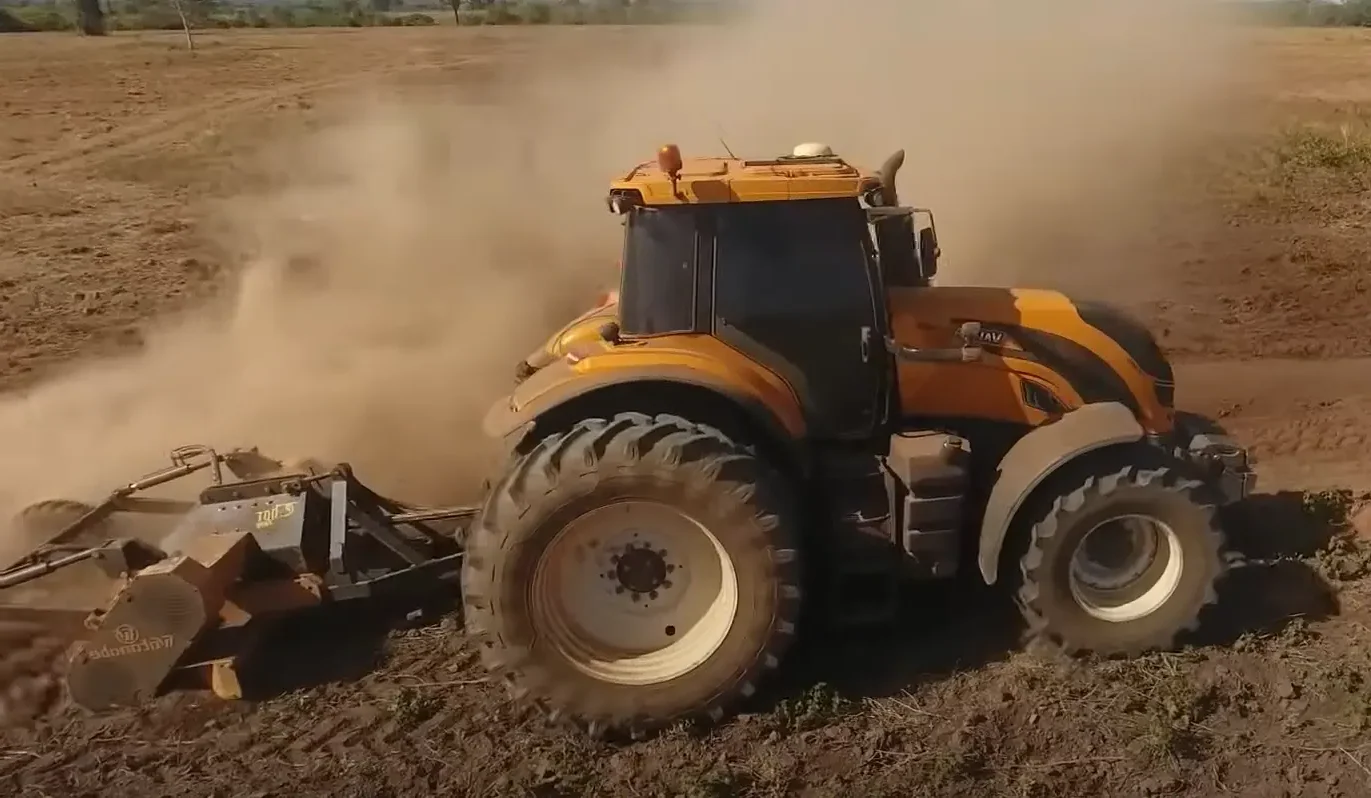
Full-depth reclamation (FDR) is a road rehabilitation method in which the existing pavement and base layers — typically the top 200 to 500 mm of the road structure — are pulverised in place by a soil stabilizer machine, mixed with a binding agent, and recompacted to form a new structural base layer. No material is excavated. No material is imported. The road is rebuilt using the material that already exists on site, chemically improved to the structural specification required for the next design life.
This is different from surface recycling, which addresses only the top 50–100 mm of worn asphalt. FDR addresses the structural cause of road failure — deterioration of the granular base layer beneath the surface — rather than treating the symptom at the surface alone. A road that has received repeated surface treatments without FDR eventually fails because the base layer cannot support the traffic load. FDR rebuilds that base layer.
Tractor-mounted soil stabilizers like the THOR ST have brought FDR into a project scale and cost range where it was previously inaccessible — rural municipal roads, farm access tracks, secondary industrial roads, and corridor lengths of 1 to 10 km that do not justify the mobilisation cost of self-propelled stabilizer trains. This is the segment where the cost comparison against conventional reconstruction is most striking.
The Two Methods: What Each Actually Involves
Conventional Reconstruction
Mill or excavate the failed road surface and base layer to the required depth
Load and transport excavated material to a licensed disposal or recycling facility
Import crushed aggregate sub-base material from quarry — typically 25–60 km transport distance
Lay and compact aggregate sub-base in multiple layers to the design depth
Apply binder course and surface course — typically two asphalt layers
Full-Depth Reclamation (FDR)
Optional: stone crusher pass if large aggregate is present, to optimise material gradation
Soil stabilizer pulverises existing road structure to target depth and incorporates binder in a single pass
Grade and compact the treated layer to design Proctor density — typically one roller pass
Plate load test — most well-specified FDR projects pass on first attempt
Apply surface dressing or thin asphalt wearing course — one layer only
The critical difference is visible immediately: FDR eliminates steps 2 and 3 of conventional reconstruction entirely — the two most expensive and time-consuming elements of any road rebuild. No material leaves the site. No material arrives from outside. The cost difference this produces is not marginal — it is structural.
Cost Comparison: The Actual Numbers
The following cost comparison is based on documented European projects in the Netherlands, Belgium, and Germany, using tractor-mounted soil stabilizer FDR at 350–500 mm depth. All figures are approximate indicative ranges — actual project costs vary with site conditions, binder dosage, surface course specification, and local labour and material rates.
| Cost Component | Conventional Reconstruction | FDR with Soil Stabilizer | FDR Saving |
|---|---|---|---|
| Excavation and removal | €12–18 / m² | €0 | €12–18 / m² |
| Aggregate import (material + transport) | €18–30 / m² | €0 | €18–30 / m² |
| Sub-base laying and compaction | €6–10 / m² | €0 | €6–10 / m² |
| Stabilizer machine and binder | — | €8–14 / m² | — |
| Surface course (asphalt) | €14–20 / m² | €10–16 / m² | €4–6 / m² |
| Traffic management and delays | €3–8 / m² | €1–3 / m² | €2–5 / m² |
| TOTAL ESTIMATED COST | €53–86 / m² | €19–33 / m² | €34–53 / m² |
Indicative ranges based on documented European projects. Actual costs vary with site conditions, binder type, local rates, and surface course specification. FDR figures assume tractor-mounted stabilizer; self-propelled equipment costs differ.
The table makes the economic case for FDR as clearly as any project report. The saving of €34–53 per square metre on the structural base layer alone represents 60–65% cost reduction on the most expensive phase of any road rebuild. On a 2 km rural road at 4 m width — 8,000 m² — this produces a project saving of €272,000 to €424,000 versus conventional reconstruction at comparable structural performance.
The Time Factor: Why FDR Wins on Programme as Well as Cost
On the A12 motorway widening project in the Netherlands, the contractor using THOR ST FDR completed the base layer preparation 12 days ahead of the conventional reconstruction schedule for the same corridor length. This time saving has value beyond programme efficiency — it translates directly into reduced traffic management costs and earlier road opening, which for rural municipal projects often determines whether the work is completed within the same financial year.
Conventional
Excavation
+ Disposal logistics
+ Aggregate delivery
+ Base compaction
+ Surface layers
4–6 weeks
per km (rural road)
vs
FDR with Stabilizer
Stabilizer pass
+ Grade and compact
+ 7-day cure
+ Surface layer
1–2 weeks
per km (rural road)
When FDR Works — and When It Does Not
FDR is not universally applicable. The method produces excellent results when the existing road structure contains recoverable material — granular base layers, bound asphalt, or mixed aggregate that responds to binder incorporation. It is less suited to roads built on inherently poor subgrade that is the primary cause of failure, where the structural problem lies below the depth of FDR treatment.
FDR Works Well
Rural and secondary roads with granular base layer failure — the most common road failure mode in the Netherlands, Belgium, and Germany. Asphalt roads with cracked or deformed surface layers where the base remains structurally adequate for FDR recycling. Unsealed farm tracks and agricultural roads where soil stabilization of the existing material produces a durable bound surface at minimal cost.
FDR Has Limits
Roads built over highly expansive clay subgrades where the failure mechanism extends below 500 mm — FDR treats the road structure but cannot address subgrade movement. Roads contaminated with fuel, oils, or hazardous materials that prevent effective binder hydration. Very thin road structures with less than 200 mm of recoverable material above the natural subgrade.
Decision Factors
Pavement condition survey, dynamic cone penetrometer testing of the base layer, subgrade CBR measurement at depth, and a trial stabilization section on 100 m of the project road are the standard pre-design investigations for FDR. These take one to two days and cost a fraction of the saving the correct method decision produces.
Documented European Project Results
Netherlands — A12 Motorway Widening
Cement FDR at 400 mm depth
Full-depth reclamation using THOR ST on 420 hp tractor. Uniform 400 mm stabilized layer achieved in a single pass at 8–10 m per minute. All plate load tests passed on first attempt. Section completed 12 days ahead of conventional reconstruction schedule. Substantial material cost saving versus imported aggregate base.
Belgium — Airport Apron Extension
Lime FDR at 500 mm depth
High-clay subgrade treatment with lime incorporation to 500 mm. Bearing capacity increased by more than 35% versus pre-treatment measurement. Heavier aircraft operations enabled earlier than anticipated. Imported material requirements reduced compared with conventional aggregate sub-base specification for the same bearing capacity target.
Germany — Niedersachsen Rural Road Network
Foam bitumen FDR at 350 mm depth
Multiple THOR ST units on 380 hp tractors covering rural road network sections. Foam bitumen cold recycling at 350 mm depth. Consistent 98% Proctor density achieved. New material requirements reduced by 45% versus conventional reconstruction across all project sections. Flexible pavement behaviour — no thermal cracking over the following two winters.
Netherlands — Municipal Access Road
Cement FDR — 2.2 km total length
Rural municipal road serving agricultural and light commercial traffic, failed granular base. FDR with cement at 300 mm depth. Total project duration 11 working days including surface dressing. Total cost approximately 38% of the equivalent conventional reconstruction budget — a saving that allowed the municipality to rehabilitate a second road in the same financial year.
Sustainability: The Environmental Case for FDR
The European Green Deal and associated national infrastructure sustainability targets are increasingly influencing how road rehabilitation methods are evaluated and specified. FDR has a measurable environmental advantage over conventional reconstruction across three dimensions:
0
Material Transport Movements
No aggregate delivery lorries. No excavation removal lorries. Carbon footprint of material transport is eliminated entirely.
100%
Material Reuse Rate
Every tonne of existing road material is reused in place as the new structural base layer. Zero waste to landfill.
45%
Virgin Material Reduction
Average reduction in new aggregate and binder material required versus conventional reconstruction, based on documented German and Dutch projects.
Dutch and Belgian municipalities increasingly include lifecycle carbon accounting in road rehabilitation tender evaluations. FDR consistently scores lower embodied carbon per lane-kilometre than conventional reconstruction — an advantage that will become a tender requirement rather than a scoring bonus as EU sustainability frameworks tighten through 2026 and beyond.
The planetary gear systems that drive the heavy construction rollers used in FDR compaction — and the tractor wheel drive systems that propel stabilizer machines across kilometres of project road in a single working day — share engineering principles with SSJ Group specialist components. SSJ Group, a manufacturer of planetary wheel drive gearboxes for heavy construction and agricultural machinery, provides relevant technical context on the drive systems that underpin high-output tractor performance in demanding stabilization applications.
Equipment Requirements for Tractor-Mounted FDR
A tractor-mounted FDR operation requires four elements: the soil stabilizer machine with integrated binder system, the tractor (minimum 300 hp for the THOR ST at 500 mm depth), a binder supply vehicle or tanker, and a vibratory roller for compaction. Of these, the stabilizer machine is the specialist item — the tractor, binder supply, and roller are standard contractor equipment on any road project.
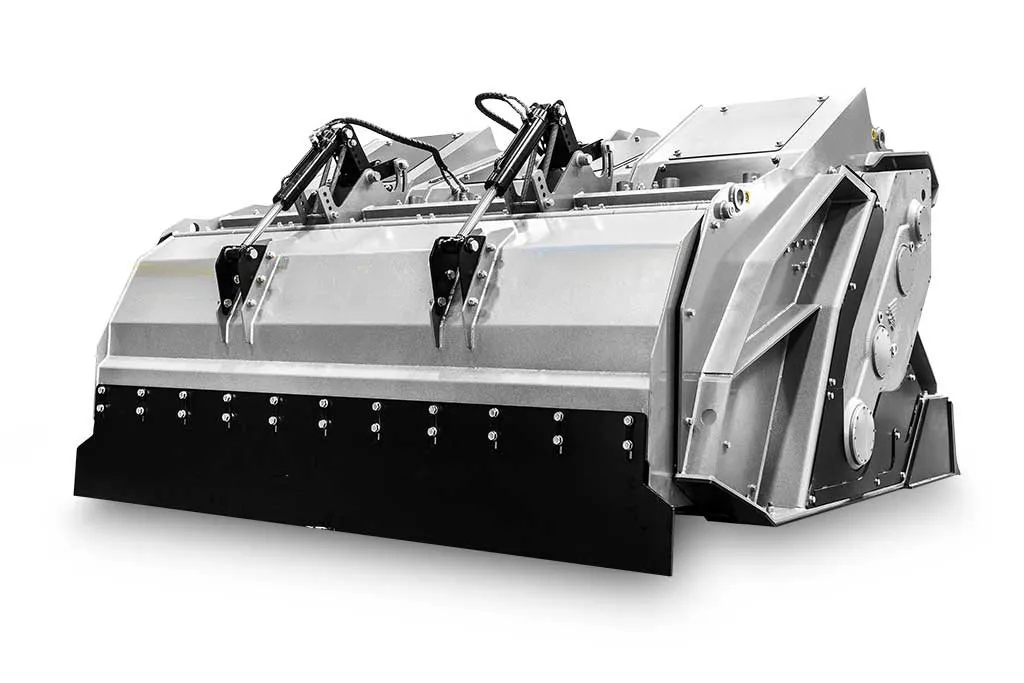
The THOR ST tractor soil stabilizer is the machine that makes tractor-mounted FDR viable at professional specification: 2.4–2.5 m working width, 0–500 mm working depth, 168–184 carbide cutting tools, computer-controlled binder dosing with up to 3,000 kg tank capacity, and compatibility with cement, lime, and foam bitumen from a single integrated system. Watanabe Netherlands supplies the THOR ST from permanent Netherlands stock, CE certified, with 48–72 hour genuine parts delivery and multilingual technical support.
For projects that involve stone or hard-fill processing before the stabilizer pass, the Watanabe Netherlands tractor stone crusher range provides the pre-processing step — and both machines can be sourced from the same supplier, with the same parts network and technical support team.
Evaluating FDR for Your Road Project?
Share your road length, existing structure, subgrade type, and traffic loading. Our Netherlands technical team will assess FDR suitability, recommend the right binder specification, and provide a project cost estimate — usually within 24 hours.