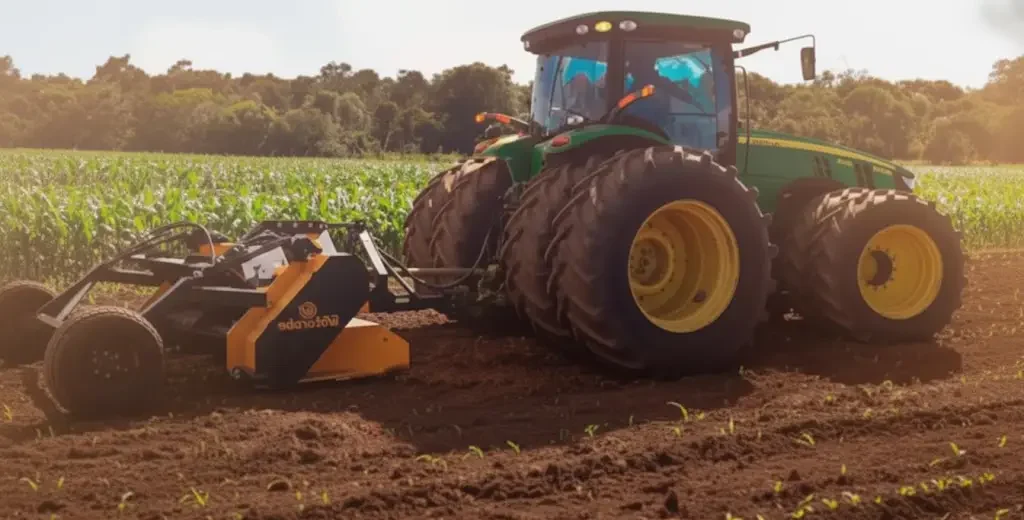
Buying the wrong stone crusher for your tractor is an expensive mistake. Underpower the machine and it will stall or work inefficiently on harder ground. Overspecify it and you pay for capacity your tractor cannot deliver. Choose the wrong working width and you either leave stones untreated or damage the machine through overloading.
This guide walks you through the four key decisions every buyer needs to make before choosing a tractor stone crusher — horsepower and PTO speed, working width, stone size and depth, and linkage capacity — and explains which series and configuration fits each combination.
Step 2 — Working width
Step 3 — Stone size & depth
Step 4 — Linkage capacity
Series comparison
ST vs DT explained
Tanya Jawab Umum
Why the Wrong Stone Crusher Costs You Money
A stone crusher that is too light for your ground conditions will struggle through dense stone concentrations, overheat the rotor drive, and leave partially crushed stones that still cause problems for following operations. A machine that is too wide for your tractor’s power output will run the engine at excessive load, accelerating wear on both tractor and crusher.
Getting the specification right means understanding four variables and matching them to the available range. For an overview of the different types of stone crushers and how they are classified, this stone crusher reference guide provides useful background before you start the selection process.
Rotor stalls on large stones. Incomplete crushing leaves stones that damage following operations. Excessive rotor tooth wear from repeated impact on oversized material.
Tractor runs at maximum engine load across the full pass. Increased fuel consumption, accelerated tractor wear, and reduced working speed reduce daily output.
Running a 1000rpm-only machine at 540rpm reduces rotor speed below the design threshold, cutting kinetic energy and crushing capacity significantly.
Step 1 — Know Your Tractor Horsepower and PTO Speed
Tractor horsepower determines which series you can run. PTO speed — either 540rpm or 1000rpm — determines which specific configuration within that series is compatible with your machine. Both must be confirmed before selecting a model.
Light-duty series (STCL). Six configurations from 1,110mm to 2,070mm working width. ST variants accept 540–1000rpm; DT variants require 1000rpm. Starting point for small farms, vineyards, and orchards.
Mid-range series (STCM). Seven configurations from 1,340mm to 2,304mm. ST/125 accepts 540 or 1000rpm; all others require 1000rpm. Covers most professional arable and contracting operations.
Heavy-duty series (STCH). Three configurations from 2,080mm to 2,560mm. All require 1000rpm PTO. For large-scale civil contracting, road preparation, and land reclamation.
If you are unsure of your tractor’s PTO speed, check the tractor’s specification sheet or look for the rpm marking stamped on the PTO stub shaft. Older European tractors (pre-1990) commonly have 540rpm only. Most tractors from 100hp upward offer both 540 and 1000rpm outputs — but always confirm before ordering.
Step 2 — Determine Your Required Working Width
Working width determines your daily output per tractor hour and — in restricted spaces like vineyards — whether the machine will physically fit in the row. Here is how to match working width to your operation:
As a rough guide: at 1.5 km/h working speed, a 2,000mm working width covers approximately 0.3 hectares per hour. At 3 km/h with the same width, that doubles to 0.6 ha/hr. Wider working width and higher sustainable speed are both limited by tractor power — do not exceed the recommended HP range for your chosen model.
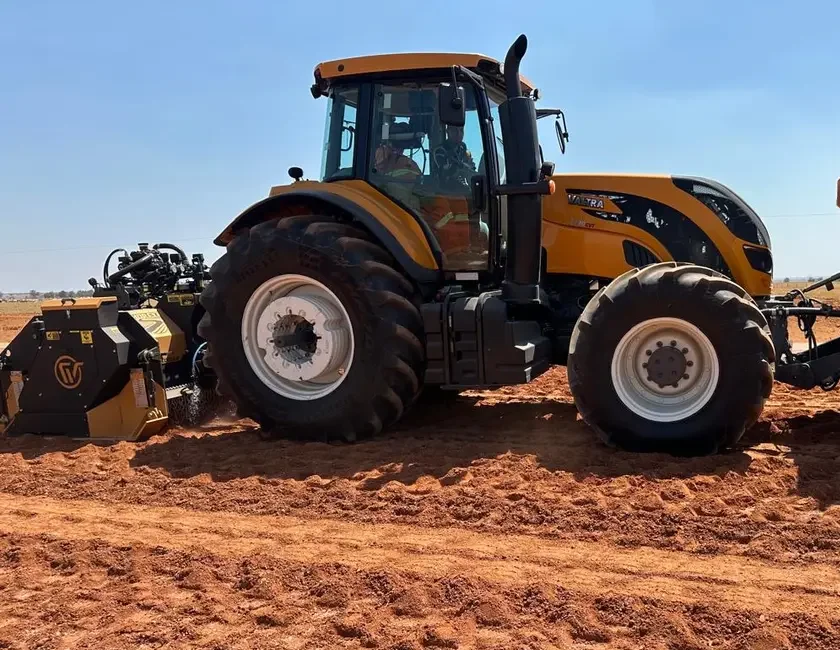
Step 3 — Assess Your Stone Size and Required Working Depth
The maximum shredding diameter and working depth of the machine must match or exceed the stone sizes and depths present in your soil. Using a machine rated for 150mm stones on ground containing 300mm rocks will cause rotor damage and incomplete crushing.
| SERIES | Tugas ringan (STCL) | Kelas menengah (STCM) | Tugas berat (STCH) |
|---|---|---|---|
| Crushing Capability | |||
| Max shredding diameter | 150 mm | 300mm | 500 mm |
| Kedalaman kerja maksimum | 150 mm | 200 mm | 250 mm |
| Rotor diameter | 450mm | 550mm | 700mm |
| Soil Type Guidance | |||
| Typical soil / application | Post-agricultural soil, vineyards, light arable — stones generally surface-level and under 150mm | Mixed arable, road sub-base, heavier contracting — stones up to 300mm, depth to 200mm | Rocky terrain, civil groundworks, former quarry land — large embedded rocks, depth to 250mm |
If you are unsure of the maximum stone size present in your soil, always specify up. Occasional stones larger than the rated shredding diameter will cause rotor tooth breakage and in some cases rotor housing damage — both costly to repair. When in doubt, contact our team and describe your soil conditions — we will advise the safe minimum specification for your ground.
Step 4 — Check Your Rear Linkage Lift Capacity
Stone crushers are significantly heavier than most other rear-mounted implements. Before ordering, confirm that your tractor’s rear linkage lift capacity meets or exceeds the machine weight — particularly for mid-range and heavy-duty models, which start at 1,850kg and reach 5,250kg.
Your tractor’s rear linkage lift capacity is listed in the operator manual under “three-point hitch specifications.” For mid-range and heavy-duty crushers, also check rear axle load ratings — the machine weight applied at the rear linkage pivot point adds to the rear axle load figure. If you share your tractor make and model with our team, we can confirm compatibility before you order.
Light / Mid / Heavy-duty — Which Range Fits You?
Use this summary to identify the right starting range, then confirm the specific model with the working width that matches your tractor power and field requirements:
Best for: vineyard and orchard stone clearing, small-to-medium arable farms, farm track maintenance. Stone sizes up to 150mm, working depth to 150mm. Lightest machine weights in the range — accessible for smaller tractors.
Best for: large arable farms, professional contracting, light road sub-base preparation. Stone sizes up to 300mm, working depth to 200mm. The most versatile series — seven configurations cover the widest range of tractors and applications in the lineup.
Best for: civil infrastructure, road construction, land reclamation, high-output professional contracting. Stone sizes up to 500mm, working depth to 250mm. Largest rotor in the range at 700mm — built for the most demanding European groundwork applications.
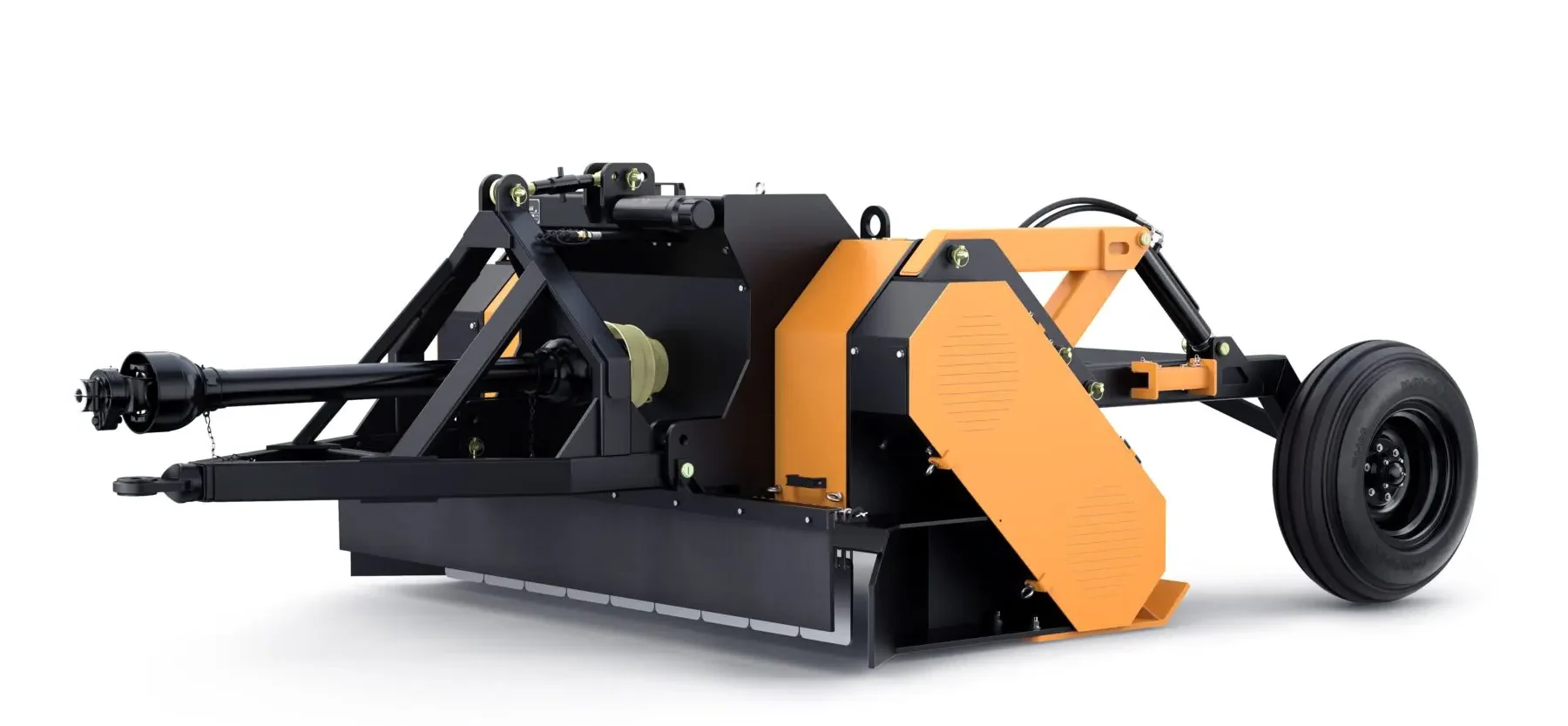
ST vs DT — What Is the Difference?
Within the light-duty STCL series, models are designated either ST (single-speed input) or DT (dual-speed input). This distinction affects PTO compatibility and typical application:
- Accept both 540rpm and 1000rpm PTO inputs
- Widest tractor compatibility — older and newer fleets
- Working widths: 1,110mm to 1,830mm
- Power range: 70–120hp
- Best for: general farm use, vineyards, older tractors
- Require 1000rpm PTO input only
- Higher rotor speed at equivalent tractor rpm
- Working widths: 1,830mm and 2,070mm
- Power range: 100–150hp
- Best for: harder ground, larger plots, consistent high-speed output
Pertanyaan yang Sering Diajukan
Yes. The STCL/ST 100 is designed for tractors from 70hp, with a 1,110mm working width — the compact entry point to the range. At 70hp you will want to work at a lower forward speed and avoid the hardest ground conditions, but the machine is rated and designed for this power range.
For ST models, always use 1000rpm where your tractor offers it. Higher PTO speed means greater rotor speed, higher kinetic energy, and better crushing performance. Use 540rpm only if your tractor does not offer 1000rpm output, or if the model is specifically rated for 540rpm only.
Walk your field and physically measure the largest stones you can find — a rough tape measure or boot-length comparison is sufficient. The shredding diameter is the maximum dimension across the stone, not its weight. If you have occasional stones significantly larger than the rated maximum, always specify a machine from the next series up.
Not necessarily. A wider machine requires proportionally more tractor power to maintain working speed — and if your tractor is underpowered for the width selected, daily output and crushing quality will both suffer. The best working width is the widest your tractor can run at its recommended working speed within its power rating. Contact our team with your tractor HP and we will confirm the maximum appropriate width.
Yes — this is exactly what our team is here for. Share your tractor make, model, horsepower, PTO speed, rear linkage category, working width requirement, and a description of your soil and stone conditions. We will confirm the right series and configuration and provide a delivery quotation to your location across Europe.
Not Sure Which Stone Crusher Fits Your Tractor?
Tell us your tractor horsepower, PTO speed, working width requirement, and stone conditions — our team will confirm the right model and provide a no-obligation delivery quotation to your location across Europe.