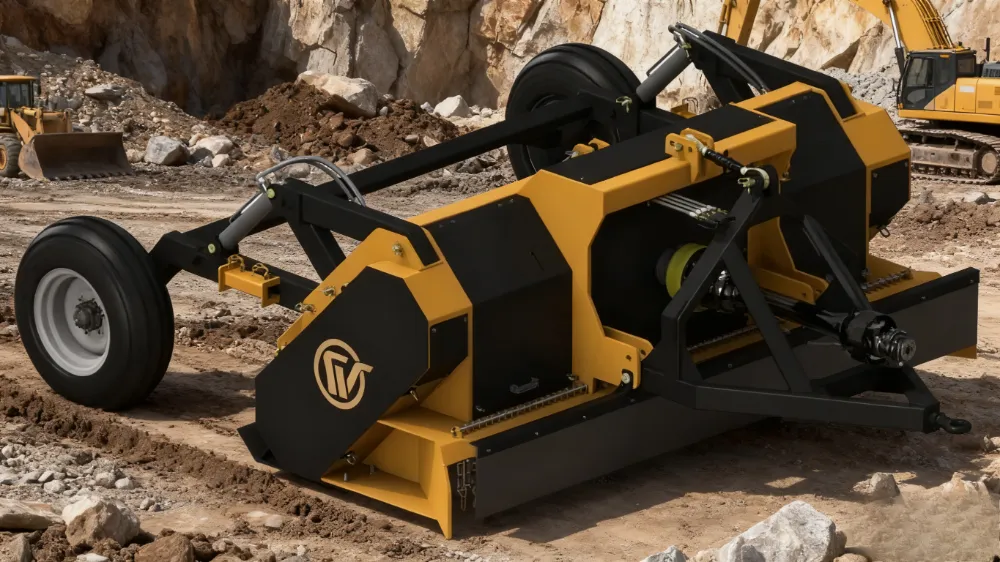
Wenn Sie Landwirtschaft betreiben oder Lohnarbeiten auf Flächen ausführen, auf denen Steine immer wieder ein Problem darstellen, ist ein Traktor-Steinbrecher eine der sinnvollsten Investitionen, die Sie tätigen können. Steine beschädigen Bodenbearbeitungsgeräte, mindern die Saatbettqualität, verlangsamen die Ernte und erschweren die Vorbereitung von Wegen und Fundamenten. Ein Traktor-Steinbrecher beseitigt diese Probleme dauerhaft – in einem einzigen Arbeitsgang, ohne Material vom Feld abzutragen.
Dieser Leitfaden erklärt, was ein Traktor-Steinbrecher ist, wie er mechanisch funktioniert, welche verschiedenen Maschinen diese verarbeiten können und wie Sie die wichtigsten Spezifikationen vor dem Kauf verstehen sollten.
Wie funktioniert es?
Hauptkomponenten
Steingröße und Arbeitstiefe
Steinbrecher vs. Mulcher
Wo sie verwendet werden
Häufig gestellte Fragen
Was ist ein Traktor-Steinbrecher?
Ein Traktor-Steinbrecher – auch Steinbrecher genannt Zapfwellen-Steinbrecher oder Traktor-Steinbrechermaschine — ist ein Heckanbaugerät, das über die serienmäßige Dreipunktaufhängung an einen Traktor angeschlossen wird. Es wird direkt von der Zapfwelle des Traktors angetrieben, welche einen schnelllaufenden Rotor im Inneren des Maschinengehäuses antreibt.
Im Gegensatz zu industriellen Backenbrechern oder Prallbrechern, die im Steinbruchbetrieb eingesetzt werden, ist ein Traktor-Steinbrecher für Folgendes ausgelegt: In-situ-BetriebDas Gerät sammelt oder entfernt keine Steine, sondern zerkleinert sie zu kleinen Fragmenten und führt das Material im selben Arbeitsgang direkt dem Boden zu. Das Ergebnis ist ein sauberes, steinfreies Saatbeet oder eine saubere Arbeitsfläche ohne die Kosten und den logistischen Aufwand für das Sammeln, Verladen und Abtransportieren von Steinen.
Traktorbetriebene Steinbrecher sind in der europäischen Landwirtschaft, im Tiefbau und bei der Instandhaltung von Infrastruktur weit verbreitet – von der Vorbereitung von Weinbergen und Obstplantagen über die Unterbaubehandlung von Straßen bis hin zur großflächigen Rodung. Einen umfassenderen Überblick über die verschiedenen Steinbrechertypen finden Sie hier. Steinbrecher-Referenzhandbuch.
Wie funktioniert ein Traktor-Steinbrecher?
Das Funktionsprinzip ist einfach, die dahinterstehende Technik jedoch präzise. Hier ist der vollständige Ablauf von der Traktorzapfwelle bis zur fertigen Oberfläche:
Die Zapfwelle des Traktors – je nach Modell mit 540 oder 1000 U/min – ist mit der Eingangswelle des Brechers verbunden. Die Rotationskraft wird über einen Antriebsriemen oder ein Getriebe auf den Rotor übertragen. Die Antriebskomponenten sind so konstruiert, dass sie den hohen Stoßbelastungen durch den Steinschlag im Betrieb standhalten.
Der Rotor dreht sich mit hoher Geschwindigkeit im Inneren des gepanzerten Gehäuses. Gehärtete, austauschbare Zähne sind über die gesamte Arbeitsbreite befestigt. Der Rotordurchmesser bestimmt die kinetische Energie – 450 mm für leichte, 550 mm für mittlere und 700 mm für schwere Beanspruchung – und damit die maximale Steingröße, die die Maschine bearbeiten kann.
Während sich die Maschine vorwärts bewegt, dringen die Rotorzähne in den Boden ein und treffen mit hoher Wucht auf Steine. Der Stein wird zwischen den Rotorzähnen und den feststehenden Gegenzähnen im Gehäuse wiederholt zerkleinert, bis er klein genug ist, um durch den hinteren Auswurf ausgeworfen zu werden.
Zerkleinerte Steinfragmente und Erde werden nach hinten abgeführt und gleichmäßig auf der Oberfläche verteilt – sie werden wieder in das Bodenprofil eingearbeitet. Kein Sammeln, kein Abtransport, keine weitere Bearbeitung erforderlich.
Eine hintere Packerwalze folgt dem Rotor und verdichtet die behandelte Oberfläche, wodurch eine ebene, gleichmäßige Oberfläche entsteht, die für den nächsten Feldvorgang – Bohren, Pflanzen oder weitere Bodenbearbeitung – bereit ist.
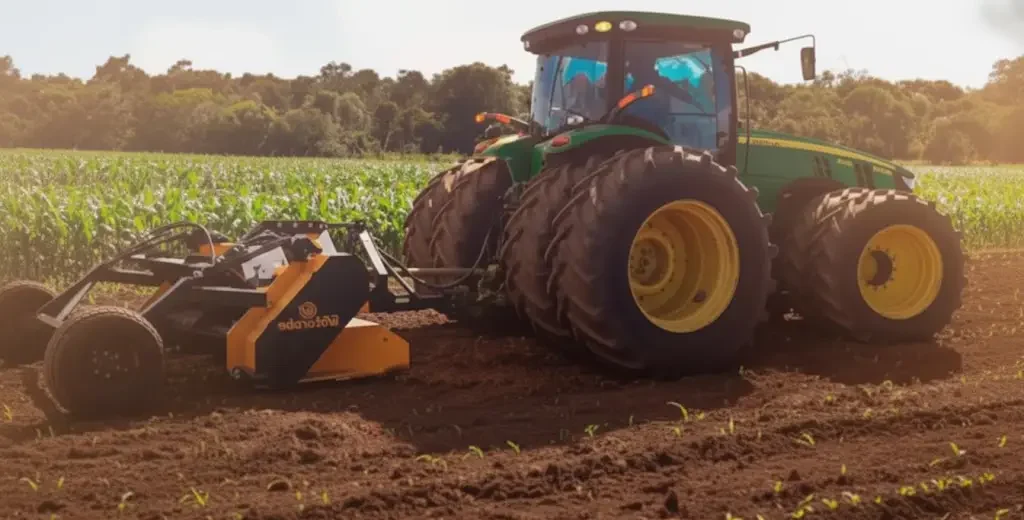
Erläuterung der wichtigsten Komponenten
Das Verständnis der Hauptkomponenten hilft Ihnen, Modelle zu vergleichen und die langfristigen Betriebskosten vor dem Kauf abzuschätzen:
Das zentrale Arbeitselement. Ein größerer Rotordurchmesser bedeutet mehr kinetische Energie und die Fähigkeit, größere Steine zu bearbeiten. Die Rotorgröße ist das Hauptunterscheidungsmerkmal zwischen leichten (450 mm), mittleren (550 mm) und schweren (700 mm) Maschinen.
Die Zähne aus gehärtetem Stahl sind die Hauptverschleißteile und können einzeln ausgetauscht werden, ohne den Rotor auszubauen. Die Zähnezahl variiert je nach Arbeitsbreite – mehr Zähne sorgen für eine feinere Oberflächengüte und eine geringere Belastung pro Zahn im Betrieb.
Diese im Gehäuse fest installierten Elemente bilden die Gegenfläche, an der die Steine zertrümmert werden. Ihre Geometrie bestimmt, wie effizient die Steine zerkleinert werden, bevor sie hinten aus der Maschine ausgeworfen werden.
Verbindet den Traktor mit der Maschine. Die ST-Varianten sind sowohl mit 540 U/min als auch mit 1000 U/min Zapfwellendrehzahlen kompatibel und gewährleisten so eine breite Traktorkompatibilität. Die DT- und HP-Varianten benötigen 1000 U/min. Bitte prüfen Sie vor der Bestellung unbedingt die Kompatibilität der Zapfwellendrehzahl.
Die Heckkraftheberkategorie 2 ist bei den meisten Modellen Standard und mit Traktoren ab 70 PS kompatibel. Bitte prüfen Sie vor dem Kauf, ob die Kategorie der Heckkraftheberkategorie und die Hubkraft Ihres Traktors zum Maschinengewicht passen.
Folgt dem Rotor und verfestigt die behandelte Oberfläche nach jedem Durchgang, wodurch eine ebene Oberfläche entsteht und die Arbeitstiefe auf unebenem Gelände reguliert werden kann.
Welche Steine kann ein Traktor-Steinbrecher verarbeiten?
Der maximale Zerkleinerungsdurchmesser – der größte Stein, den eine Maschine zuverlässig verarbeiten kann – variiert innerhalb der Produktpalette erheblich und steht in direktem Zusammenhang mit der Rotorgröße und der Traktorleistung:
| SPEZIFIKATION | Leichte Beanspruchung | Mittelklasse | Hochleistungsfähig |
|---|---|---|---|
| Leistung und Kraft | |||
| Traktorleistung (PS) | 70 – 150 | 80 – 280 | 280 – 400 |
| Rotordurchmesser (mm) | 450 | 550 | 700 |
| Maximaler Zerkleinerungsdurchmesser (mm) | 150 | 300 | 500 |
| Maximale Arbeitstiefe (mm) | 150 | 200 | 250 |
| Arbeitsbreiten (mm) | 1.110–2.070 | 1.340–2.304 | 2.080–2.560 |
| Am besten geeignet für | |||
| Typische Anwendung | Weinberge, Obstgärten, Ackerbaubetriebe | Große Ackerflächen, Straßenbau, Auftragsvergabe | Tiefbau, Schwerbau, Landgewinnung |
Für die meisten europäischen Ackerbau- und Weinbauanwendungen sind Steine bis zu 150 mm üblich – die leichte Ausführung ist der ideale Ausgangspunkt. Wo größere Steine häufig vorkommen (z. B. auf postglazialen Böden, ehemaligen Steinbrüchen oder im Straßenbau), empfiehlt sich die mittlere oder schwere Ausführung. Kontaktieren Sie unser Team mit Informationen zu Ihrer Bodenart und den Gesteinsverhältnissen – wir beraten Sie gerne zur passenden Ausführung.
Steinbrecher vs. Mulcher: Worin liegt der Unterschied?
Dies ist einer der häufigsten Irrtümer beim Kauf von Landmaschinen. Beide sind rotorgetriebene Zapfwellenanbaugeräte, die an die Heckhydraulik eines Traktors angeschlossen werden – sie sind jedoch für völlig unterschiedliche Aufgaben konzipiert und nicht austauschbar.
- Konzipiert für den Einsatz gegen Stein- und Felsaufprall
- Verstärkter Rotor mit gehärteten, steinbeständigen Zähnen
- Schwer gepanzertes Gehäuse, ausgelegt für Stoßbelastungen
- Deutlich schwerere Maschinenkonstruktion
- Zerkleinert Steine und führt das Material dem Boden wieder zu.
- Bearbeitet in einem Arbeitsgang bis zu einer Tiefe von 150–250 mm.
- Entwickelt für Vegetation, Erntereste, Zweige
- Leichterer Rotor, optimiert für das Schneiden von Pflanzenmaterial
- Zähne nicht für Steinschlagfestigkeit ausgelegt
- Leichtere Gesamtkonstruktion
- Wird auf steinigem Untergrund schnell beschädigt.
- Die Garantie erlischt bei Verwendung auf Stein
Wenn Ihr Grundstück Steine enthält – auch nur vereinzelt oberflächliche Steine –, sollten Sie unbedingt einen Steinbrecher einsetzen. Ein Mulcher ist kein Ersatz und darf niemals auf steinigem Untergrund betrieben werden. Dies führt zu schnellem Verschleiß der Schneidzähne, Rotorschäden und in manchen Fällen zu einem Totalausfall, wenn ein großer Stein bei Betriebsdrehzahl auftrifft.
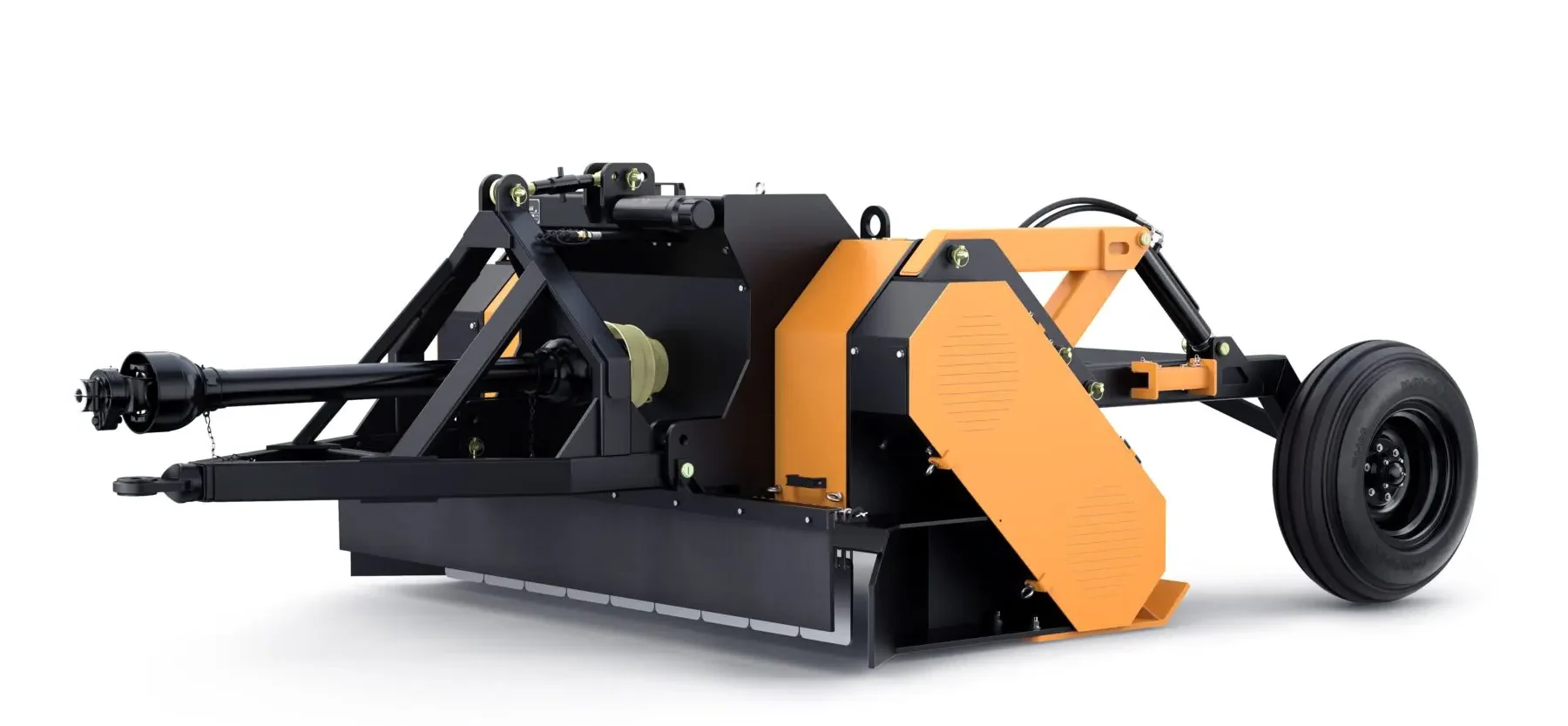
Wo werden Traktor-Steinbrecher eingesetzt?
Traktorbetriebene Steinbrecher werden in ganz Europa für eine Vielzahl von landwirtschaftlichen und zivilen Anwendungen eingesetzt. Die fünf häufigsten Anwendungsfälle sind:
Das Entfernen von Oberflächen- und Untergrundsteinen vor dem Säen oder Pflanzen reduziert den Verschleiß der Sämaschine, verbessert die Saatgutablage und beugt Schäden am Mähdrescher vor. Ein einziger Durchlauf mit einem Steinbrecher kann zwei bis drei zusätzliche Bodenbearbeitungsschritte vor dem Säen überflüssig machen.
Kompakte, leichte Modelle mit Arbeitsbreiten ab 1.110 mm eignen sich für die engen Reihenabstände europäischer Weinberge und Obstplantagen. Die Steinentfernung verbessert die Leistung der Erntemaschine und reduziert Reifenschäden während der Erntesaison, ohne die Wurzeln zu beschädigen.
Steinbrecher verdichten lose Oberflächensteine zu einer Fahrbahnbasis und verbessern so die Tragfähigkeit von Erntemaschinen und Viehtransportern bei allen Wetterbedingungen – ohne die Kosten für den Import von Schotter.
Mittelgroße und schwere Maschinen werden im Tiefbau eingesetzt, um verdichtete Gesteinsschichten vor dem Straßenbau aufzubrechen – dadurch verringert sich der Bedarf an mechanischem Aufbrechen und Abtransport von Zuschlagstoffen, und es entsteht eine verfestigte Unterbauoberfläche, die für den Straßenbau bereit ist.
Hochleistungsmodelle können Steine mit einem Durchmesser von bis zu 500 mm verarbeiten und eignen sich daher für die Forstrodung, die Vorbereitung von Brachflächen und großflächige Landgewinnungsprojekte, bei denen die Steindichte und -größe die Möglichkeiten leichterer Maschinen übersteigen.
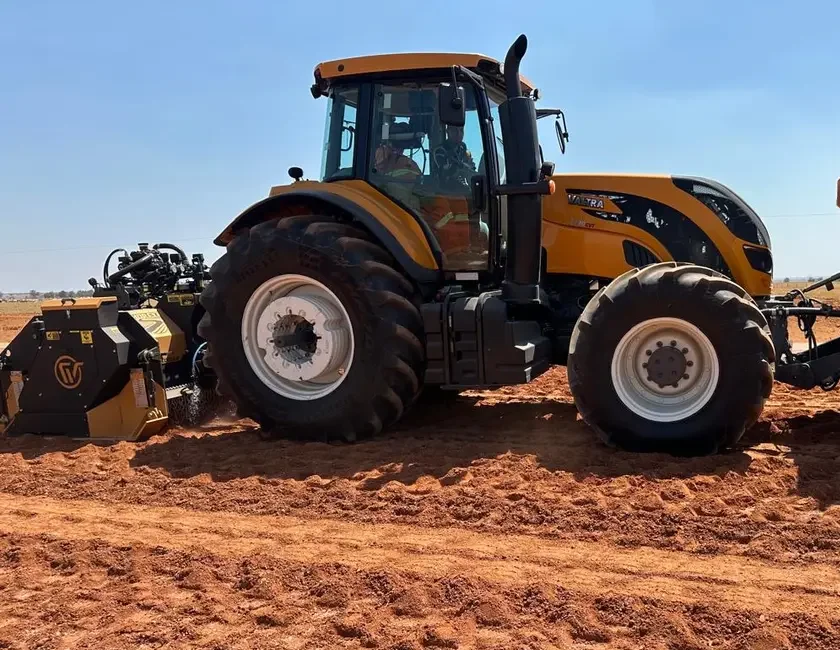
Häufig gestellte Fragen
Ein Traktor-Steinbrecher ist ein zapfwellengetriebenes Anbaugerät, das an der hinteren Dreipunktaufhängung eines Traktors befestigt wird. Er nutzt einen schnell rotierenden Rotor mit gehärteten Zähnen, um Steine im Boden zu zerkleinern und das zerkleinerte Material in einem Arbeitsgang direkt auf den Boden zurückzuführen – wodurch das Aufsammeln oder Abtransportieren der Steine entfällt.
Die Arbeitstiefe variiert je nach Baureihe: Leichte Modelle erreichen 150 mm, mittlere Modelle 200 mm und schwere Modelle 250 mm. Die tatsächliche Tiefe hängt auch von der Fahrgeschwindigkeit des Traktors und der Bodenhärte ab – langsamere Fahrten ermöglichen ein tieferes Eindringen in verdichtete oder lehmhaltige Böden.
Ein Steinbrecher ist speziell für den Einsatz mit Steinschlag konzipiert – verstärkter Rotor, gehärtete, steinbeständige Zähne, robustes Gehäuse. Ein Mulcher hingegen ist für organisches Material (Erntereste, Pflanzenreste, Äste) ausgelegt und nicht für den Einsatz mit Steinen geeignet. Die Verwendung eines Mulchers auf steinigem Boden führt zu schnellem Rotorschaden und zum Erlöschen der Garantie.
Leichte Steinbrecher sind ab 70 PS erhältlich (kompatibel bis 150 PS). Mittelklassegeräte decken 80–280 PS ab, und Schwerlastmodelle benötigen 280–400 PS. Die optimale Wahl hängt außerdem von der Zapfwellendrehzahl (540 U/min oder 1000 U/min), der Heckkraftheberkategorie und der Hinterachslast ab. Kontaktieren Sie unser Team, um die Kompatibilität mit Ihrem Traktormodell zu prüfen.
Sind Sie bereit, den passenden Steinbrecher für Ihren Traktor zu finden?
Wir liefern Steinbrecher für Traktoren von 70 PS bis 400 PS – CE-zertifiziert, permanent in den Niederlanden auf Lager und mit Original-Ersatzteilen innerhalb von 48–72 Stunden verfügbar. Kontaktieren Sie unser Team für eine individuelle Beratung und ein Angebot für die europaweite Lieferung.