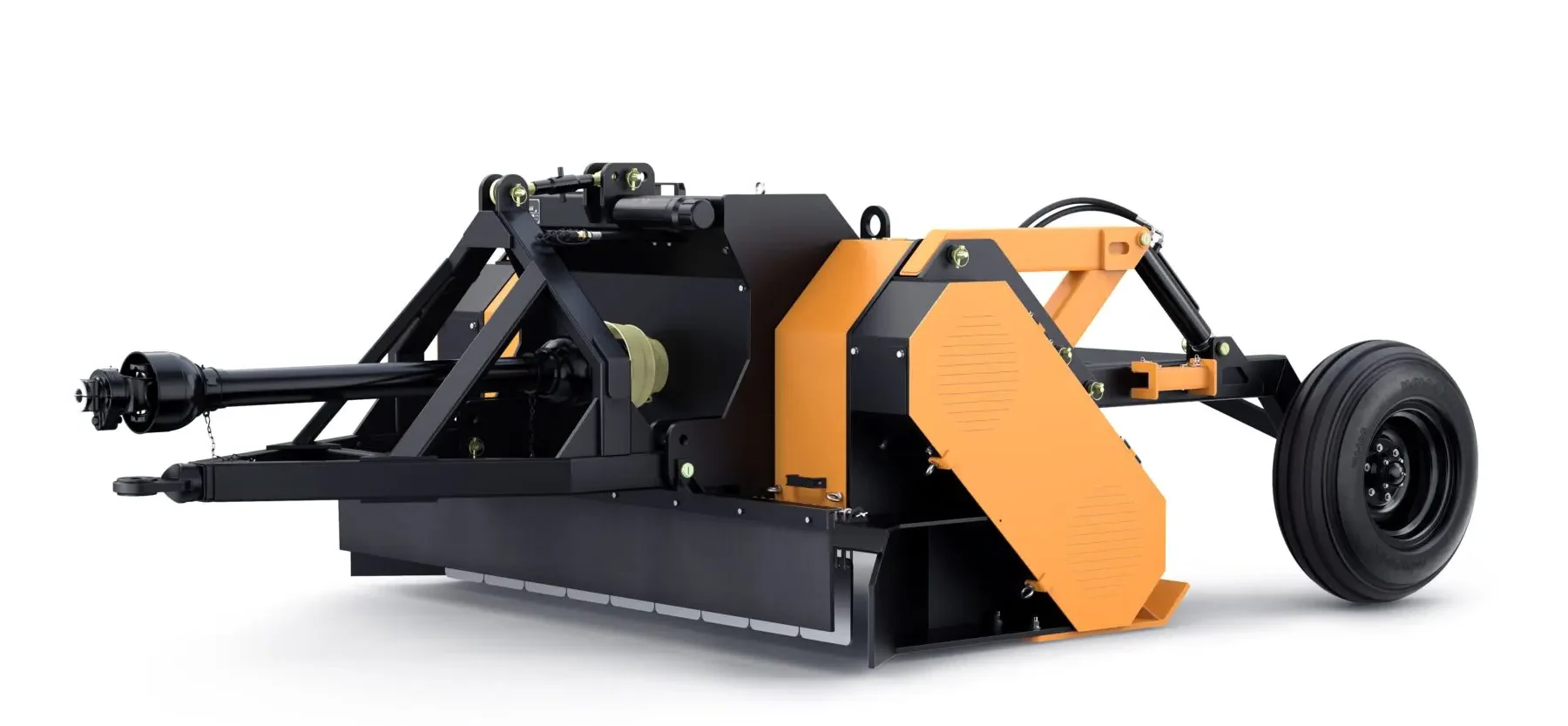
A tractor stone crusher is one of the most mechanically demanding attachments you can fit to a tractor. It operates at high rotor speeds, works against abrasive stone and soil, and puts continuous stress on teeth, bearings, belts, and gearbox components throughout every working hour. The difference between a machine that runs reliably for thousands of hours and one that fails mid-season is almost always maintenance discipline — not machine quality. This guide gives European operators a complete, scheduled maintenance framework for tractor-mounted stone crushers, covering daily checks through seasonal storage, with specific attention to the wear parts that most commonly cause downtime.
Why Maintenance Schedules Matter for Stone Crushers
Unlike most tractor attachments, a stone crusher generates extreme mechanical stress in every working cycle. The rotor impacts hundreds of stones per minute at tip speeds exceeding 80 km/h. Each impact transfers shock loads through the teeth, tooth holders, rotor body, bearings, drive shaft, gearbox, and ultimately into the tractor PTO. Any component that has degraded beyond its serviceable limit — even slightly — does not simply underperform. It accelerates wear on every connected component in the drivetrain.
A worn carbide tooth reduces crushing efficiency and causes the rotor to work harder for the same output, increasing heat and stress on the bearings and gearbox. A slack drive belt slips under peak load, generating heat that shortens belt life dramatically. A gearbox running on degraded oil loses its film strength precisely when it is needed most — during hard stone impacts.
Disciplined maintenance does not just prevent failures — it reduces cost per working hour, extends total machine life, and protects the resale value of the equipment. The schedule below is structured around the actual failure modes of tractor stone crushers operating in European agricultural and construction conditions.
Before Every Shift: The 10-Minute Pre-Start Check
Every working day begins with the same visual and tactile inspection before the PTO is engaged. This check takes 10 minutes and prevents the majority of in-field failures. It should be carried out with the machine stationary, tractor engine off, and PTO fully disengaged.
Carbide Teeth
Walk the full rotor length. Each tooth should have a visible carbide tip with no cracks, chips, or missing material. A tooth worn flush with the tooth holder has lost its cutting geometry and is no longer crushing efficiently — it is simply dragging. Flag any tooth at 60% of its original height for replacement within the next service window.
Tooth Holders
Check each holder for cracks at the base weld and for rotation — a loose holder will have visible movement when pushed by hand. Loose holders cause uneven rotor balance, which generates vibration that accelerates bearing failure. Tighten or replace any holder showing movement before starting the machine.
Drive Belts
Press each belt at the midpoint of the longest run. Correct tension allows approximately 15–20 mm of deflection under moderate thumb pressure. Belts that deflect more than 25 mm are running slack and will slip under load. Check belt surfaces for glazing, cracking along the sidewalls, or fraying at the edges — any of these signals imminent failure.
Crushing Chamber
Rotate the rotor by hand a full turn. It should move freely with no binding, scraping, or irregular resistance. Any contact between the rotor teeth and the chamber walls or anvil indicates a bent tooth holder, a shifted anvil, or a foreign object lodged in the chamber. Do not engage the PTO until the cause is found and resolved.
Rear Door
Verify the hydraulic rear door opens and holds its set position. The door controls the output particle size — a door that drifts under pressure produces inconsistent material gradation and increases rotor load by retaining oversized fragments in the crushing chamber.
PTO Guards
Verify the full-length PTO shaft guard is in place and rotates freely around the shaft. A missing or cracked guard is a safety violation in all EU member states and voids machine insurance coverage on public works contracts. Replace damaged guards before operating.
Every 50 Hours: Lubrication and Wear Assessment
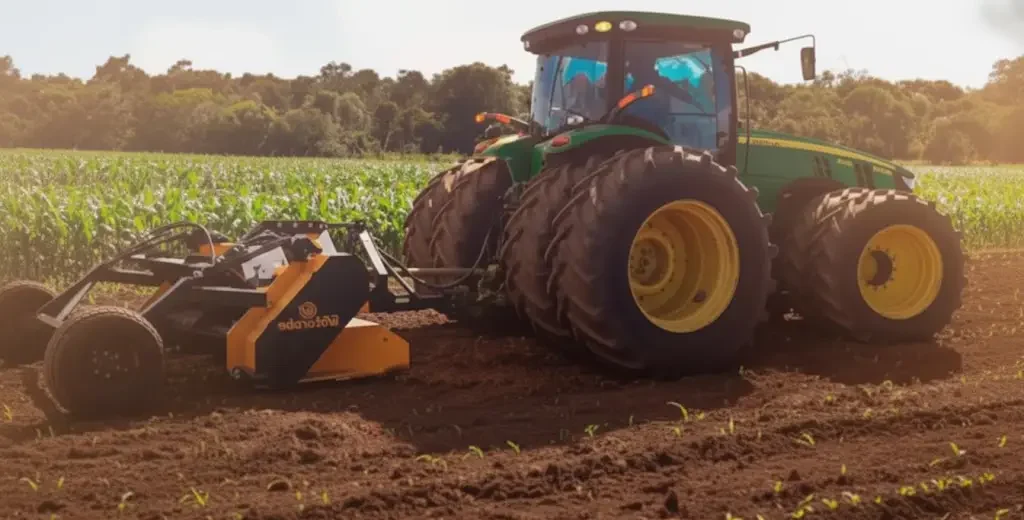
At every 50 working hours — which for a farm contractor running the machine full days during land preparation season represents approximately one week of intensive use — a more thorough service is required. This interval is the most important in the entire maintenance schedule.
Bearing Lubrication
Grease all rotor bearing points using the manufacturer-specified grease — typically EP2 lithium complex or equivalent. On the THOR series, there are two main rotor bearings and two side bearing points. Apply three to five pumps of grease per point and rotate the rotor slowly by hand after greasing to distribute the lubricant evenly through the bearing race. Never over-grease — excess grease in sealed bearings causes overheating.
Belt Tension Adjustment
New belts stretch by 2–3% during their first 20 hours of operation. After 50 hours, re-tension to specification using the tensioner adjustment bolt. Record the belt deflection measurement at each service — a belt that requires progressively more tensioning is approaching the end of its serviceable stretch range and should be scheduled for replacement within the next 100 hours.
Tooth Wear Measurement
Measure the carbide tip height on three representative teeth across the rotor width using a vernier calliper or wear gauge. Compare against the new-tooth reference dimension in the machine manual. When average tip height reaches 60% of the new dimension, plan replacement. When any tooth reaches 40% — regardless of the average — replace immediately to prevent tooth holder damage from direct rock contact.
Hydraulic Connections
Inspect all hydraulic hose connections at the rear door cylinder, depth skids, and side-shift linkage for weeping or seepage. Wipe each connection clean and run the machine through full door and skid range of motion, then inspect again for new seeping. A weeping connection ignored for 50 hours becomes a hose failure at 100 hours — and hydraulic fluid on hot stone introduces a fire risk.
Fastener Check
Stone crusher vibration is severe enough to loosen fasteners even when correctly torqued at installation. At every 50-hour service, apply a torque wrench to all tooth holder bolts, rotor end cap fasteners, and machine frame-to-hitch bolts. Use the manufacturer torque specifications — undertightening causes loosening in the next cycle; overtightening causes fatigue cracking at the bolt head.
Depth Skid Wear
The depth skids control working depth by riding on the surface ahead of the rotor. As skids wear down, the effective working depth increases beyond the set point — the rotor cuts deeper than intended, overloading the drivetrain and producing inconsistent output particle size. Measure skid thickness at each 50-hour service and replace skids when worn to 50% of original thickness.
Every 250 Hours: Gearbox and Drive System Service
The 250-hour service interval addresses the components with longer service lives but whose failure carries the highest repair cost: the gearbox, belt set, and PTO drive shaft assembly.
| Component | Action at 250 Hours | Specification |
|---|---|---|
| Gearbox oil | Drain and refill with fresh oil. Inspect the drained oil for metal particles — fine metallic sheen is normal; visible chips or flakes indicate gear or bearing wear requiring investigation before continuing operation. | GL-5 80W-90, manufacturer-specified volume |
| Belt set replacement | Replace the full belt set as a matched set — never replace individual belts from a multi-belt drive. Mixed-age belts have different stretch characteristics and load share unevenly, causing the newest belt to carry disproportionate load and fail prematurely. | Manufacturer matched set only |
| PTO shaft inspection | Disassemble the PTO drive shaft, clean all universal joint crosses, and inspect for pitting or discolouration on the bearing cups. Regrease all crosses and reassemble. Check telescoping tube overlap — minimum 150 mm engagement required at maximum extension. | EP2 grease on all cross bearings |
| Pulley inspection | Inspect drive and driven pulleys for groove wear — run a straight edge across the groove; worn grooves show a concave profile that reduces belt contact area. Replace pulleys showing more than 2 mm groove depth reduction from the new specification. | Max 2 mm groove wear |
| Bearing condition check | With the rotor at rest, hold each bearing housing and attempt to move the rotor shaft axially and radially. Any detectable play beyond 0.1 mm indicates bearing wear. Running a worn bearing to failure damages the rotor shaft and bearing housing — components far more expensive than the bearing itself. | Max 0.1 mm radial play |
Carbide Tooth Replacement: The Most Common Wear Event
Carbide-tipped teeth are the primary wear consumable on any stone crusher. Their service life varies substantially depending on the type of stone being processed: softer limestone may allow 200+ hours per tooth set, while basalt or granite can reduce life to 60–80 hours. Abrasive sandy soils with fine silica particles cause accelerated wear even when the stones themselves are soft.
Tooth Replacement Decision Rules
Replace the full rotor set when average tooth height reaches 60% of new-tooth specification — never replace individual teeth, as mismatched heights introduce rotor imbalance.
Replace immediately if any tooth shows a missing carbide tip or a crack running into the steel body — operating with a broken tooth causes the tooth holder below it to take direct stone impact, leading to rapid holder failure.
Use only genuine manufacturer teeth — aftermarket teeth with different carbide grades shift the rotor balance and wear profile, potentially voiding the machine warranty and causing premature holder wear.
After replacing the full tooth set, run the machine for 30 minutes at reduced working depth before returning to full operating conditions — this beds-in the new teeth and allows any installation stresses to settle before maximum load is applied.
Watanabe Netherlands holds genuine THOR series wear parts — carbide teeth, tooth holders, belts, and bearings — in stock at its Netherlands warehouse, with delivery within 48 to 72 hours to most EU destinations. This is the key operational advantage of sourcing from a European-based supplier versus waiting weeks for parts from overseas. For the full range of available tractor stone crusher machines and configurations, visit the product section.
End-of-Season Storage: Protecting the Machine Over Winter
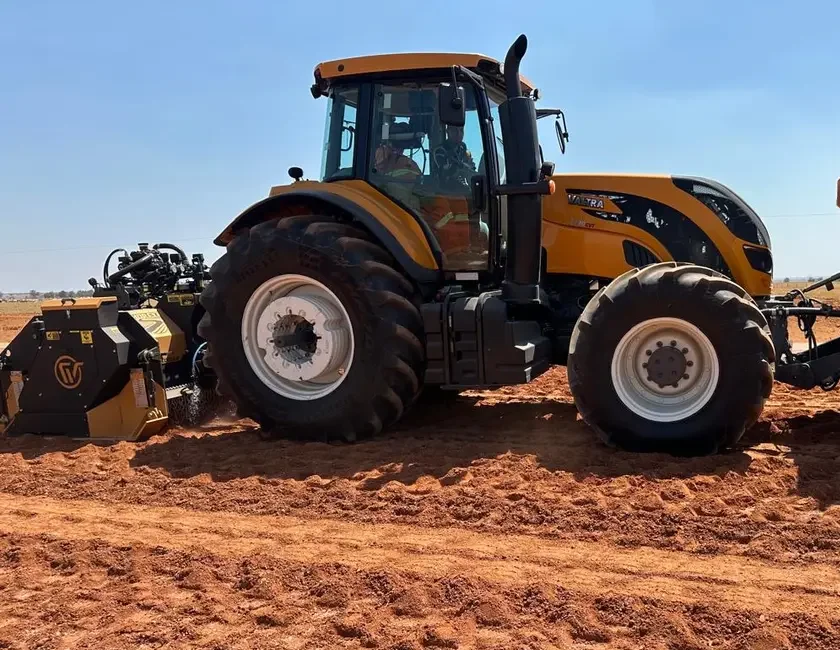
For operators who store their stone crusher over winter — typically from November to March in northern European climates — the storage procedure carried out in autumn directly determines how much remedial work is needed before the machine returns to service in spring. Poor storage practices are responsible for a disproportionate share of belt failures, bearing corrosion, and seized tooth holders encountered at the start of each new season.
Thorough cleaning before storage
Pressure-wash the entire machine, paying particular attention to the crushing chamber interior, the rotor face, and any areas where soil has packed into gaps around tooth holders. Soil retained over winter holds moisture against metal surfaces and causes accelerated corrosion at tooth holder bases and frame welds.
Full lubrication cycle
Grease all bearing points to capacity before storage — not after. Fresh grease displaces any moisture that has entered the bearing housing during the last working days of the season. Change the gearbox oil at this point even if the 250-hour interval has not been reached — used oil contains suspended metal particles and combustion products that cause corrosion of gear and bearing surfaces during the static storage period.
Belt slackening
Reduce belt tension to approximately 50% of operating tension for the storage period. Belts held at full tension for months while static develop permanent set — a slight elongation in the loaded section that cannot be fully recovered even after re-tensioning. Slackened belts in a dry, covered store retain their original flexibility and tension capacity for the following season.
Hydraulic cylinder rod protection
Retract all hydraulic cylinders fully so the polished rod surfaces are inside the cylinder body, protected from atmospheric moisture. If full retraction is not possible due to geometry, apply a light coat of corrosion inhibitor spray to any exposed rod surface. Rod pitting causes seal failure — and a leaking hydraulic cylinder on a public works contract is a regulatory compliance issue, not just a maintenance problem.
Order replacement parts during winter
Use the winter period to assess which wear parts will need replacement before or during the next season — teeth approaching 60% wear, a belt set with 200 hours on it, depth skids at 60% thickness. Order these parts in advance rather than in the first week of the working season when demand peaks. Watanabe Netherlands maintains Netherlands stock for 48 to 72 hour delivery, but forward planning eliminates any risk of a parts delay at the busiest point of the working year.
The Role of the PTO Drive Shaft in Stone Crusher Reliability
The PTO drive shaft connects the tractor output to the stone crusher gearbox input. It is subjected to the full transmitted torque of the system plus the torsional shock loads generated by each stone impact. PTO shaft universal joint failures on stone crushers are disproportionately common compared with lighter implements — because the shock loading profile is far more severe than for rotary cutters or balers operating at steady-state conditions.
The 250-hour universal joint inspection and the pre-season bearing check are the two most important interventions for preventing PTO shaft failure. SSJ Group, a specialist supplier of PTO shafts for agricultural machinery, provides detailed guidance on universal joint inspection, cross replacement, and correct telescoping overlap for high-torque applications — useful reference material for operators maintaining stone crushers in demanding operating conditions.
When specifying a replacement PTO shaft for a stone crusher, always verify the rated torque capacity against the machine manufacturer specification — not against the rating of the original shaft length. Shafts shortened at the workshop to fit a specific tractor-implement combination have reduced torque capacity compared with their rated full-length specification. For the THOR series, consult Watanabe Netherlands technical support to verify the correct PTO shaft specification for your tractor model and working configuration. Details of the full THOR stone crusher range, including THOR 2.4 AR specifications, are available on the product pages.
Maintenance Schedule Summary
| Interval | Key Tasks | Critical Check |
|---|---|---|
| Pre-shift (daily) | Teeth visual, belt tension, chamber rotation, door function, PTO guard | Free rotor rotation — no binding |
| Every 50 hours | Grease bearings, re-tension belts, measure tooth wear, check hydraulics, torque fasteners, inspect skids | Tooth height at or above 60% of new |
| Every 250 hours | Change gearbox oil, replace belt set, inspect PTO shaft crosses, check pulley grooves, measure bearing play | Oil colour and particle content |
| As needed | Full tooth set replacement when average height reaches 60% or any tooth reaches 40% | Replace full set — never individual teeth |
| End of season | Full clean, grease all points, change gearbox oil, slacken belts, retract cylinders, order winter parts | Belts slackened for storage |

Following this maintenance schedule consistently will extend the operational life of a tractor stone crusher well beyond 2,000 hours. The machines that fail prematurely almost always share the same history: deferred tooth replacement, intervals between bearing greasing that stretched from 50 hours to 150, and end-of-season storage that skipped the cleaning and oil change steps. The cost of consumables consumed on schedule is a fraction of the cost of a gearbox replacement or rotor rework caused by running past serviceable limits.
Need Genuine Parts Delivered to Your Site?
Watanabe Netherlands holds carbide teeth, belts, bearings, and seals for the full THOR stone crusher range in Netherlands stock. Most orders ship within 48 hours to anywhere in the EU. Contact our technical team for part numbers and current availability.