If you are replacing seed drill coulters every one or two seasons, sharpening them mid-drilling campaign, or slowing down on known stony fields to protect your investment — you already know the problem. Stones in the seedbed are one of the most persistent and quietly expensive issues in European arable farming. The cost is not just the coulters themselves: it is the lost drilling time, the inconsistent seed placement, the uneven emergence, and the yield penalty that compounds across every stony field every single season.
This article explains exactly why stones cause disproportionate coulter wear, why the damage gets worse as the drill ages, and why a tractor stone crusher is the only solution that actually eliminates the problem permanently — rather than managing it year after year.
The hidden costs beyond the coulter itself
Why the problem gets worse over time
Why temporary fixes don’t work
The permanent fix explained
Which stone crusher for your tractor
Häufig gestellte Fragen
Why Stones Cause Disproportionate Coulter Wear
A seed drill coulter is designed to cut through soil — a relatively compliant medium that deforms and parts around the blade as it passes through. Soil wear on a coulter is gradual and predictable. Stone contact is neither.
When a moving coulter tip contacts a stone — even a stone of 40–60mm diameter — the impact is concentrated on the hardened cutting edge at the point of deepest penetration. The stone does not deform. The coulter does. Every stone strike removes a microscopic amount of material from the cutting edge, rounds the tip profile, and reduces the coulter’s ability to cut a clean slot in subsequent passes. After enough contacts, the coulter is no longer cutting — it is pushing soil aside. The result is a wider, shallower slot with poor consolidation around the seed, inconsistent depth, and reduced emergence rates.
On heavily stoned fields, a single drilling campaign can generate thousands of stone contacts per coulter — an abrasive load equivalent to several years of normal soil wear in clean conditions. This is why operators on stony land replace coulters two to four times faster than the manufacturer’s expected service life suggests.
The Hidden Costs Beyond the Coulter Itself
Coulter replacement cost is the visible part of the stone damage bill. The costs that are harder to see — but equally real — accumulate across every stony field every season:
Coulter discs, tines, press wheels, and seed tubes all wear faster in stony conditions. For a 6-metre drill on heavily stoned land, annual wear parts expenditure can run to several thousand euros — recurring every season without end.
Most operators reduce forward speed by 20–40% on known stony fields to protect the drill. On a farm with 150 hectares of stony ground, this adds 15–25 additional hours to the drilling campaign — time with a direct fuel and opportunity cost, and a risk of missing the optimal drilling window in a narrow autumn.
Worn coulters produce inconsistent seeding depth — seeds placed too shallow are exposed to frost, drought, and surface predation; seeds placed too deep germinate late and produce weaker plants. The yield penalty from inconsistent emergence on stony ground is measurable and compounds across every field every season.
Stone contact does not just wear coulters — it stresses the entire drill frame, coulter arm springs, and press wheel axles. Drills used regularly on stony fields show measurably faster structural wear than those used on clean ground, reducing the machine’s useful life and resale value.
Why the Problem Gets Worse Each Season
Many farmers manage stony fields for years without treating the stone problem directly — and over time find that the situation gradually deteriorates rather than stabilising. There is a well-understood reason for this.
Ploughing and deep cultivation repeatedly bring previously buried stones to the surface from below the previous season’s working depth. Fields that appear moderately stony in Year 1 often have a substantially larger stone population at 25–35cm depth — material that has never been near the surface before. Each autumn ploughing brings a fresh cohort of this buried material upward into the seedbed layer.
On a newly cultivated field or one that has been deep-ploughed for the first time, the first two to three seasons will often see the highest surface stone burden — as the pool of buried material is progressively exposed. Without a stone crusher treatment, this cycle continues indefinitely. Managing the surface symptoms (replacing coulters, slowing down) never reduces the underlying stone population.
The only way to break this cycle is to treat the stone population at depth — eliminating stones throughout the plough layer, not just at the surface — so that subsequent cultivation cycles bring up pulverised fragments rather than intact stones.
Why Temporary Fixes Do Not Solve the Problem
When coulter wear from stones becomes a serious problem, most operators reach for one of three responses. Each addresses the symptom — not the cause:
Premium tungsten carbide or boron steel coulters wear more slowly — but they still wear. They cost 3–5× as much per unit and still need replacing on heavily stoned land. The stone problem remains; you are simply paying more to manage it more slowly.
Drilling shallower reduces coulter contact with sub-surface stones — but also reduces seed placement quality, increases vulnerability to frost heave, and is not agronomically appropriate for most cereal crops. Trading stone contact for yield consistency is not a solution.
A rock picker removes surface stones — but only the ones visible at the surface after cultivation. Sub-surface stones within the drilling depth remain. After the next ploughing, the surface population is replenished from below. A rock picker must be used every season on every stony field — it never reduces the underlying problem.
The Permanent Fix: A Single Stone Crusher Pass
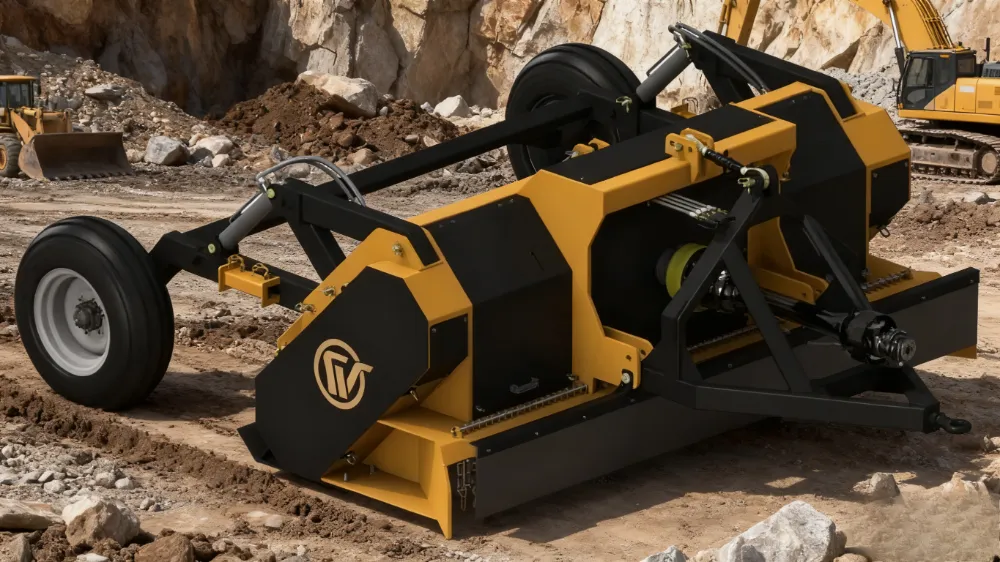
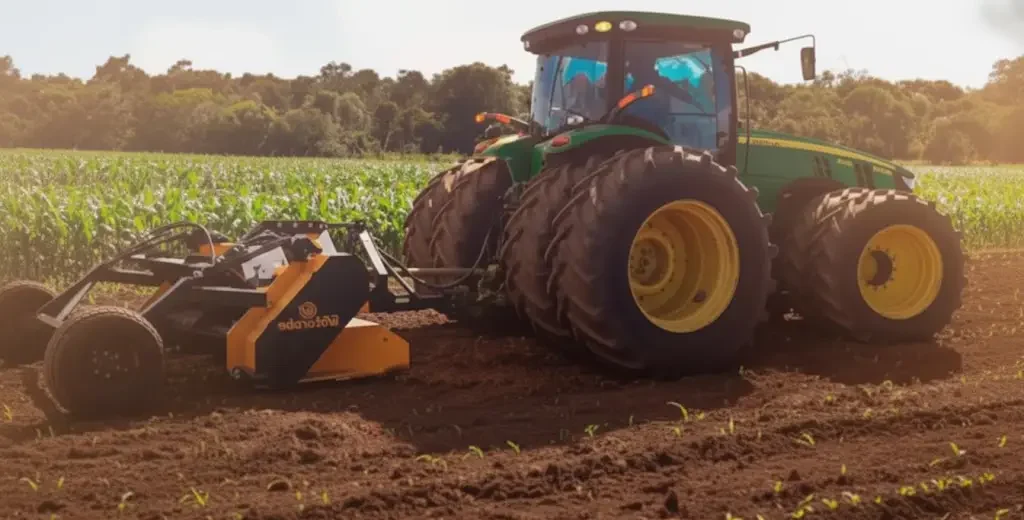
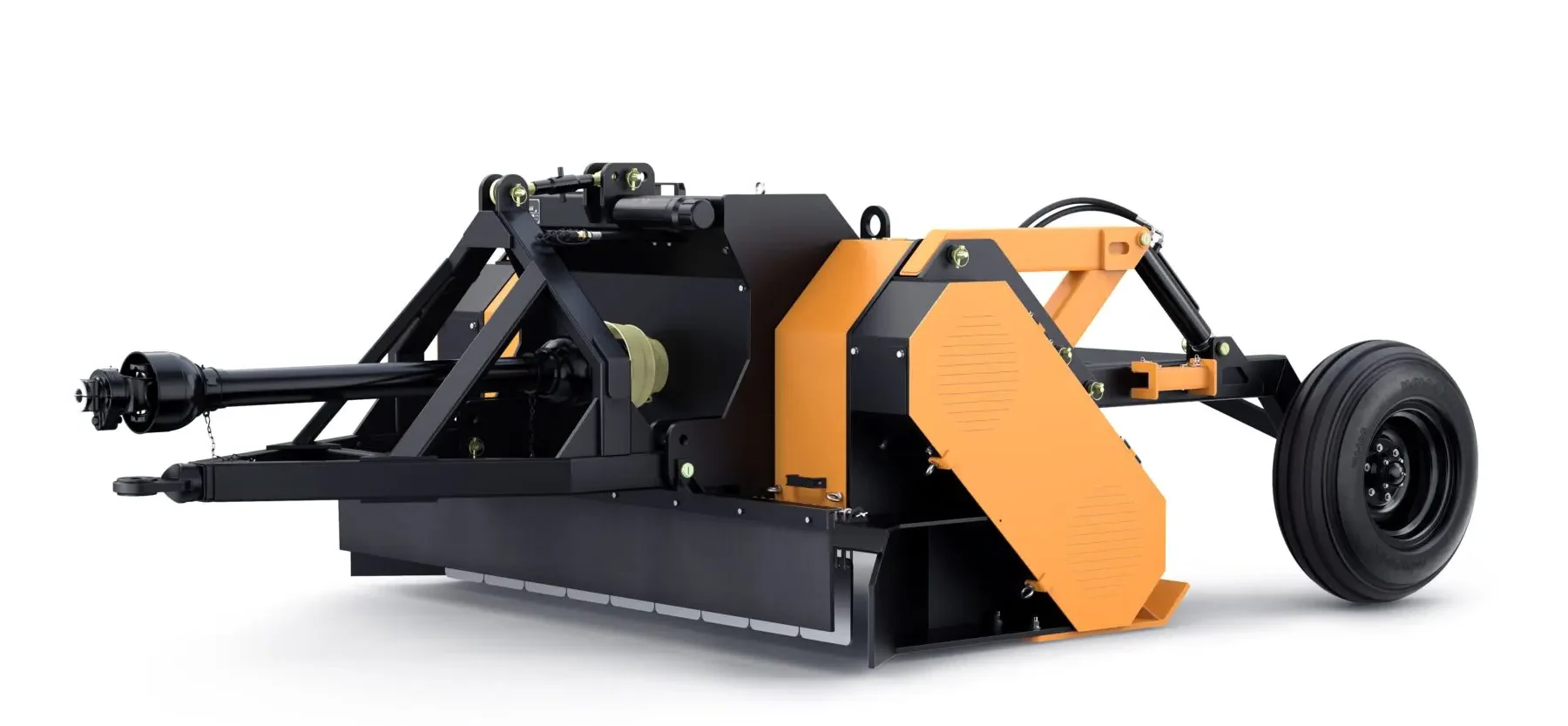
A tractor-mounted stone crusher does something that no other field operation achieves: it permanently destroys the stones in the treated zone. The machine’s high-speed rotor — driven through the PTO shaft from your tractor — pulverises stones throughout the working depth into fragments too small to cause any further coulter contact or equipment damage. The crushed material is returned to the soil in the same pass.
Once a stone has been crushed to sub-centimetre fragments, it cannot reconstitute itself. It cannot surface as an intact stone in any future cultivation cycle. The stone population in the treated zone is permanently reduced — not managed, not moved, not temporarily cleared. Eliminated.
The PTO drive system that powers the stone crusher rotor handles high shock loads by design — for a technical explanation of how PTO shaft systems manage the transmission demands of heavy implements, this guide to common PTO shaft issues covers the relevant principles.
The practical result in the field is straightforward: in the first season after stone crusher treatment, drill coulter wear on the treated fields drops dramatically. By the second season, operators routinely report running through entire drilling campaigns without a single coulter replacement on previously problematic fields. Working speeds return to the normal operational range. Emergence is uniform. The recurring annual cost of managing stony ground is eliminated.
- Coulters replaced every 1–2 seasons
- Drilling speed reduced 20–40% on stony fields
- Inconsistent seed depth → uneven emergence
- Annual stone management cost — recurring
- Problem worsens as ploughing exposes more stones
- Combine header stones risk at harvest
- Coulter wear drops to normal soil-only levels
- Full drilling speed restored on treated fields
- Consistent seeding depth → uniform emergence
- Stone management cost eliminated — permanent
- Sub-surface stone population permanently reduced
- Combine header risk eliminated in treated zone
Which Stone Crusher Do You Need to Protect Your Drill?
The right machine depends on three things: the maximum stone size present in your soil, your tractor’s horsepower, and the working width that matches your tractor’s power and your field size. Here is a quick guide:
| YOUR SITUATION | Recommended Series | Max Stone | Arbeitstiefe | Tractor HP |
|---|---|---|---|---|
| Match Your Stone Size to the Right Series | ||||
| Stones mainly under 150mm — typical arable, vineyard | Leichte Beanspruchung (STCL) | 150 mm | 150 mm | 70–150 PS |
| Stones up to 300mm — heavier post-glacial soils | Mittelklasse (STCM) | 300 mm | 200 mm | 80–280 PS |
| Occasional large rocks over 300mm | Mittelklasse-HP (STCM/HP) | 300 mm | 200 mm | 200–280 PS |
| Rocks up to 500mm — heavy clay, reclamation land | Hochleistungsversion (STCH) | 500 mm | 250 mm | 280–400 PS |
| Drilling System Guidance | ||||
| Direct drill / min-till — coulters at 30–50mm depth | STCL at reduced depth setting | Prioritise working to 100–120mm — targets the critical seedbed horizon | ||
| Conventional drill — coulters at 40–60mm depth | STCL or STCM depending on stone size | Full working depth treatment before drilling — best results | ||
| Disc drill on heavy land with large stones | STCM or STCM/HP | Discs are more vulnerable to large stones — specify mid-range minimum | ||
If you are operating a direct drilling or strip-till system — or planning to convert — stone crusher treatment is even more critical than in conventional tillage. Direct drills work the soil at 30–50mm depth, leaving their coulters with almost no margin to avoid stones in the upper profile. Converting to direct drilling without addressing the stone burden first is one of the most common causes of early drill failure in stony European soils.
Häufig gestellte Fragen
Yes — the improvement is immediate and measurable in the first drilling campaign after treatment. Stone crusher treatment eliminates the stones in the treated zone at working depth. In the following drilling pass, coulters operate in a seedbed with dramatically reduced stone content. Operators typically report a step-change reduction in coulter wear from the very first season after treatment on the treated fields.
No. Stone crusher treatment is a one-time or infrequent operation, not a seasonal pass. Once the stone population in the plough layer has been treated, the crushed material cannot reconstitute itself. In subsequent seasons, deep cultivation may bring some previously deeper-buried material to the surface — a follow-up pass in years two or three is sometimes useful on heavily stoned fields, but the initial treatment delivers the majority of the long-term benefit.
For farms with significant stony ground, yes — substantially so. Premium coulters reduce wear rate but do not eliminate stone contact. You continue to pay a premium for parts every season indefinitely. A stone crusher is a capital investment that permanently removes the cause of the problem. The payback period depends on farm size and stone severity — on heavily stoned farms above 100 hectares, payback within two to three seasons is common when all stone-related costs (parts, labour, speed loss, yield impact) are included.
Contact our team at [email protected] with your tractor make, model, horsepower, and a description of your stone conditions — approximate stone sizes, whether stones are mainly surface or sub-surface, and your approximate field area. We will recommend the right series and working width and provide a delivery quotation to your location across Europe within one working day.
Stop Replacing Coulters. Eliminate the Stones.
Tell us your tractor horsepower, approximate stone sizes, and field area. Our team will confirm the right model and provide a no-obligation delivery quotation across Europe within one working day.