Introduction
In the rugged landscapes of modern agriculture and construction, dealing with rocky terrain often presents significant challenges. Imagine a farmer in the Netherlands preparing a field for planting, only to encounter stubborn stones that hinder soil preparation and damage equipment, or a road construction team in Belgium facing uneven ground that compromises the stability of new infrastructure. These scenarios highlight the critical role of a stone crusher—a heavy-duty machine designed to reduce rocks, stones, and debris into smaller, manageable particles. But what is a stone crusher used for? This question is central to understanding its versatility across industries.
A stone crusher is essentially a mechanical device that applies force to break down large rocks into finer aggregates, facilitating their use in various applications. From enhancing soil quality in farming to creating stable bases for roads, stone crushers address practical problems by transforming obstacles into usable resources. Whether you are in agriculture, construction, or land management, understanding stone crushers can optimize operations and reduce costs. Let’s delve into the mechanics and applications to see how these machines drive productivity.
What is a Stone Crusher?
A stone crusher is a specialized piece of equipment engineered to fragment large rocks and stones into smaller sizes through mechanical force, making them suitable for further processing or direct use. At its core, the machine operates by applying compressive, impact, or shear forces to break down materials. Key components typically include a robust frame, rotors or jaws for crushing, hammers or blades for impact, and hydraulic systems for control and adjustment. For instance, in tractor-mounted variants, the stone crusher attaches to the tractor’s three-point linkage, drawing power from the PTO (power take-off) shaft to drive the crushing mechanism.
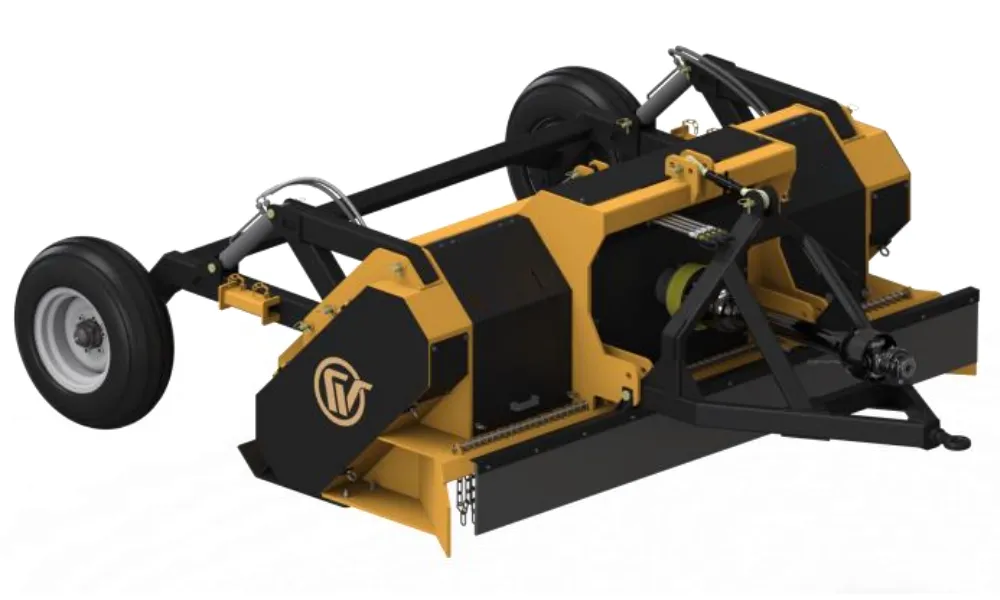
The evolution of stone crushers traces back to the industrial revolution, when manual labor and simple tools like hammers were replaced by steam-powered machines for mining and quarrying. Over time, advancements led to modern designs, particularly mobile and tractor-attached models that emphasize portability and efficiency. Today, tractor stone crushers represent a significant innovation, allowing on-site operation without the need for fixed installations. This differentiation is crucial: fixed crushers are stationary and suited for large-scale quarries, while mobile or tractor-attached versions provide flexibility for variable terrains.
In the context of our offerings at Watanabe Netherlands, tractor stone crushers are tailored for European conditions, featuring durable construction to handle abrasive rocks and integrated safety features like overload protection. These machines not only crush stones but also mix them into the soil, improving texture and drainage. A labeled diagram would illustrate this: the intake hopper feeds rocks to the rotor, where high-speed hammers pulverize them, and adjustable screens control output size. This process ensures consistent results, whether for agricultural land clearing or road base preparation, underscoring the stone crusher’s role as an indispensable tool in resource management.
Types of Stone Crushers
Stone crushers come in various types, each optimized for specific materials, reduction ratios, and applications. Classification can be based on the crushing mechanism—compressive, impact, or shear—or by mobility, such as fixed versus mobile units. For professionals in agriculture and construction, understanding these types is essential to selecting the right equipment.
Compressive crushers, like jaw crushers, work by squeezing rocks between two plates. Jaw crushers are ideal for primary crushing of hard, abrasive materials, offering high throughput but producing more irregular shapes. Impact crushers, including horizontal shaft impactors (HSI) and vertical shaft impactors (VSI), use high-speed collisions to fracture rocks, resulting in cubical aggregates suitable for concrete production. Cone crushers, a subset of compressive types, provide finer outputs through layered crushing in a cone-shaped chamber, making them perfect for secondary or tertiary stages.
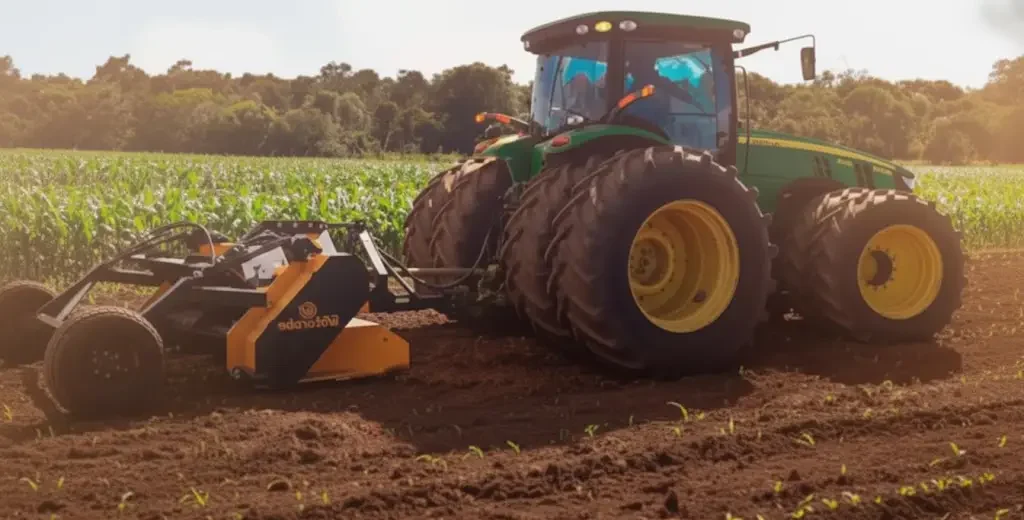
In our focus area, tractor-mounted stone crushers stand out for their versatility. These mobile units attach to tractors via three-point hitches, drawing power from the PTO. Agricultural stone crushers, for example, are designed for land preparation, featuring lighter frames and adjustable depths to avoid soil compaction. Road construction stone crushers, on the other hand, emphasize durability with reinforced rotors to handle aggregates for base layers.
To clarify key features, consider the following comparison table:
| Type | Key Mechanism | Power Requirement | Typical Width | Suitability |
|---|---|---|---|---|
| Jaw Crusher | Compression | High (200+ hp) | Fixed | Primary crushing, hard rocks |
| Impact Crusher | High-speed impact | Medium (150 hp) | 2-4 m | Aggregates, cubical shapes |
| Cone Crusher | Layered compression | High (180 hp) | Fixed | Secondary/tertiary, fine outputs |
| Tractor-Mounted | Rotor hammers | Low-Medium (80+ hp) | 3.0-3.6 m | Mobile, agriculture/construction |
This table highlights how tractor stone crushers, like those from Watanabe Netherlands, offer balanced performance with lower power needs, targeting long-tail queries such as “tractor stone crusher types for agriculture.” By choosing the appropriate type, users can achieve optimal efficiency tailored to their operational demands.
Primary Uses of Stone Crushers
Stone crushers serve a wide array of purposes, primarily in reducing oversized rocks to usable sizes, thereby facilitating efficient resource utilization. In agriculture, agricultural stone crushers are employed for land preparation, where they pulverize rocks to create arable soil. This process not only removes obstacles that could damage planting equipment but also mixes crushed stone into the soil, enhancing drainage and nutrient retention. For instance, a Dutch farm in the Flevoland polders used a tractor stone crusher to clear rocky fields, resulting in a 20% increase in crop yields by improving soil structure.
In construction and infrastructure, road construction stone crushers play a pivotal role in creating stable base layers. By crushing on-site aggregates, stone crusher machines recycle materials, reducing the need for imported gravel and lowering project costs. A real-world example from a highway expansion in Belgium involved using a stone crusher to process local rocks, achieving superior load-bearing capacity and completing the base layer ahead of schedule. Beyond these, stone crushers extend to forestry for debris clearing, mining for ore pre-processing, and environmental remediation for soil recycling in contaminated sites.
Other extensions include landscape management, where crushers prepare grounds for parks or golf courses by eliminating surface rocks, and industrial applications like producing gravel for railways. In each use, benefits such as efficiency—through one-pass operations—and cost savings—from material recycling—are evident. Environmentally, they promote sustainability by minimizing quarry dependency and reducing transport emissions.
Benefits and Advantages
The adoption of stone crushers offers substantial benefits, starting with enhanced efficiency and productivity. By enabling one-pass operations, these machines significantly reduce time spent on material processing, allowing projects to progress faster. For example, tractor stone crushers can cover large areas quickly, minimizing labor requirements and operational downtime.
Durability and cost-effectiveness are also key advantages. Constructed with high-strength materials, modern stone crushers withstand abrasive rocks, leading to lower maintenance needs and longer service life. This translates to long-term ROI, as users avoid frequent replacements. Safety features, such as guards and automatic overload protection, further mitigate risks, ensuring operator well-being in hazardous environments.
Environmentally, stone crushers support sustainable practices by recycling on-site materials, reducing the carbon footprint associated with transporting aggregates. Product-specific advantages from Watanabe Netherlands include compatibility with 80+ hp tractors, making them accessible for small to medium operations. Overall, these benefits position stone crushers as essential tools for optimizing resource use and achieving high-quality results.
How to Choose the Right Stone Crusher
Selecting the appropriate stone crusher requires careful consideration of several factors to ensure it aligns with operational needs. First, evaluate tractor power, as models vary in requirements—opt for those compatible with your equipment, such as 80+ hp for tractor stone crushers. Working width is crucial; narrower options suit small farms, while wider ones (3.6m) are ideal for large-scale road projects.
Terrain type influences choice: agricultural stone crushers perform best on soft soils, whereas road construction stone crushers handle harder aggregates. Budget considerations include initial cost, maintenance, and fuel efficiency—look for durable models with low operating expenses. Procurement tips involve checking CE certification for safety compliance and warranty terms for reliability.
Encourage exploring our catalog at Watanabe Netherlands or requesting a quote to match your specific requirements.
Conclusion
In summary, stone crushers are versatile machines essential for breaking down rocks in agriculture, construction, and beyond, offering efficiency, durability, and environmental benefits. From land preparation to road building, their applications enhance productivity and sustainability. For expert advice or to purchase a stone crusher tailored to your needs, contact Watanabe Netherlands today—explore our range and elevate your operations.
Frequently Asked Questions (FAQ)
What horsepower is needed for a tractor stone crusher? Typically, 80+ hp is sufficient for standard models, but heavier duties may require 150+ hp to maintain efficiency.
How does a stone crusher differ from a soil stabilizer? A stone crusher focuses on reducing rocks to aggregates, while a soil stabilizer mixes binders like lime for ground strengthening; they often complement each other in construction.
What are the maintenance requirements for a stone crusher? Regular inspections of hammers, rotors, and hydraulics are essential, with replacements every 500–1000 hours depending on usage.
Can stone crushers be used for recycling? Yes, they effectively process construction debris into reusable aggregates, promoting sustainability.
What safety features should a stone crusher have? Look for overload protection, guards, and emergency stops to prevent accidents.
How much does a stone crusher cost? Prices vary from €10,000 for basic models to €50,000+ for advanced tractor-mounted versions; contact us for quotes.
Are stone crushers environmentally friendly? When used for on-site recycling, they reduce transport emissions and quarry impacts.