Land preparation is not a single operation — it is a sequence of operations, each dependent on the one before it. Whether the objective is agricultural cultivation, road construction, forestry reclamation, or converting rough ground to productive use, the same principle applies: the right machine at each stage of the sequence determines the quality of every stage that follows. This guide maps the complete land preparation process from initial clearance to final cultivation, identifies the correct equipment for each phase, and explains how the full Watanabe Netherlands product range covers the sequence from end to end — with a single European supplier, a single parts network, and a single technical support team.
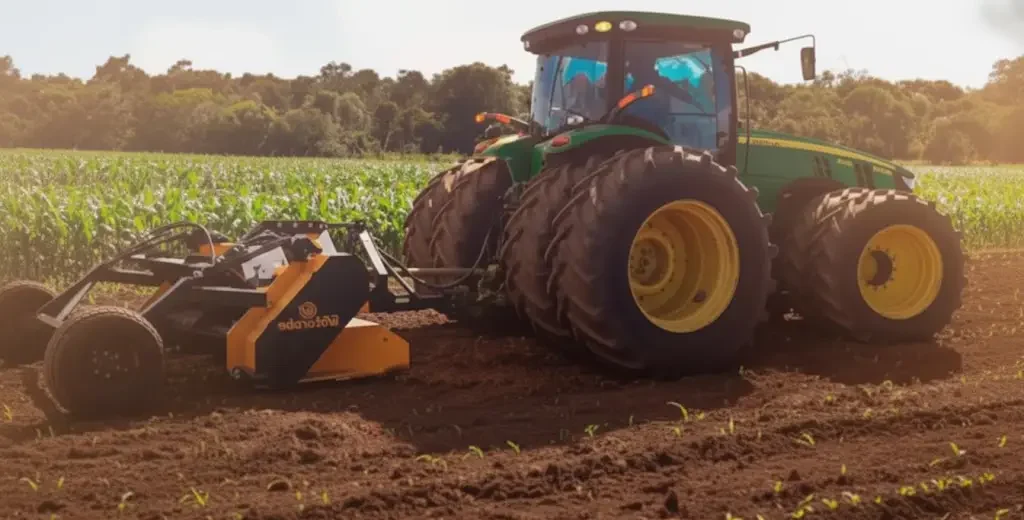
The Land Preparation Sequence: Five Phases
Effective land preparation follows a logical progression. Attempting to run a later-stage machine on ground that has not been prepared by the earlier stages wastes time, damages equipment, and produces inferior results. The five phases below represent the standard sequence for challenging European ground conditions — not every site requires all five, but understanding the full sequence allows operators to identify which phases apply to their specific situation and specify the right equipment accordingly.
Phase 1 — Surface Clearance
Equipment: Rock Rake
Before any powered ground engagement tool operates, the surface must be assessed for boulders and large debris that exceed the capacity of the crusher or tiller to follow. A rock rake — a tractor-mounted implement with heavy-duty tines — gathers and windrows surface rocks above approximately 400 mm diameter. This does not require a powered rotor. The rake physically moves oversized material to the field boundary, where it can be incorporated into dry stone walls, used as drainage aggregate, or left as landscape features. On most European agricultural and forestry sites, this phase takes one to two passes and takes less than half a day on a typical field. It protects every powered implement that follows from contact with material that cannot be processed safely. Watanabe Netherlands supplies two EW-4000 rock rake configurations — the standard AR model and the T AR tandem version — for tractors across a wide horsepower range.
Phase 2 — Stone Processing
Equipment: Stone Crusher
With oversized boulders cleared by the rock rake, the stone crusher processes all remaining stone material within its capacity range — 150 mm diameter for light-duty machines, up to 500 mm for heavy-duty configurations. The rotor penetrates the ground to the set working depth, shattering stones in place and redistributing the crushed aggregate across the surface. Nothing leaves the field. The processed material becomes the raw resource for subsequent operations: the aggregate base for a road, the improved mineral tilth for a seedbed, or the gradated material for a soil stabilizer to incorporate binder into. This is the phase that converts a problem — stone that prevents other operations — into an asset. The THOR series, ranging from 70 hp to 400 hp configurations, covers the full range of European applications from vineyard row clearing to heavy infrastructure ground preparation.
Phase 3 — Residual Stone Collection
Equipment: Rock Picker
This phase applies specifically to sites being prepared for mechanical planting — potato cultivation, precision seeding, and reforestation planting operations where residual stone fragments above a specific size threshold damage planting heads or interfere with root development. After the stone crusher pass, a rock picker collects the fragments that were not fully reduced and deposits them in a collection hopper for removal. This is not required for road construction or pasture conversion, where the crushed stone material is either a resource or not a problem. For potato farming in particular — where stone impacts during mechanical harvesting cause bruising that reduces produce grade — the rock picker pass between stone crushing and planting is a production quality requirement, not an optional step. Watanabe Netherlands supplies the CT-2100 tractor rock picker for this application.
Phase 4 — Ground Improvement
Equipment: Soil Stabilizer (road/infrastructure) OR Subsoiler/Plough (agriculture)
Phase 4 diverges depending on the end use of the prepared ground. For road construction and infrastructure projects, the THOR ST tractor soil stabilizer incorporates cement, lime, or foam bitumen into the processed material from Phase 2, transforming it into a structural base layer with defined bearing capacity. This is full-depth reclamation — the material that was problematic stone becomes the road base. For agricultural conversion, a subsoiler or deep plough passes through the stone-reduced layer to address compaction at depth — the Phase 2 crusher work has already removed the stone hazard that would have shattered the plough body on first contact. Without Phase 2, Phase 4 agricultural cultivation tools are at high risk of damage on stony sites.
Phase 5 — Final Tilth Preparation
Equipment: Rotavetor
The rotavetor is the final cultivation pass on agricultural sites, producing the fine, homogeneous seedbed structure that direct seeding, transplanting, or mechanical planting machinery requires. With the stone material already processed in Phase 2 and residual fragments removed in Phase 3, the rotavetor operates at normal working speed without stone strikes. On stone-free ground that has been through Phases 1 to 3, the rotavetor achieves consistent depth, uniform tilth, and full working speed in a single pass. On unprocessed stony ground, the rotavetor is at continuous risk of stone impact damage — the most common cause of rotavetor blade and gearbox failure on unprepared rocky sites. Watanabe Netherlands supplies the PSW-3200 series rotavetor in three configurations for tractors from 90 hp upwards.
Which Phases Apply to Your Project
Not every project requires all five phases. The selection depends on the starting condition of the site, the stone density and size distribution, and the intended end use. The table below maps the most common European land preparation scenarios to the appropriate phase sequence.
| Project Type | Phase 1 Rock Rake | Phase 2 Crusher | Phase 3 Picker | Phase 4 Stabilizer | Phase 5 Rotavetor |
|---|---|---|---|---|---|
| Potato farm — stony field | ✓ | ✓ | ✓ | ✗ | ✓ |
| Arable conversion — moderate stone | ✗ | ✓ | ✗ | ✗ | ✓ |
| New rural road — rocky ground | ✓ | ✓ | ✗ | ✓ | ✗ |
| Road rehabilitation (FDR) | ✗ | Optional | ✗ | ✓ | ✗ |
| Forestry reclamation — reforestation | ✓ | ✓ | ✓ | ✗ | ✗ |
| Vineyard row clearing | ✗ | ✓ | ✗ | ✗ | ✗ |
| Airport or industrial sub-base | ✗ | Optional | ✗ | ✓ | ✗ |
European Soil Geography: How Ground Conditions Shape Equipment Choices
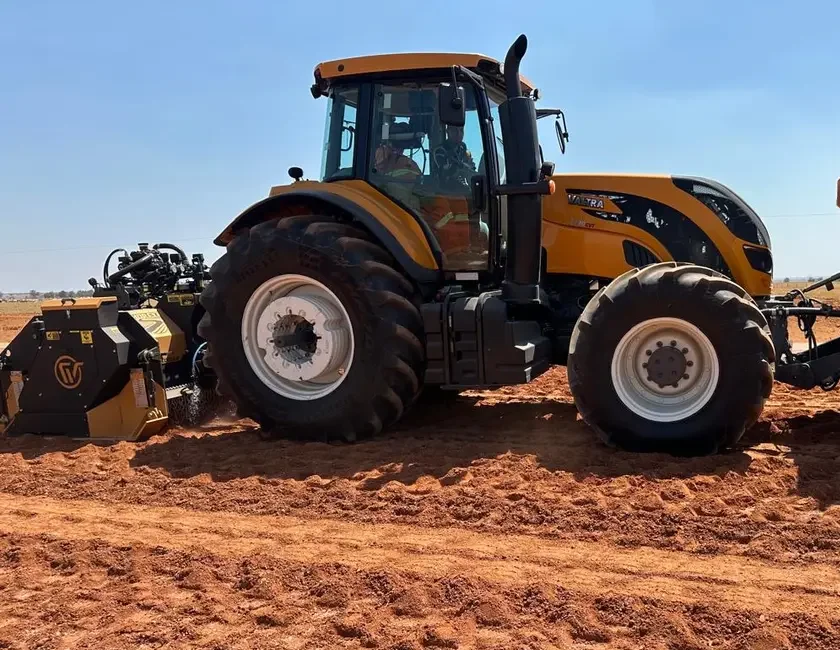
Ground conditions across Europe are not uniform, and the land preparation equipment sequence that works optimally in one region may require modification in another. The dominant stone type, soil texture, and historical land use all influence which phases are required and at what intensity.
Netherlands and Belgium
Predominantly clay and sandy soils with glacially deposited stones — rounded, often limestone and flint. Moderate stone density on agricultural land. Light to mid-range crushers (STCL/STCM) typically adequate. Rock picker pass essential for potato farming. Road rehabilitation focus: FDR with cement on granular bases and lime treatment on clay subgrades.
Northern Germany
Sandy Geest soils with embedded glacial erratic boulders reaching 300–500 mm diameter. Rock rake essential before crusher pass. Mid to heavy-duty crushers required on cleared forestry land. High silica sand content accelerates tooth wear — 50-hour inspection intervals should be reduced to 30 hours. Foam bitumen FDR well-suited to rural road network rehabilitation.
Scandinavia
Granite and gneiss bedrock with thin glacial till overlying. Highest tooth wear rates in Europe — granite sites reduce carbide tooth life to 40–70 hours. Heavy-duty STCH or THOR 3.0 AR essential for forestry reclamation on granite terrain. Two-pass approach recommended: first pass at shallow depth to process surface stone, second pass to full depth on processed material.
France and Southern Europe
Limestone in the north and centre; basalt in Massif Central and Auvergne; granite in Brittany and Pyrenees; schist and slate in vineyard regions. Vineyard applications dominant in limestone and schist zones — light-duty machines with 1.1–1.8 m working width for row clearing. Basalt and granite in forestry and infrastructure applications require mid to heavy-duty specifications. Firebreak preparation in southern France a growing application for mid-range stone crushers.
The Watanabe Netherlands Product Range: One Supplier for All Five Phases
Watanabe Netherlands is structured specifically to supply the complete land preparation equipment sequence from a single European base. This is not a coincidence of the product range — it reflects a deliberate strategy to serve contractors and large farm operations who need multiple machines from the same support structure. The practical benefit is significant: one technical team that knows every machine in the sequence, one parts warehouse that stocks wear parts for all of them, and one commercial relationship that covers the entire land preparation operation.
Phase 1
Рок Рејк
EW-4000 AR / T AR
Heavy-duty tine rakes for surface boulder collection and windrow formation. Two configurations: standard AR and tandem T AR for wider working width. Used before any powered implement on sites with boulders above crusher capacity.
Phase 2
Дробилица камена
STCL / STCM / STCH / THOR
Full range from 70 hp to 400 hp. THOR 2.4 AR and 3.0 AR flagship hydraulic configurations. STCL light-duty for 70–150 hp tractors. STCM mid-range for 80–280 hp. STCH heavy-duty for 280–400 hp. CE certified from Netherlands stock, 7–14 day delivery across EU.
Phase 3
Сакупљач камења
CT-2100
Post-crusher collection of residual stone fragments for sites requiring a clean seedbed — potato cultivation, precision seeding, mechanical planting, reforestation planting. Deposits collected material in an on-board hopper for field removal.
Phase 4
Стабилизатор земљишта
Тор ул.
For road and infrastructure applications. 2.4–2.5 m working width, 0–500 mm depth, 168–184 carbide tools, computer-controlled binder dosing. Compatible with cement, lime, and foam bitumen. 300–500 hp tractor requirement. CE certified, Netherlands stock, same 48–72 hour parts supply as the stone crusher range.
Phase 5
Ротаветор
PSW-3200 / A / B
Final tillage for agricultural seedbed preparation. PSW-3200 series in three configurations for tractors from 90 hp upwards. Working widths to 3.2 m. Produces the fine, stone-free tilth structure required for direct seeding, transplanting, and mechanical planting on sites that have passed through the crusher and picker phases.
Potato Farming: The Full Five-Phase Application
Potato cultivation on stony ground is the application where all five phases are consistently required and where the economic case for the full equipment sequence is most clearly demonstrated. Stony potato fields in the Netherlands, Belgium, and northern Germany face two stone-related cost burdens: equipment damage during cultivation and produce quality damage during harvest.
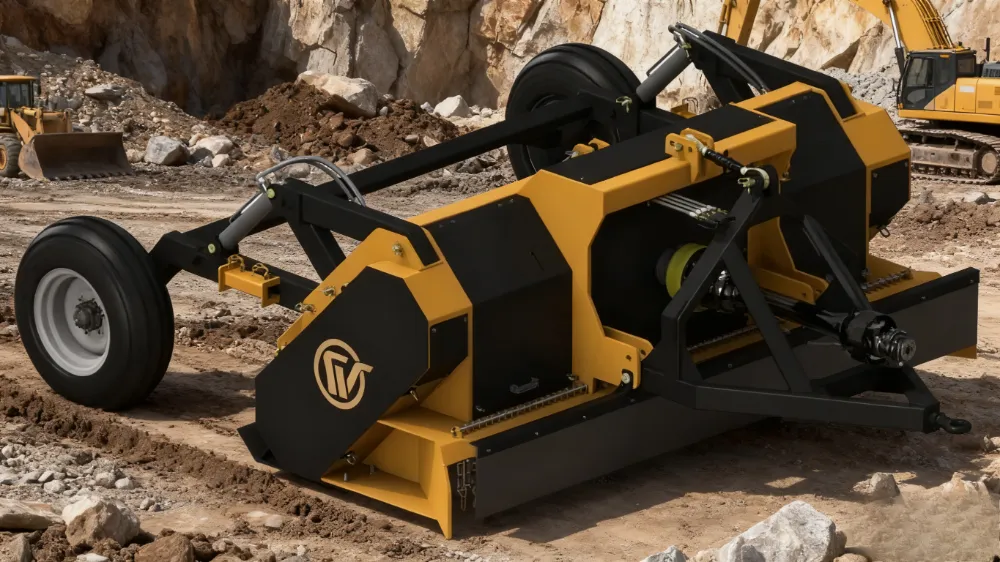
A Dutch potato grower running 250 ha of stony ground faces the following without a stone management programme: harvester damage from stone strikes averaging €8,000–15,000 per season in repairs and downtime; produce quality downgrades from stone bruising during mechanical harvesting reducing the proportion of Grade 1 produce by 5–15%; and blade and rotor damage on tillers and ridgers used without prior stone clearing. Against this cost profile, the capital investment in a stone crusher, rock picker, and rotavetor — sourced as a coordinated set from Watanabe Netherlands — typically pays back within two to three seasons on a farm of this scale.
The Watanabe Netherlands potato machinery range extends further into the growing and harvest cycle, with potato diggers, harvesters, furrowers, and planters forming a complete integrated system. This means the same supplier that provides the land preparation sequence also provides the crop-specific machinery that works the prepared ground — a level of integration that simplifies procurement, training, and after-sales support significantly for large potato operations.
Sourcing the Full Sequence from Watanabe Netherlands
All equipment in the five-phase sequence is held in stock at the Watanabe Netherlands facility in Doetinchem. CE documentation is prepared and issued for every machine at the facility before delivery. Genuine wear parts for every machine — stone crusher teeth, rotavetor blades, rock rake tine points, soil stabilizer carbide tools — are held in the same Dutch stock with 48–72 hour delivery to most EU destinations.
For contractors and large farm operations sourcing two or more machines from the sequence, a combined enquiry allows the technical team to assess the full equipment set for tractor compatibility, sequence optimisation, and coordinated delivery. Technical support — in Dutch, English, German, and French — covers every machine in the range for its full operational life.
For the stone crusher range and стабилизатор тла за трактор specifications in full detail, the product sections provide complete technical data, tractor compatibility matrices, and configuration options. For operators considering the rotavetor as the final phase of their land preparation sequence, SSJ Group provides engineering context on the rotary tiller gearbox — the core power transmission component that drives rotavetor performance in heavy soil preparation conditions.
Tell Us Your Project — We Will Map the Right Sequence
Share your site conditions, tractor horsepower, and end objective — agricultural, road construction, or forestry. Our Netherlands team will recommend the correct phase sequence, specify the right machines, and provide a combined quotation within 24 hours.