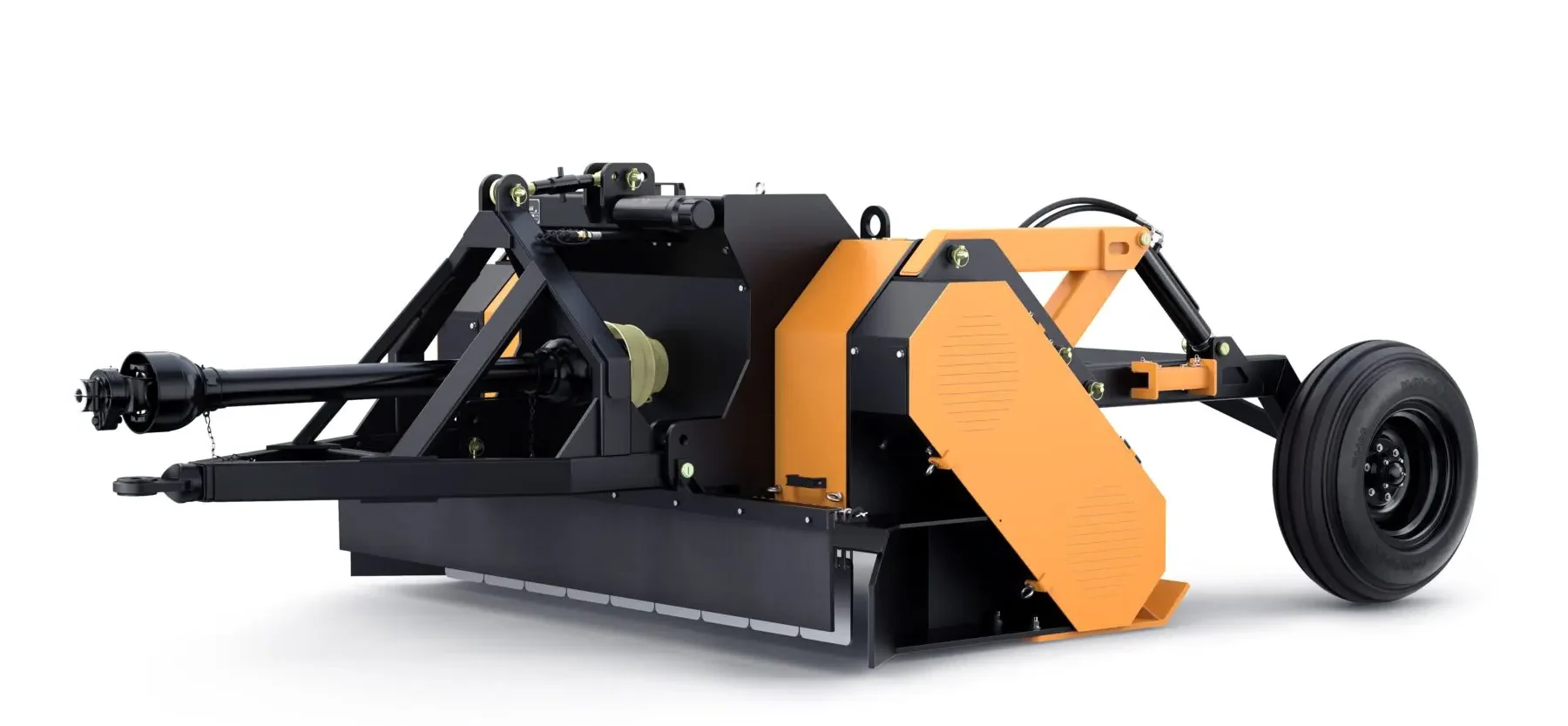
The carbide-tipped teeth on a tractor stone crusher rotor are the single component that determines more of the machine performance and operating cost than any other. They set the effective working output per hour, the quality of the crushed material gradation, the fuel consumption required to achieve a given throughput, and the stress transmitted to every other component in the drivetrain. Yet tooth wear management is one of the most inconsistently practised areas of stone crusher operation in Europe — operators frequently run teeth past the point of economic use, or replace entire sets prematurely based on appearance rather than measurement. This guide provides the technical framework for making tooth replacement decisions based on data rather than intuition, and explains what factors control tooth life on different site conditions.
How Carbide Teeth Actually Wear
A carbide-tipped stone crusher tooth consists of two materials working together: a tungsten carbide tip brazed or pressed into a forged steel body. The carbide provides the hard cutting face that contacts rock; the steel body provides the structural support that absorbs impact and transmits force to the tooth holder. These two materials wear at different rates and through different mechanisms, which is why tooth condition assessment requires looking at both components independently rather than judging the tooth by overall appearance alone.
The carbide tip wears primarily through abrasion — the progressive removal of material as the hard tip slides against stone surfaces under high contact pressure. Harder stone minerals, particularly quartz, feldspar, and the silica compounds found in granite and basalt, abrade carbide much faster than the softer calcite minerals in limestone. This is why identical tooth sets show a 3x to 4x difference in working life between limestone agricultural sites and granite forestry or quarry sites.
The steel tooth body wears through impact fatigue — repeated shock loading from stone impacts generates stress cycles in the steel at the base of the carbide tip seat. When the carbide tip wears down to the point where the steel body begins contacting rock directly, this fatigue loading increases dramatically. The steel erodes rapidly at this stage, eventually exposing the tooth holder below, which has no carbide protection and fails quickly once it contacts stone.
Understanding this two-stage wear mechanism explains the non-linear relationship between tooth wear and operational consequence. For the first 60–70% of tooth life, performance degrades gradually and predictably. In the final 30–40%, the rate of degradation accelerates sharply as the protective carbide geometry is lost and steel-on-rock contact begins. Operating in this final zone inflicts disproportionate damage on the tooth holders, rotor body, and drivetrain — the components that are far more expensive to repair or replace than the teeth themselves.
What Controls Tooth Life: The Five Key Variables
1
Stone Hardness and Mineral Composition
This is the dominant variable. Limestone (Mohs 3–4) produces minimal abrasive wear on carbide — operators on limestone agricultural sites may achieve 150–200 hours per tooth set. Granite and gneiss (Mohs 6–7) contain high proportions of quartz, which is harder than many carbide grades and causes aggressive abrasive wear — the same tooth set may last only 40–70 hours. Basalt and dolerite fall between these extremes at 80–120 hours depending on the specific mineralogy. The key variable is quartz content, not rock hardness alone — a quartz-rich sandstone can wear carbide as aggressively as granite.
2
Soil Abrasivity
Sandy soils with fine silica particles cause continuous abrasive wear on carbide tips even when the stones being crushed are relatively soft. A machine working limestone boulders in sandy alluvial soil will wear teeth faster than the same machine on limestone in clay-dominated agricultural soil. Fine silica enters the crushing chamber and acts as a continuous abrasive medium against the tooth surfaces between stone impacts. Soil moisture content also affects this — wet soil tends to flush fine abrasive particles from the chamber faster than dry conditions, reducing this secondary wear mode.
3
Stone Size Relative to Machine Capacity
Running a machine consistently at or near its maximum stone size rating generates higher tooth impact loads per crushing event than the same machine working material well within its capacity. A light-duty STCL series machine rated for 150 mm stones processing 130 mm stones experiences modest tooth loading. The same machine processing 145 mm material — just within its rated capacity — works the teeth near their design stress limit on every impact. Machines consistently operated at 80–90% of their rated stone size will show noticeably shorter tooth life than identical machines working at 50–60% of capacity.
4
Working Speed and Depth
Higher working speed increases the rate of stone encounters per unit time and the kinetic energy of each impact. Working deeper than necessary for the application engages more stone per pass than required, increasing tooth loading without improving output quality. Operators who run consistently at maximum speed and depth on sites that do not require it accelerate tooth wear unnecessarily. On sites with moderate stone density, reducing working speed by 20% on hard material often extends tooth life by 30% or more — the reduction in impact frequency outweighs the reduction in area coverage per hour at most European stone densities.
5
Carbide Grade and Tooth Design
Not all carbide is equivalent. Tungsten carbide grades vary in their cobalt binder content — higher cobalt content increases toughness but reduces hardness; lower cobalt produces harder, more wear-resistant carbide that is more brittle under impact. Genuine manufacturer teeth are formulated for the specific rotor speed, impact geometry, and stone size range of the machine they are designed for. Aftermarket teeth with mismatched carbide grades wear faster, chip more readily, or both — and the reduced performance affects the entire operating economy of the machine, not just the tooth replacement cost.
The Tooth Wear Reference Table by Stone Type
The following indicative working life ranges are based on European field experience with THOR series carbide teeth. Individual site conditions will produce results above or below these ranges — use them as a planning baseline, not a guarantee.
| Stone / Soil Type | Typical European Location | Indicative Tooth Set Life | Wear Rate |
|---|---|---|---|
| Limestone / Chalk | Southern England, Belgium, Northern France, Benelux | 150–220 hrs | Low |
| Mixed agricultural (limestone + clay) | Netherlands, Germany arable, Flanders | 100–160 hrs | Low–Medium |
| Sandstone / Siliceous soil | Northern Germany, Eastern Netherlands, Landes (France) | 70–110 hrs | Medium |
| Basalt / Dolerite | Massif Central (France), Eifel (Germany), Ardennes | 80–130 hrs | Medium–High |
| Granite / Gneiss | Scandinavia, Brittany, Scotland, Schwarzwald | 40–80 hrs | High |
| Recycled concrete / demolition rubble | Urban fringe sites, brownfield redevelopment | 50–90 hrs | High |
How to Measure Tooth Wear: The Four Inspection Checks
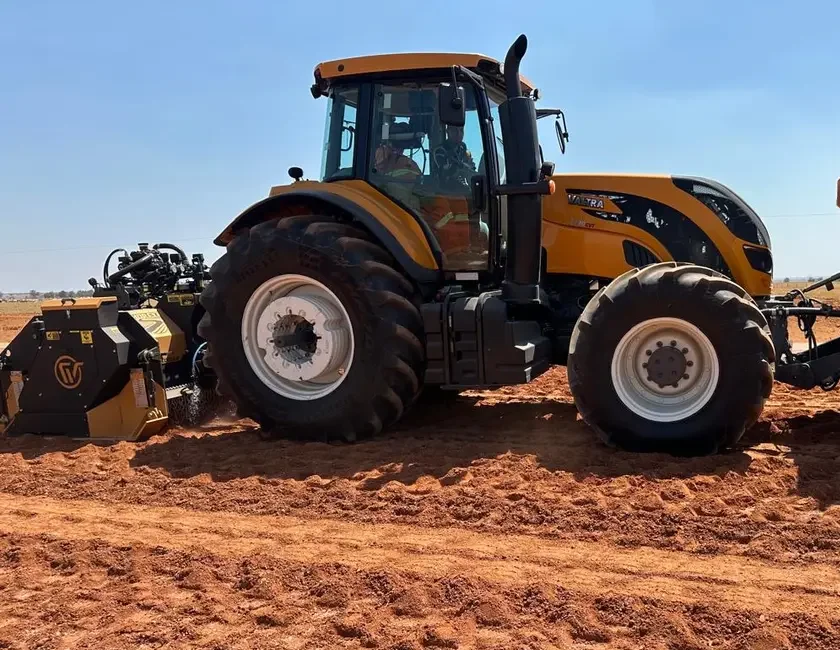
Visual inspection is insufficient for tooth wear assessment — experienced operators consistently underestimate wear severity by eye. Measurement gives objective data that removes the uncertainty from replacement decisions and allows advance parts ordering without the risk of mid-season machine downtime.
Check 1
Carbide Tip Height Measurement
Using a vernier calliper, measure the height of the carbide tip above the steel tooth body on three representative teeth — one from each third of the rotor width. Record and compare against the new-tooth reference dimension from the machine manual. This single measurement, taken at each 50-hour service, gives the rate of wear per hour and allows projection of remaining service life.
Check 2
Carbide Geometry Inspection
A worn tooth reduces in height while retaining a roughly hemispherical profile — this is normal wear. A tooth that shows flat facets, angular chips, or asymmetric profiles has suffered impact damage in addition to abrasive wear. Impact-damaged teeth wear asymmetrically, which changes the effective cutting radius on one side of the tooth and disrupts rotor balance. These teeth require immediate replacement regardless of remaining height.
Check 3
Steel Body Condition
Examine the steel tooth body below the carbide tip for pitting, erosion channels, or material loss at the carbide seat. Any visible erosion of the steel body surrounding the tip indicates the tooth has entered the accelerated wear phase — steel-on-rock contact has begun. This condition triggers immediate replacement regardless of the measured carbide height, because the remaining carbide is no longer properly supported by the steel body and will fracture under impact rather than abrade predictably.
Check 4
Output Gradation Quality
An indirect but highly reliable wear indicator: the particle size of the crushed output. As teeth wear, the effective crushing geometry changes and the machine produces a coarser output for the same depth and speed setting. If a machine that previously produced 30 mm minus material now produces 50 mm minus under identical operating conditions, the rotor geometry has changed — teeth have worn beyond the point where they are maintaining the designed gap between tip and anvil. This observation alone, without measuring, is grounds for scheduling a full tooth inspection at the next opportunity.
Replacement Decision Rules: When to Act
These rules should be applied as absolutes, not guidelines. Each threshold has a specific mechanical justification — they are not conservative estimates.
60%
Average Height
Plan replacement — order parts now
When average measured carbide height across three representative teeth reaches 60% of the new-tooth reference dimension, order the replacement tooth set immediately. Do not wait until the machine stops working — order during the current 50-hour service so parts arrive before the next inspection is due. The machine can continue operating, but the replacement window has opened.
40%
Any Single Tooth
Replace full set immediately — stop work if parts not on site
If any individual tooth reaches 40% of its original carbide height, the full tooth set must be replaced before the next working shift — regardless of the condition of other teeth. A single tooth at 40% height has begun exposing its steel body to direct rock contact. The resulting tooth holder damage will cost far more to repair than the tooth set itself.
Any
Missing Tip
Stop immediately — do not operate with a broken tooth
A tooth with a fractured or missing carbide tip must be treated as a critical failure. The bare steel tooth body makes direct stone contact on every revolution, damaging the tooth holder at an accelerating rate. A broken tooth also disrupts rotor balance, generating vibration that stresses the bearings and gearbox. Operating with a missing carbide tip for one additional shift can cause tooth holder damage requiring rotor rework — a repair cost that dwarfs the cost of the tooth set.
Full
Set Rule
Always replace the complete rotor set — never individual teeth
Replacing individual teeth on a rotor with other teeth at 60–70% wear produces a rotor with non-uniform cutting radii. The new teeth cut deeper than the worn ones, generating unequal crushing loads across the rotor width. This imbalance accelerates wear on the new teeth, stresses the bearings unevenly, and degrades output gradation. A full-set replacement restores uniform rotor geometry in a single operation.
Building a Tooth Life Log: The Practical Tool Most Operators Skip
The single most effective tooth management practice costs nothing and takes five minutes per 50-hour service: recording each tooth height measurement in a log alongside the date, operating hours, and site material type. After two or three tooth set cycles on the same type of site, this log provides a reliable tooth life prediction for planning purposes.
With this data, a contractor running a stone crusher for 600 hours per season on mixed limestone and basalt sites can predict with confidence that they need 4.5 tooth sets per season, order them at the start of the season at volume pricing, and never face a parts delay during the working window. The alternative — ordering reactively when teeth reach the 40% threshold — risks a 48 to 72 hour downtime window even with the best parts supply network in Europe.
Watanabe Netherlands maintains genuine THOR series carbide teeth, tooth holders, and related wear parts in Netherlands stock. Orders placed before 14:00 ship same day for delivery within 48 hours to most EU destinations. For operators maintaining the drivetrain components beyond the rotor — PTO shafts, universal joints, and associated transmission components — SSJ Group provides specialist guidance on universal joint inspection and replacement for high-torque agricultural machinery applications, a complementary maintenance reference for stone crusher drivetrain management.
Genuine vs Aftermarket Teeth: Why the Difference Matters at Scale
Aftermarket carbide teeth are available at 30–50% below genuine part pricing, making them superficially attractive for operators focused on consumables cost. The economics change when the full operating picture is considered.
Aftermarket teeth from non-OEM sources often use carbide grades with higher cobalt content than the genuine specification — producing teeth that are tougher under impact but softer in abrasion resistance. On abrasive sites, these teeth wear 20–40% faster than genuine teeth. The reduced set life partially or completely eliminates the purchase price saving. On the rotor, faster-wearing teeth reach the steel body exposure point sooner, increasing the risk of tooth holder damage that genuine teeth would avoid.
The rotor balance implication is also significant. Genuine teeth are manufactured to tight weight tolerances so that a full rotor set is balanced within specification. Aftermarket teeth from different batches may vary in weight by 5–15%, producing a measurable vibration increase that accelerates bearing wear over the season.
For operators running the full THOR tractor stone crusher range, including the THOR 2.4 AR, through a full European working season — typically 400 to 800 hours — the genuine parts cost premium over a season is recovered within two to three avoided tooth-holder damage events. The long-term maintenance cost of a machine run consistently on genuine parts is lower than the same machine run on aftermarket consumables, even before accounting for the drivetrain protection benefit.
Running Low on Carbide Teeth?
Watanabe Netherlands holds genuine THOR series carbide teeth and tooth holders in Netherlands stock. Orders placed before 14:00 ship same day — delivery within 48 hours to most EU destinations. Contact us with your machine model for part numbers and current availability.