유럽 ​​농부 및 계약자를 위한 PTO 석재 분쇄기 구매 가이드


PTO tractor stone crusher machine — buying guide for European farmers and contractors

Buying a PTO stone crusher is a significant investment for any European farming or contracting operation. Get the specification right and it will pay for itself within a season in reduced equipment wear, fewer field operations, and improved seedbed quality. Get it wrong — wrong series, wrong width, wrong supplier — and the machine underperforms, parts are unavailable when you need them, and the cost of ownership climbs well beyond the purchase price.

This guide covers everything you need to evaluate before placing an order: the key technical specifications to compare, what CE certification means for European buyers, how to assess a supplier’s stock and parts capability, and how to calculate total cost of ownership beyond the sticker price. For a general overview of stone crusher types, see this stone crusher reference guide.

In This Guide
Why PTO crushers dominate Europe
8 specs to compare
CE certification explained
Stock & delivery
Spare parts availability
Total cost of ownership
10 questions to ask your supplier
자주 묻는 질문

Why PTO Stone Crushers Dominate European Agriculture

The PTO-driven tractor stone crusher has become the standard solution for stone management across European agriculture for a straightforward reason: it uses the power already available on the farm — the tractor — without requiring a separate engine, fuel system, or operator. The PTO shaft connects directly to the crusher’s input shaft, the three-point linkage provides the attachment, and the tractor’s hydraulic system handles depth control. No additional infrastructure is needed.

Self-propelled stone crushers and static crushing plants exist, but for European farm and contracting operations working fields of 20 to 500 hectares, the PTO tractor-mounted model offers the best balance of capital cost, operating cost, versatility, and transport logistics. The machine can be hitched and unhitched in minutes, transported on a standard trailer, and operated by the same driver running the tractor for every other field operation.

The result is a market where PTO stone crushers are available for tractors from 70hp to 400hp, in working widths from just over a metre to more than 2.5 metres, covering every application from narrow vineyard rows to large-scale civil groundworks.

70–400hp
Tractor power coverage
1,110–2,560mm
Working width range
500mm
Max stone diameter
1 Pass
Permanent in-situ result

The 8 Key Specifications to Compare Before Buying

Not all PTO stone crushers are built to the same standard. These are the eight specifications that determine whether a machine will perform as expected in your conditions — and what it will cost to keep running over its working life:

1
Rotor Diameter

The primary indicator of crushing capacity. A 450mm rotor processes stones up to 150mm. A 550mm rotor handles up to 300mm. A 700mm rotor can shred stones up to 500mm in diameter. Rotor diameter also determines the machine’s weight and the tractor power required to run it efficiently.

2
작업 폭

Determines daily output per tractor hour and whether the machine physically fits your field constraints. In vineyards and orchards, working width must fit within row spacing. For open arable work, wider is more productive — provided the tractor has sufficient power to maintain working speed across the full width.

3
Max Shredding Diameter

The largest stone dimension the machine is rated to process. Always specify at or above the largest stone size present in your soil — occasional oversized stones striking the rotor above its rated capacity cause accelerated tooth wear and in severe cases structural damage to the rotor housing.

4
Max Working Depth

Working depth determines which stones the machine addresses. Light-duty machines work to 150mm — covering most surface and shallow sub-surface stone. Mid-range reaches 200mm, covering the tillage layer where most arable equipment damage occurs. Heavy-duty models reach 250mm for road and civil applications.

5
Machine Weight

Stone crushers are considerably heavier than most rear-mounted implements. Weight must be checked against your tractor’s rear linkage lift capacity and rear axle load rating. Light-duty models start at 1,230kg; heavy-duty reach 5,250kg. Exceeding tractor rear axle capacity causes structural tractor damage over time.

6
PTO Speed Requirement

ST variants accept 540rpm or 1000rpm. DT and HP variants require 1000rpm only. Running a 1000rpm-only machine at 540rpm reduces rotor speed below design threshold, cutting kinetic energy and crushing performance significantly. Always confirm your tractor’s PTO output before specifying a model.

7
Linkage Category

Most PTO stone crushers use Category 2 rear three-point linkage, compatible with tractors from 70hp upward. Heavy-duty models may require Category 3. Confirm your tractor’s linkage category before ordering — a category mismatch requires adapter brackets that add cost and reduce connection rigidity.

8
Tooth Count and Type

Rotor tooth count increases with working width. More teeth mean lower per-tooth impact load, longer tooth life, and a finer finish. Tooth type — standard, HD (heavy duty), or FP — determines performance on different stone hardness levels. Always confirm genuine replacement teeth are available from your supplier before purchase.


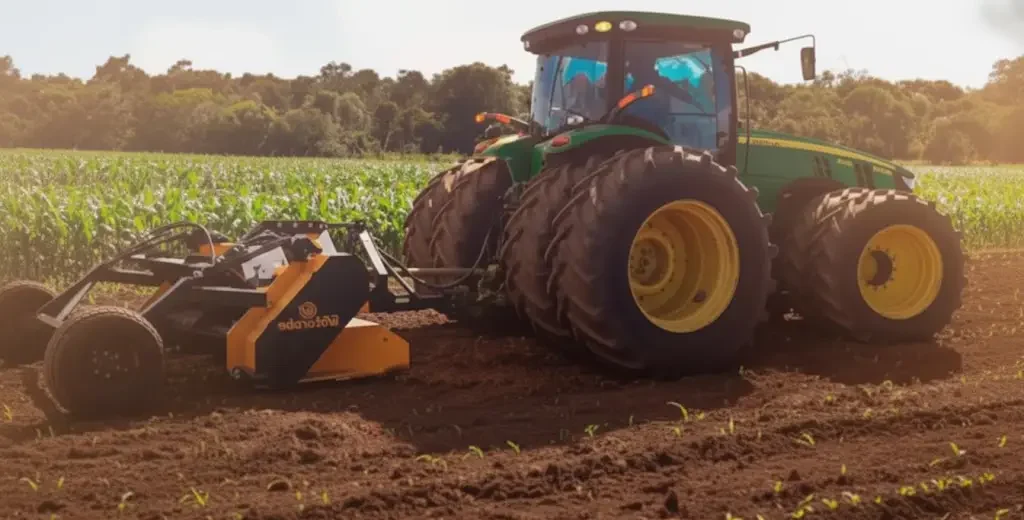
PTO tractor stone crusher in operation — rotor working in European agricultural field

CE Certification — Why It Matters for European Buyers

CE marking is mandatory for all agricultural machinery sold within the European Union and the UK. It confirms that the machine has been assessed against the EU Machinery Directive (2006/42/EC) and meets the essential health and safety requirements for design, guarding, noise, vibration, and documentation.

For buyers, CE marking has three practical implications:

Insurance Validity

Operating non-CE machinery in the EU and UK can invalidate your farm or contractor insurance policy. In the event of an incident involving a non-compliant machine, liability may rest entirely with the operator rather than the manufacturer.

Resale Value

Non-CE machinery has significantly lower resale value in European markets — and may be unsaleable to professional buyers who require documentary compliance for their own insurance and contracting obligations.

Legal Operation

Operating non-CE machinery on public land, roads, or contracted sites in the EU and UK is illegal. For contractors working on local authority, infrastructure, or commercial sites, CE documentation is routinely requested before work begins.

💡 Watanabe Netherlands

All stone crushers supplied by Watanabe Netherlands are CE certified and come with a complete Declaration of Conformity and Operator Manual in the buyer’s language. CE documentation is provided as standard with every machine — not as an add-on or optional extra.

Stock and Delivery — What to Look for in a European Supplier

Stone crushers are seasonal machines — demand concentrates in spring and autumn land preparation windows. A supplier who operates on a factory-order basis will quote 8–16 week lead times during peak periods, meaning you miss the cultivation window you bought the machine to serve.

Permanent Netherlands stock changes this entirely. Machines available in-country can typically be delivered within 5–10 working days to most European destinations — allowing you to respond to the season rather than planning around a factory production schedule.

Factory Order
8–16 week lead time. Payment typically required upfront or on order. Delivery window uncertain — subject to production schedule and shipping delays. No opportunity to inspect before dispatch.
Netherlands Stock
5–10 working day delivery across Europe. Machine available immediately — no production wait. Delivery timing confirmed at order. Machines inspected and prepared before dispatch from our Netherlands facility.


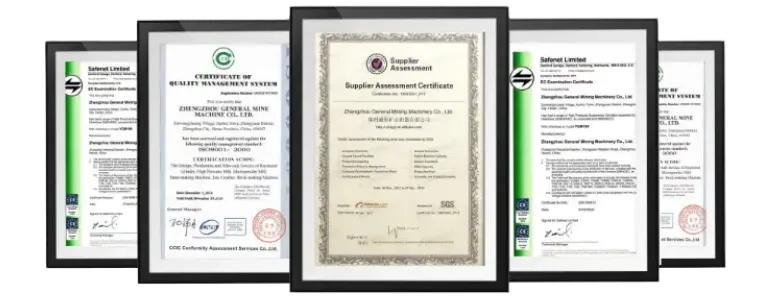
Watanabe Netherlands CE certifications and quality documentation for stone crushers

Spare Parts Availability — The Hidden Cost of Getting It Wrong

Rotor teeth are the primary wear component on any PTO stone crusher. They are designed to be replaced — the question is not whether you will need replacement teeth, but how quickly you can get them when you do. A stone crusher sitting idle during the cultivation window because teeth are on a three-week ocean freight journey from the manufacturer costs significantly more than the teeth themselves.

Before buying, ask your supplier three questions about parts:

Are parts stocked locally?

Rotor teeth, counter-teeth, drive belts, and bearings should be held in the supplier’s local stock — not ordered from the factory on demand. Ask for confirmation of which specific parts are held and how many are available.

Are they genuine?

Non-genuine rotor teeth are manufactured to lower hardness and dimensional tolerances. They wear faster, fit less precisely, and in some cases cause accelerated counter-tooth wear. Using non-genuine parts may also void the machine warranty.

What is the dispatch time?

48–72 hours from order to dispatch is the standard that minimises downtime risk. Watanabe Netherlands holds genuine replacement parts in Netherlands stock with confirmed 48–72 hour dispatch across Europe.

⚠️ Parts Warning

Before placing your order, ask your supplier to confirm in writing which parts are held in local stock and the guaranteed dispatch time from order. If the answer is vague — “we can usually get parts within a few weeks” — this is a material risk to your operating schedule that should be factored into the total cost of ownership calculation.

How to Evaluate Total Cost of Ownership

The purchase price of a PTO stone crusher is only one component of what you will actually spend over its working life. These five factors together determine the true cost of ownership:

💰
Purchase Price

The initial outlay. Machines at the lower end of the price range often reflect lower rotor quality, thinner housing steel, or non-genuine tooth specifications. In stone crusher duty, lower initial quality typically means higher tooth consumption and earlier rotor wear.

🔩
Annual Tooth Replacement Cost

Rotor teeth are consumables. Replacement frequency depends on stone hardness, working depth, and daily hours. Ask your supplier for an expected annual tooth consumption figure for your ground conditions and confirm the per-tooth price for genuine replacements before committing to the machine.

⏱️
Downtime Cost

Every day the machine is idle during the cultivation season has a cost — whether measured in delayed field operations, contractor call-out charges, or lost working days. A supplier with local parts stock and 48–72 hour dispatch eliminates most unplanned downtime risk.

Fuel Consumption

A correctly matched crusher running at optimal working speed burns less fuel per hectare than an underpowered machine working at reduced speed. Over a season of 200+ operating hours, the fuel cost difference between a well-matched and poorly-matched combination is measurable.

📈
Residual Value

CE-certified machines from established manufacturers with documented service history and available parts retain significantly higher resale values than non-CE or off-brand equipment. At resale, CE documentation and parts availability are the two most commonly requested items by professional buyers.


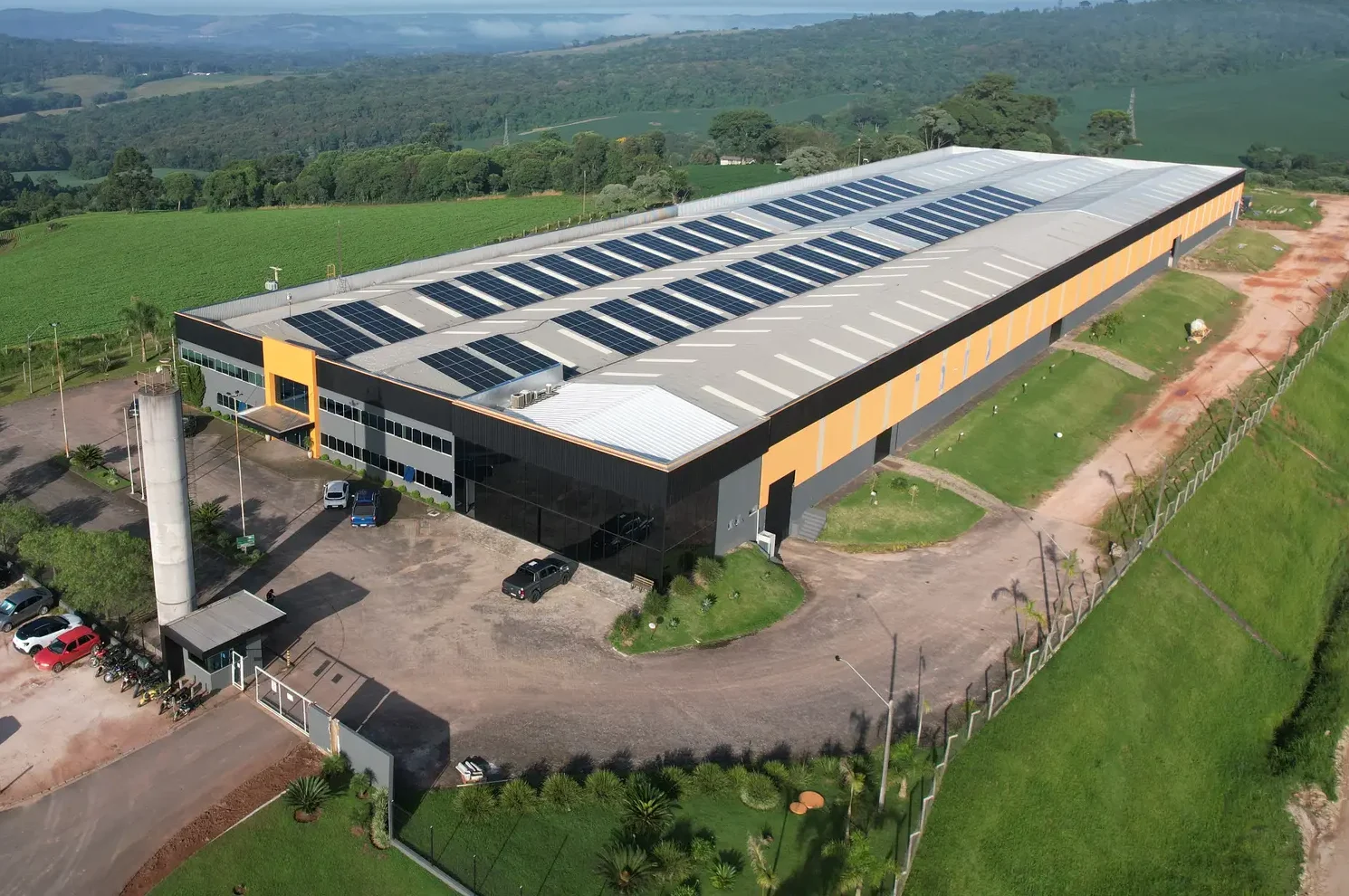
Watanabe Netherlands production facility and stone crusher supply operation

10 Questions to Ask Your Supplier Before Ordering

Use this checklist when evaluating any PTO stone crusher supplier in Europe. A supplier confident in their product and service will answer all ten without hesitation:

1
Is this machine CE certified, and can you provide the Declaration of Conformity at delivery?
2
Is the machine held in stock in Europe, and what is the confirmed delivery lead time to my location?
3
Are genuine replacement rotor teeth stocked locally, and what is the dispatch time from order?
4
What is the per-tooth replacement price, and how many teeth will this model typically consume per 100 operating hours in typical arable conditions?
5
Can you confirm that my tractor — [make, model, HP, PTO speed] — is compatible with this specific model?
6
What warranty is provided, and how are warranty claims handled in my country?
7
Is technical support available in my language, and is there a direct contact for after-sales questions?
8
Can you provide working demonstration footage or references from operators in similar soil conditions to mine?
9
What are the shipping and delivery costs to my location, and who handles customs documentation if applicable?
10
What is the expected resale value of this machine after five years, and do you buy back or assist with resale?

Browse Our CE-Certified PTO Stone Crusher Range

Frequently Asked Questions

Do I need CE certification if I am buying a stone crusher for private farm use only?
Q

Yes. CE marking is required for all agricultural machinery placed on the European market, regardless of whether it is used for private or commercial purposes. Your farm insurance policy will require compliant machinery, and in the event of an accident involving non-CE equipment, liability may fall on the operator rather than the manufacturer.

How often do rotor teeth need replacing on a PTO stone crusher?
Q

Tooth life varies significantly depending on stone hardness, stone density, working depth, and daily operating hours. In typical European arable conditions with moderate stone content, individual teeth may last between 50 and 200 operating hours. Harder or more abrasive stone (granite, quartzite) shortens tooth life considerably. Your supplier should be able to give a realistic estimate based on your specific ground conditions.

Can Watanabe Netherlands deliver a PTO stone crusher to the UK after Brexit?
Q

Yes. Watanabe Netherlands ships stone crushers to the UK. UK delivery involves standard customs clearance procedures, and we assist with the necessary documentation. UK delivery lead times are slightly longer than mainland European destinations — contact us at [email protected] with your location for a specific lead time and shipping cost.

What warranty is included with a Watanabe Netherlands stone crusher?
Q

All machines are supplied with the manufacturer warranty covering defects in materials and workmanship under normal operating conditions. Rotor teeth are wear items and are not covered by warranty — this is standard across the industry. For warranty claims, contact our team directly with your machine serial number and we manage the process on your behalf.

Is it worth buying a more expensive stone crusher with a larger rotor than I currently need?
Q

If you are at the top of a series power range and considering upgrading your tractor in the next few years, specifying the next series up can make sense — it gives you headroom and typically results in lower tooth wear per hour on your current ground conditions. However, if your tractor power is well below the next series minimum, there is no benefit in over-specifying. Our team can advise on the right balance for your situation.

와타나베 네덜란드

Ready to Buy a PTO Stone Crusher for Europe?

CE certified. Permanent Netherlands stock. Genuine spare parts dispatched within 48–72 hours. Contact our team with your tractor specification and ground conditions — we will confirm the right model and provide a no-obligation quotation with confirmed delivery to your location.

📧 [email protected]

알아두면 좋을 정보입니다

트랙터용 석재 분쇄기를 이용한 도로 하부층 준비

도로 하부 기층 준비는 모든 석재 분쇄기에게 가장 까다로운 작업 중 하나입니다. 다져진 석재층, 다양한 크기의 암석이 박혀 있는 지반 조건, 그리고 단단한 하부 지반 재료는 일반적인 장비로는 감당하기 어려운 수준으로 기계를 작동 한계까지 몰아붙입니다.

포도밭용 석재 분쇄기: 포도나무 줄기 정리 작업에 적합한 장비 선택하기

포도밭 토양에 있는 돌멩이는 유럽 포도 재배 농가에게 가장 지속적이고 비용이 많이 드는 관리 문제 중 하나입니다. 돌멩이는 기계식 수확기를 손상시키고, 포도나무 아래 경운 장비를 마모시키며, 경작 작업 속도를 저하시키고, 심한 경우에는 포도나무의 성장을 저해하기도 합니다.

트랙터용 석재 분쇄기를 작동시키려면 얼마나 많은 마력이 필요합니까?

트랙터 마력은 작업에 적합한 석재 분쇄기를 선택하는 데 있어 가장 중요한 요소입니다. 마력이 너무 낮으면 기계가 밀집된 석재를 처리하는 데 어려움을 겪고, 로터 회전 속도가 설계 속도 이하로 떨어져 분쇄 품질이 저하되며, 일일 생산량도 감소합니다.

석재 분쇄기 vs. 암석 선별기: 어떤 장비가 먼저 필요할까요?

땅에 돌이 많아 문제가 생길 때 흔히 추천되는 장비는 돌 분쇄기와 암석 선별기 두 가지입니다. 둘 다 돌을 처리하고 트랙터에 부착해서 사용하지만, 작동 방식과 해결하려는 문제가 완전히 다르기 때문에 어떤 장비를 살지 결정할 때...

트랙터에 맞는 석재 분쇄기 선택 방법

트랙터에 맞지 않는 석재 분쇄기를 구입하는 것은 값비싼 실수입니다. 기계 출력이 부족하면 작동이 멈추거나 단단한 지면에서 비효율적으로 작업하게 됩니다. 반대로 사양이 너무 높으면 트랙터가 감당할 수 없는 용량에 대한 비용을 지불하게 됩니다. 작업 폭을 잘못 선택하면 다음과 같은 문제가 발생할 수 있습니다...

트랙터 석재 분쇄기란 무엇이며 어떻게 작동합니까?

돌이 많은 땅에서 농사를 짓거나 계약 작업을 한다면, 트랙터용 돌 분쇄기는 가장 실용적인 투자 중 하나입니다. 돌은 경작 장비를 손상시키고, 종자상을 저하시키며, 수확 작업을 지연시키고, 도로 및 기초 공사를 어렵게 만듭니다.

석재 분쇄기는 무엇에 사용되나요?

서론 현대 농업 및 건설 현장의 험준한 지형에서 암석 지형을 다루는 것은 종종 상당한 어려움을 야기합니다. 네덜란드의 한 농부가 파종을 위해 밭을 갈다가 흙이 스며들지 못하게 막는 단단한 돌들을 만났다고 상상해 보세요...

토양 안정화 기계는 어떻게 작동하나요?

서론 토양 안정화는 토목 공학 및 농지 관리에서 근본적인 과정으로, 기반 시설의 안정성이나 작물 생산성을 저해할 수 있는 불안정하거나 약한 토양 구조와 관련된 문제들을 해결합니다. 토양...