Most discussions of tractor-mounted stone crushers focus on the 70 to 200 hp range — the tractors that work European farms, vineyards, and small contracting operations. But a distinct and growing segment of the European market operates in a different weight class entirely: infrastructure contractors, large-scale land development companies, and quarry operators running tractors above 280 hp who need a stone crusher that matches the output and durability of their machines. This guide addresses that segment directly — what heavy-duty stone crusher technology actually delivers at 280 to 400 hp, where it applies, what to look for in a specification, and why the economics at this scale differ fundamentally from lighter-duty applications.
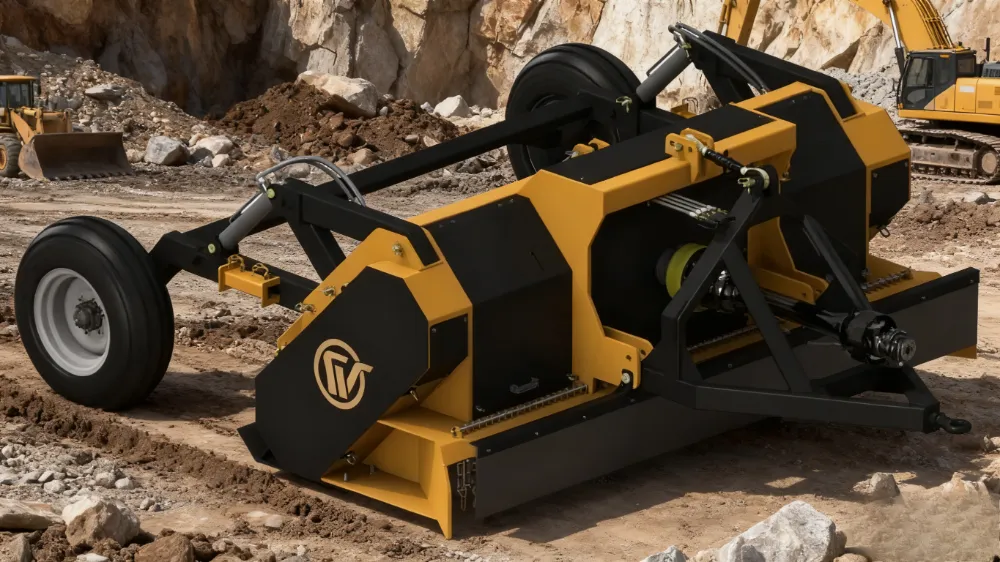
What Changes Above 280hp: A Different Machine Category
The step from mid-range to heavy-duty stone crusher is not a linear increment in capability — it represents a categorical shift in the work the machine can handle. Three parameters change simultaneously and interact to produce a qualitatively different output:
700mm
Diameter Rotor
56% larger than the 450mm light-duty rotor — significantly more rotational inertia for hard material
500 mm
Max Stone Diameter
More than 3x the 150mm capacity of the light-duty STCL series — genuine boulder-class material
250mm
Kedalaman Kerja
67% deeper than the light-duty series — reaching the sub-surface stone layer in a single pass
The 700 mm rotor diameter is the defining specification of the heavy-duty STCH series. A larger rotor carries substantially more rotational kinetic energy at operating speed. When this rotor contacts a 400 mm granite boulder, the energy stored in the rotating mass carries the machine through the impact without stalling — a smaller rotor encountering the same material would either stall, damaging the drivetrain, or skip over the stone without processing it. This physics is why under-specifying the machine for the stone size on site is the most expensive mistake a buyer can make.
At working widths of 2.08 to 2.56 m and 250 mm working depth, a single heavy-duty stone crusher pass processes a material volume per hour that changes the economics of large-scale projects fundamentally. What takes a mid-range machine four passes requires one.
The STCH Heavy-Duty Range: Specifications in Detail
Watanabe Netherlands supplies three STCH heavy-duty configurations, covering working widths from 2,080 mm to 2,560 mm. All three share the same core rotor and drive specifications — the width choice is determined by the tractor available PTO power and the required daily area coverage.
| Specification | STCH 200 | STCH 225 | STCH 250 |
|---|---|---|---|
| Lebar Kerja | 2,080 mm | 2,320 mm | 2,560 mm |
| Lebar Total | 2,566 mm | 2,806 mm | 3,046 mm |
| Berat Mesin | 4,850 kg | 5,050 kg | 5,250 kg |
| Diameter Rotor | 700 mm | 700 mm | 700 mm |
| Max Stone Diameter | 500 mm | 500 mm | 500 mm |
| Kedalaman Kerja Maksimum | 250 mm | 250 mm | 250 mm |
| Tooth Count | 50+4+4 | 56+4+4 | 62+4+4 |
| Kategori Keterkaitan | Category 3 | Category 3 | Category 3 |
| Kecepatan PTO | 1000 rpm | 1000 rpm | 1000 rpm |
All three STCH configurations require Category 3 rear linkage — standard on tractors of 280 hp and above from Fendt, John Deere, Claas, New Holland, and Case IH. The PTO operates exclusively at 1000 rpm for this series; tractors with dual-speed PTO must be set to 1000 rpm mode before connecting. The full range specifications and compatibility details are available on the tractor stone crusher machine page.
Where Heavy-Duty Stone Crushers Are Actually Deployed
Heavy-duty stone crushers at 280–400 hp are not farm machines. They operate on projects where the scale of ground preparation, the stone size encountered, or the required daily output exceeds what a mid-range machine can deliver cost-effectively. The following application categories represent where this class of equipment consistently generates a measurable return over lighter alternatives.
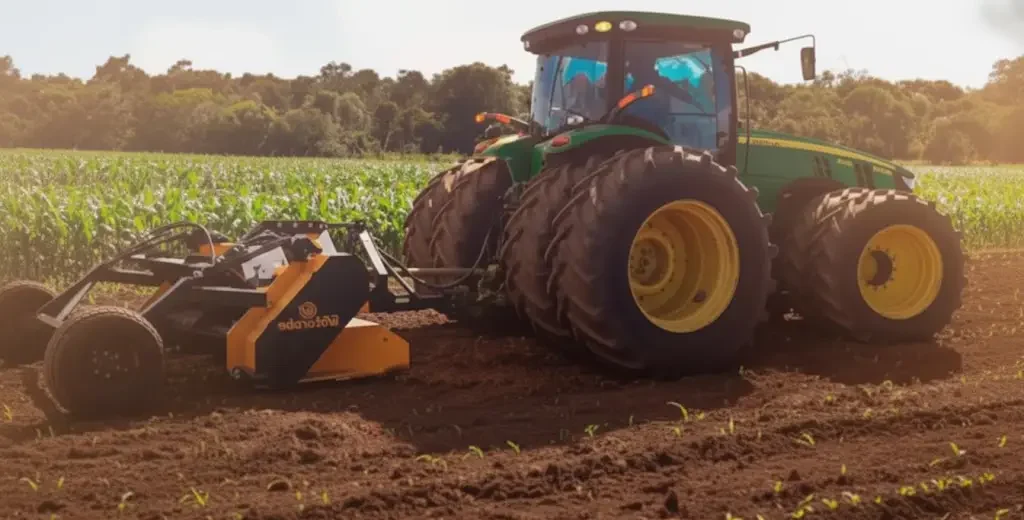
Large-Scale Road and Highway Corridor Preparation
Road widening schemes, bypass construction, and new industrial access roads through rocky terrain require ground preparation across linear distances measured in kilometres rather than hectares. A heavy-duty stone crusher processing a 2.5 m wide strip at 250 mm depth can prepare the full width of a single-lane carriageway sub-base in continuous passes, with the processed material providing the aggregate base for subsequent soil stabilization. Belgian contractors on airfield service road extensions used this approach to reduce imported aggregate requirements by 40% on the sub-base preparation phase.
Quarry and Mining Access Road Construction
Access haul roads in active quarries and open-cast mining operations must carry loaded dump trucks with axle weights of 30 tonnes or more on a daily basis. Building these roads on site using native rock processed by a heavy-duty stone crusher eliminates the cost of importing crushed aggregate from outside the quarry boundary. The quarry stone becomes the road material — at material cost of zero.
Large Arable Farm Conversion from Rough Pasture or Woodland
Farm operations in the 500 to 2,000 ha range converting rough pasture or recently cleared woodland to arable cultivation face stone removal requirements that light and mid-range machines cannot complete within the available time window. A single 400 hp tractor with an STCH 250 processes 2.56 m per pass at 250 mm depth — covering ground at a rate that makes large-area conversion projects financially viable within a single season rather than spread across multiple years.
Industrial Site and Logistics Park Ground Preparation
New logistics hubs, distribution centres, and industrial parks on greenfield or brownfield sites often encounter stone or hard-fill layers at sub-base depth that must be processed before ground improvement work can proceed. A heavy-duty stone crusher at this scale processes the material in place, after which a soil stabilizer completes the structural layer. This two-machine sequence — stone crusher followed by soil stabilizer — is the standard approach for large industrial ground preparation in central Europe.
Reclamation of Demolition and Construction Waste Ground
Sites with buried demolition rubble — broken concrete, brick aggregate, and mixed hard fill — present material that a mid-range machine cannot process reliably. The heavy-duty 700 mm rotor handles concrete fragment sizes up to 500 mm that demolition and construction activity commonly produces. Processed on-site, this material becomes a viable sub-base aggregate rather than a costly disposal liability.
Tractor Matching: Getting the Specification Right at This Power Level
Running a heavy-duty stone crusher at 280–400 hp places demands on the tractor that go beyond simple horsepower matching. Several parameters need to be verified before ordering equipment to avoid performance shortfalls or drivetrain stress that voids manufacturer warranties.
PTO Torque Rating
Not just horsepower — torque at the PTO shaft
The STCH series demands high sustained torque at the PTO, not just peak power. A tractor with 320 hp but a restricted PTO torque curve will underperform the same horsepower engine with a full-torque PTO specification. Verify the tractor manufacturer PTO torque data for your specific model and gearbox configuration before ordering.
Hydraulic Flow Rate
Rear door and depth skid control
The STCH series requires at least two double-acting hydraulic remotes for rear door and depth skid control. Verify that the tractor hydraulic pump output meets the minimum flow rate requirement at operating pressure — tractors with small-displacement pumps running multiple ancillary circuits simultaneously may not maintain adequate flow to the crusher controls under full PTO load.
Rear Linkage Lift Capacity
5+ tonnes at maximum lift height
The STCH 250 weighs 5,250 kg. The tractor must lift this weight to road transport height — approximately 400 mm off the ground — for inter-field movement. Most 280 hp and above tractors comfortably meet this requirement, but it should be verified for the specific model, particularly when operating with front ballast weights fitted.
Tractor Ballasting
Front weight to maintain steering traction
A 5+ tonne rear implement requires corresponding front ballast to maintain front axle traction and steering control. Most operators at this power level run 1,500 to 2,000 kg of front ballast plus wheel weights. Insufficient front ballast causes front axle lightening on slopes and hard material, reducing steering precision and increasing tractor wear.
Heavy-Duty Crusher Economics: The Numbers That Justify the Investment
The capital cost of a heavy-duty stone crusher — significantly higher than a mid-range or light-duty machine — is only justified if the operating economics support it at the scale of projects you actually run. For contractors working at this level, the calculation typically closes convincingly.
Illustrative Project Economics
Project: 5 km rural road corridor, new construction through stony ground
Working width 2.5 m, 250 mm processing depth, aggregate import eliminated by on-site stone processing
Conventional approach
Excavate surface layer, remove and tip stone material, import crushed aggregate from quarry 25 km away, lay and compact base layer. Estimated material and transport cost: €35–50 per m² of road corridor.
Heavy-duty crusher approach
Process surface stone in situ, follow with soil stabilizer pass. Material cost: zero. Machine operating cost: fuel and wear parts only. Estimated total cost: €8–14 per m² of road corridor.
At 5 km × 2.5 m = 12,500 m², the saving versus conventional excavation and import approaches €300,000 to €450,000 on a single project. Against the capital cost of the heavy-duty stone crusher, a single project of this scale generates a meaningful return on the equipment investment.
This economic logic is the same one driving adoption of heavy-duty tractor-mounted stone crushers across Belgian, German, and Dutch infrastructure contractors. It is also why the on-site processing approach — crusher first, stabilizer second — is now the standard method for new rural road construction in these markets rather than the exception.
The hydraulic systems that power heavy-duty tractor implements at this scale share engineering principles with the high-pressure boom and arm cylinders used in large excavators. SSJ Group, specialists in heavy-duty boom hydraulic cylinders for construction machinery, provides context on the hydraulic force requirements and pressure specifications that define performance at the heavy end of the construction equipment spectrum — relevant background for engineers specifying hydraulic circuit requirements for high-output tractor-implement systems.
Sourcing Heavy-Duty Stone Crushers in Europe
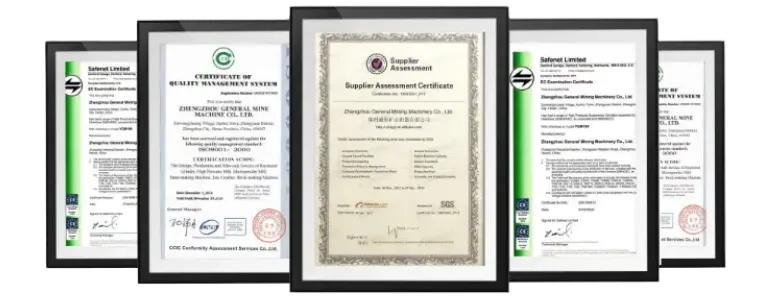
Heavy-duty stone crushers in the 280–400 hp class are not commodity items available from agricultural dealers. They require a supplier with the technical depth to match the machine specification to the tractor, the project conditions, and the operator experience level — and the parts infrastructure to support the machine once it is deployed.
Watanabe Netherlands supplies the full STCH heavy-duty range from permanent Netherlands stock. All machines are CE certified and fully prepared before delivery. The STCH series uses Category 3 rear linkage compatible with all major European tractor manufacturers above 280 hp. Genuine wear parts — carbide teeth, heavy-duty tooth holders, belt sets, bearing assemblies — are held in Dutch stock with 48 to 72 hour delivery across the EU.
For contractors evaluating the STCH range against their project requirements, Watanabe Netherlands provides site-specific machine recommendations based on tractor horsepower, stone size range, working depth requirement, and target area coverage per day. The THOR 3.0 AR is the heaviest-duty THOR series configuration and represents an alternative approach for contractors whose projects combine large-stone forestry and construction work with the requirement for a single versatile machine across both applications.
Is a Heavy-Duty Stone Crusher the Right Investment for You?
A heavy-duty stone crusher at 280–400 hp is the right investment when three conditions are met simultaneously: you have the tractor to run it at full specification, the stone size on your sites regularly exceeds 300 mm diameter, and your annual workload justifies the capital cost through either owned projects or contractor work at the scale described above.
If any of these conditions is absent — the tractor is borderline on power, the stone sizes are predominantly below 200 mm, or the annual workload is limited — a mid-range machine in the STCM series will achieve the same results at lower capital cost and with more forgiving tractor requirements. The choice between machine classes is a project-economics decision, not a preference for larger equipment.
Contact the Watanabe Netherlands technical team with your tractor specification and a description of your typical projects — they will recommend the correct machine from the full range without overselling a heavier specification than your operation requires.
Running 280hp or Above? Let Us Match the Right Machine.
Share your tractor model, typical stone sizes, and project type. Our Netherlands team will specify the right STCH configuration and provide a competitive quotation — usually within 24 hours.