Introduction
Soil stabilization represents a fundamental process in civil engineering and agricultural land management, addressing the challenges associated with unstable or weak soil structures that may compromise infrastructure integrity or crop productivity. A soil stabilizer machine functions as specialized equipment designed to enhance soil properties through mechanical and chemical methods, thereby transforming marginal ground into a stable base suitable for construction or cultivation. This article examines the operational mechanics of soil stabilizer machines, with emphasis on their components, processes, and applications, drawing upon established engineering principles to provide a comprehensive overview.
At its core, a soil stabilizer machine mixes existing soil with binding agents, such as lime or cement, to improve its load-bearing capacity, reduce permeability, and mitigate issues like erosion or settlement. These machines are particularly valuable in regions with variable soil compositions, such as the clay-rich terrains of the Netherlands or the sandy soils prevalent in parts of Belgium and Germany. Tractor-mounted models, which offer mobility and adaptability, constitute a common configuration in European markets, facilitating efficient deployment in both rural agricultural settings and urban construction projects.
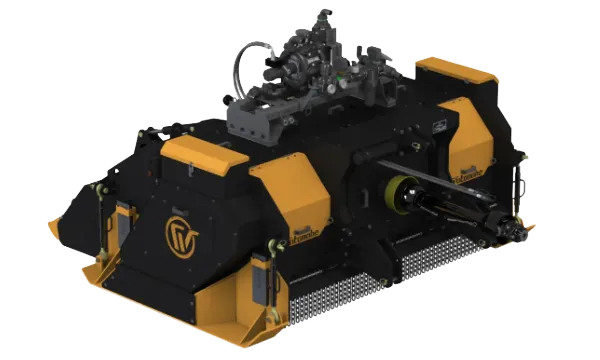
Understanding how a soil stabilizer machine works is essential for professionals selecting equipment for projects. This knowledge not only informs operational efficiency but also ensures compliance with environmental and safety standards. In the following sections, we will explore the machine’s definition, fundamental principles, step-by-step operations, benefits, applications, and potential challenges, offering insights grounded in practical engineering experience. For those seeking reliable solutions, Watanabe Netherlands provides a range of tractor soil stabilizer machines tailored to European conditions, backed by technical support and genuine parts availability.
What Is a Soil Stabilizer Machine?
A soil stabilizer machine is an advanced engineering tool engineered to modify the physical and chemical properties of soil, rendering it more suitable for load-bearing applications. It achieves this by blending the native soil with stabilizing additives, resulting in a homogeneous mixture that exhibits enhanced strength, durability, and resistance to environmental factors. These machines are integral to sectors such as road construction, airport runway development, and agricultural land reclamation, where soil quality directly impacts project longevity and performance.
There are two primary types of soil stabilizer machines: self-propelled units, which are larger and suited for extensive infrastructure projects, and tractor-mounted models, which offer greater mobility and are ideal for smaller to medium-scale operations. Tractor soil stabilizers, in particular, attach to standard agricultural or construction tractors via a three-point hitch or drawbar, leveraging the tractor’s power take-off (PTO) and hydraulic systems for operation. This configuration allows for precise control and cost-effective deployment, making it a preferred choice in Europe where versatile equipment is essential for diverse terrains.
Key components of a soil stabilizer machine include the mixing rotor or drum, which performs the primary tillage and blending function; the binder spreading system, responsible for uniform distribution of additives like cement, lime, or fly ash; depth control mechanisms, often hydraulic, to regulate milling depth; and a water or binder injection system to facilitate chemical reactions. Additional features may encompass side-shift capabilities for alignment with tractor tracks and dust suppression systems to comply with environmental regulations.
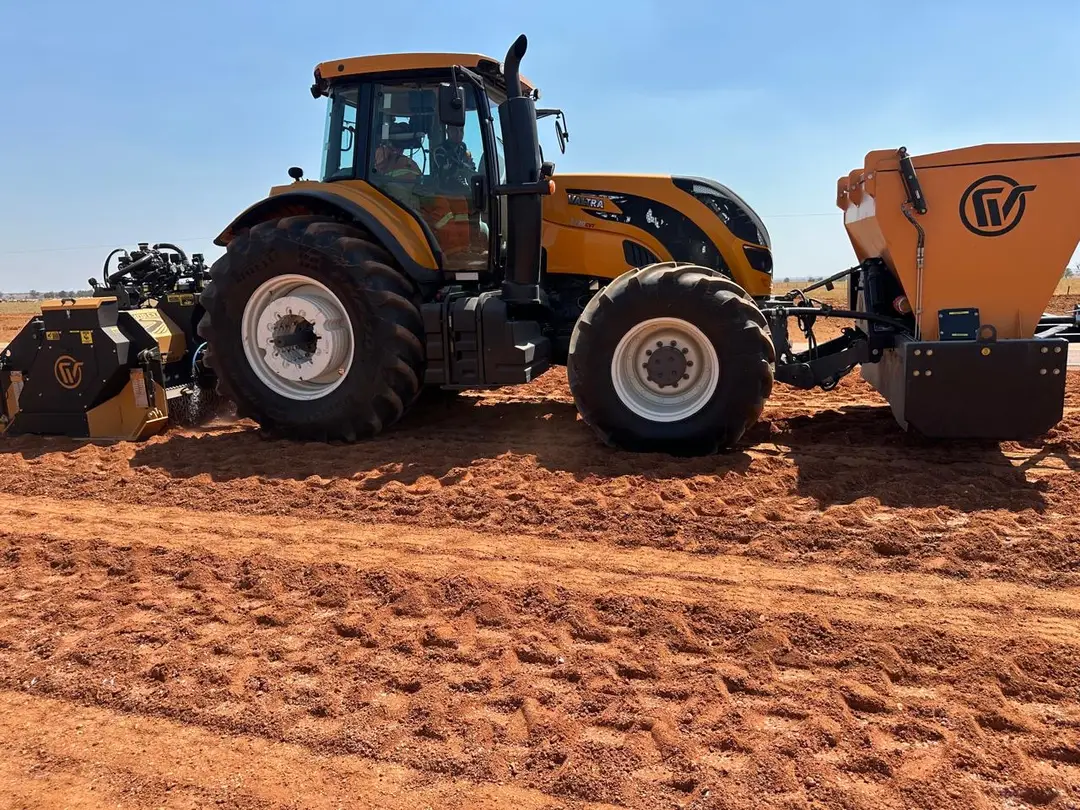
In terms of qualifications, modern soil stabilizer machines adhere to stringent standards, such as CE marking in Europe, ensuring safety and operational reliability. Watanabe Netherlands’ offerings, for instance, incorporate robust designs with high-torque rotors capable of handling depths up to 50 cm, suitable for stabilizing cohesive clays or granular sands. These machines not only improve soil shear strength but also contribute to sustainable practices by recycling in-situ materials, thereby reducing the need for imported aggregates and minimizing carbon emissions associated with transportation.
Extending beyond basic functionality, soil stabilizer machines can integrate advanced technologies like GPS guidance for precision application and variable rate controls for binder distribution, optimizing resource use based on soil analysis data. This integration enhances accuracy in projects requiring tailored stabilization, such as highway subgrades or agricultural fields prone to waterlogging.
The Basic Working Principle
The fundamental working principle of a soil stabilizer machine revolves around the mechanical disruption and chemical enhancement of soil layers to create a stabilized composite material. This process begins with the machine’s rotor penetrating the ground, scarifying the existing soil to a predetermined depth, typically ranging from 20 to 50 cm depending on the project requirements. As the rotor rotates at high speeds—often powered by the tractor’s PTO—the blades or tines break down soil aggregates, creating a loose, workable matrix.
Simultaneously, stabilizing agents are introduced through the machine’s binder spreading system. These agents, such as Portland cement for pozzolanic reactions or hydrated lime for clay modification, are distributed evenly across the milled soil. The rotor then mixes the additives thoroughly with the native material, ensuring uniform dispersion. This blending initiates chemical processes: for instance, cement hydration forms a cementitious matrix that binds soil particles, while lime reacts with clay minerals to reduce plasticity and increase strength.
Physically, the machine’s action promotes particle interlocking, expelling excess moisture and air voids to achieve higher density. The resulting stabilized soil exhibits improved compressive strength, typically increasing from 1-2 MPa in untreated form to 5-10 MPa post-stabilization, depending on soil type and additive dosage. This enhancement is quantifiable through laboratory tests like the California Bearing Ratio (CBR), where values can rise from 5-10% to over 50%, making the soil suitable for heavy loads.
In tractor soil stabilizer models, the principle is adapted for mobility: the tractor provides forward propulsion at 3-5 km/h, while hydraulic systems control rotor depth and tilt for contour following. Safety interlocks prevent operation without proper engagement, and dust control measures, such as water sprays, mitigate airborne particulates.
Extending the principle, modern machines incorporate sensors for real-time monitoring of mixing uniformity, allowing adjustments to binder rates based on soil moisture content. This precision minimizes waste and ensures compliance with engineering specifications, such as those outlined in Eurocode 7 for geotechnical design.
Detailed Operational Steps
Operating a soil stabilizer machine involves a systematic sequence of steps to ensure effective stabilization while adhering to safety and efficiency protocols. The process commences with site preparation: engineers conduct soil sampling and analysis to determine the appropriate additive type and dosage, typically 3-8% by weight for cement or 2-6% for lime, based on soil classification (e.g., AASHTO or USCS systems).
Next, the machine is attached to the tractor. For tractor-mounted models, this entails securing the three-point hitch or drawbar, connecting the PTO shaft for rotor drive, and linking hydraulic lines for depth and side-shift controls. Calibration follows: the binder spreading system is loaded and tested for uniform flow, while rotor speed is verified at 150-250 RPM to match soil conditions.
On-site, the operation begins with a preliminary pass if needed to scarify compacted layers. The tractor advances at a controlled speed of 3-5 km/h, with the rotor engaging the soil to the target depth. As the machine progresses, the binder is dispensed ahead of or into the mixing chamber, where the rotor’s blades thoroughly incorporate it. This mixing phase is critical, requiring multiple passes (2-4) in heavy soils to achieve homogeneity, monitored visually or via onboard sensors.
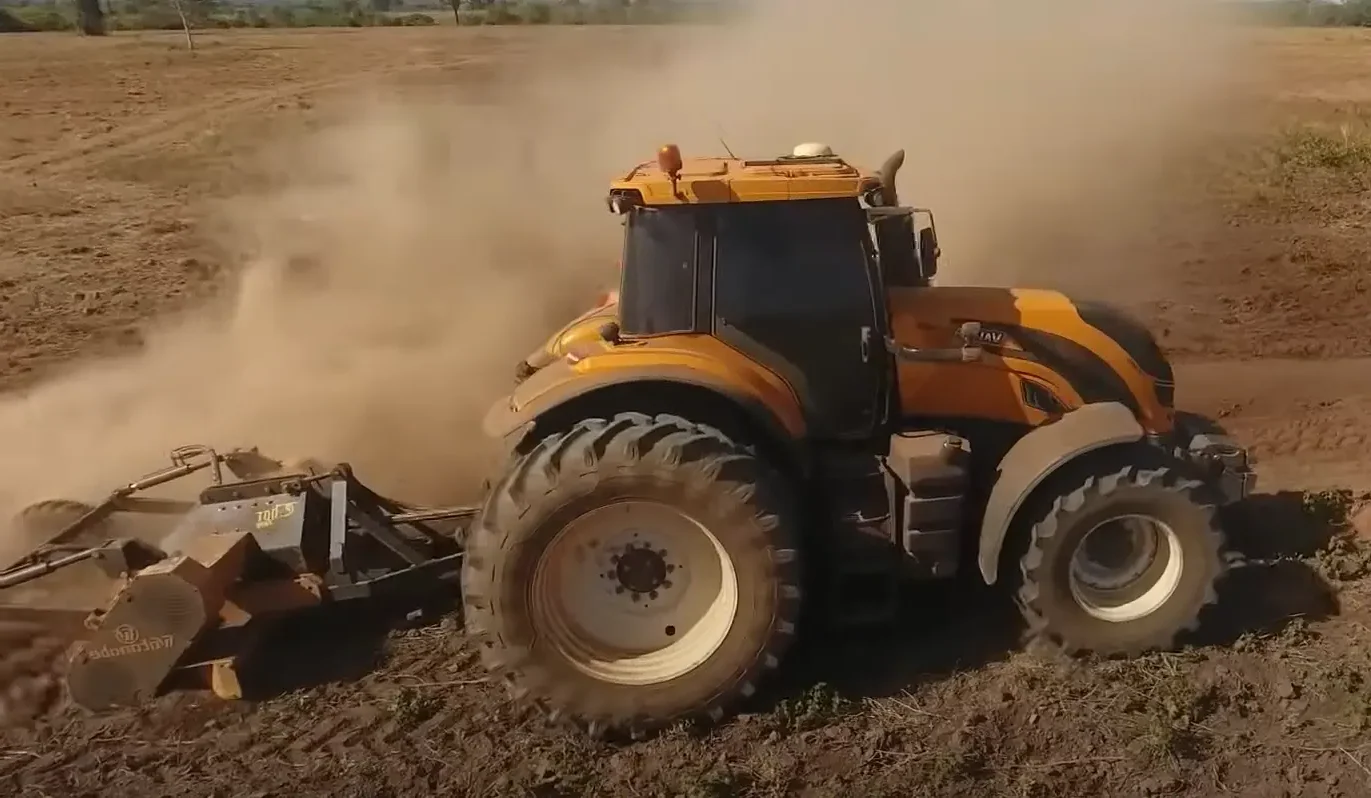
Post-mixing, grading occurs using the machine’s leveling bar or a separate grader to ensure a smooth surface. Compaction follows immediately with rollers to achieve 95-98% Proctor density, locking in the stabilized structure before curing begins. Curing typically lasts 7-28 days, during which traffic is restricted to allow full strength development.
Safety measures include operator training on emergency stops, personal protective equipment, and environmental controls like water suppression for dust. Maintenance steps, such as blade inspection after 100 hours, extend machine life.
Extending the operational framework, advanced models integrate telematics for data logging, enabling post-project analysis to refine future applications. In European contexts, compliance with EN 12620 standards for aggregates ensures the stabilized material meets road construction requirements.
| Step | Description | Key Considerations |
|---|---|---|
| Site Preparation | Conduct soil sampling and select additives. | Determine dosage based on soil type (e.g., 3-8% cement). |
| Machine Attachment & Calibration | Secure hitch, connect PTO, test binder flow. | Verify rotor speed at 150-250 RPM. |
| Scarifying & Mixing | Advance at 3-5 km/h, dispense binder, mix uniformly. | Multiple passes for heavy soils; monitor homogeneity. |
| Grading & Compaction | Level surface, compact to 95-98% density. | Use rollers immediately post-mixing. |
| Curing & Maintenance | Restrict traffic for 7-28 days; inspect equipment. | Blade checks after 100 hours; safety compliance. |
Benefits and Applications
Soil stabilizer machines offer substantial benefits, including cost reduction through in-situ processing, which eliminates the expense of excavating and replacing poor soil—savings can reach 30-50% compared to traditional methods. Environmentally, they promote sustainability by recycling native materials and reducing quarry dependency, aligning with EU directives on resource efficiency. Structurally, stabilized soil provides superior resistance to frost heave and water infiltration, extending infrastructure lifespan by 20-30 years.
Applications span multiple sectors. In road construction, tractor soil stabilizers create durable subbases for highways and rural paths, as seen in Dutch polder reclamation projects. Agricultural uses include improving field drainage and reducing compaction for better root growth. Industrial sites benefit from stabilized foundations for warehouses or solar farms, while airport runways utilize deep mixing for high-load tolerance.
Extending applications, these machines support disaster recovery, such as post-flood soil reinforcement, and green initiatives like permeable stabilized surfaces for urban stormwater management.
Common Challenges and Solutions
Despite their efficacy, soil stabilizer machines face challenges like inconsistent soil moisture, which can hinder mixing uniformity. Solutions involve pre-wetting or using moisture sensors for real-time adjustments. Additive clumping in humid conditions is addressed through agitated spreaders. Equipment wear from abrasive soils requires regular blade replacement with carbide-tipped variants.
Operational delays from weather are mitigated by scheduling during dry periods or using all-weather models. Environmental concerns, such as dust generation, are resolved with integrated suppression systems to meet EU emission standards.
Conclusion
In summary, soil stabilizer machines operate through a precise blend of mechanical tillage and chemical enhancement, transforming unstable ground into reliable foundations. This process, from preparation to compaction, underscores their value in efficient, sustainable projects. For professionals seeking robust solutions, Watanabe Netherlands offers expert guidance on tractor soil stabilizer models. Contact us to explore options tailored to your needs.