Choosing the right binder is one of the most consequential decisions in any soil stabilization project. Use cement on a high-plasticity clay subgrade and you may get shrinkage cracks within weeks. Use lime on a sandy granular base and the chemical reaction you are counting on will never occur. Use foam bitumen when the existing material is too wet and the mix will be unstable. Getting this decision right determines whether the treated layer meets its design bearing capacity — or fails under the first season of traffic loading. This guide gives European engineers and contractors a direct, practical framework for selecting between the three principal binders used in tractor-mounted soil stabilization: cement, lime, and foam bitumen.
Why Binder Selection Matters More Than Machine Power
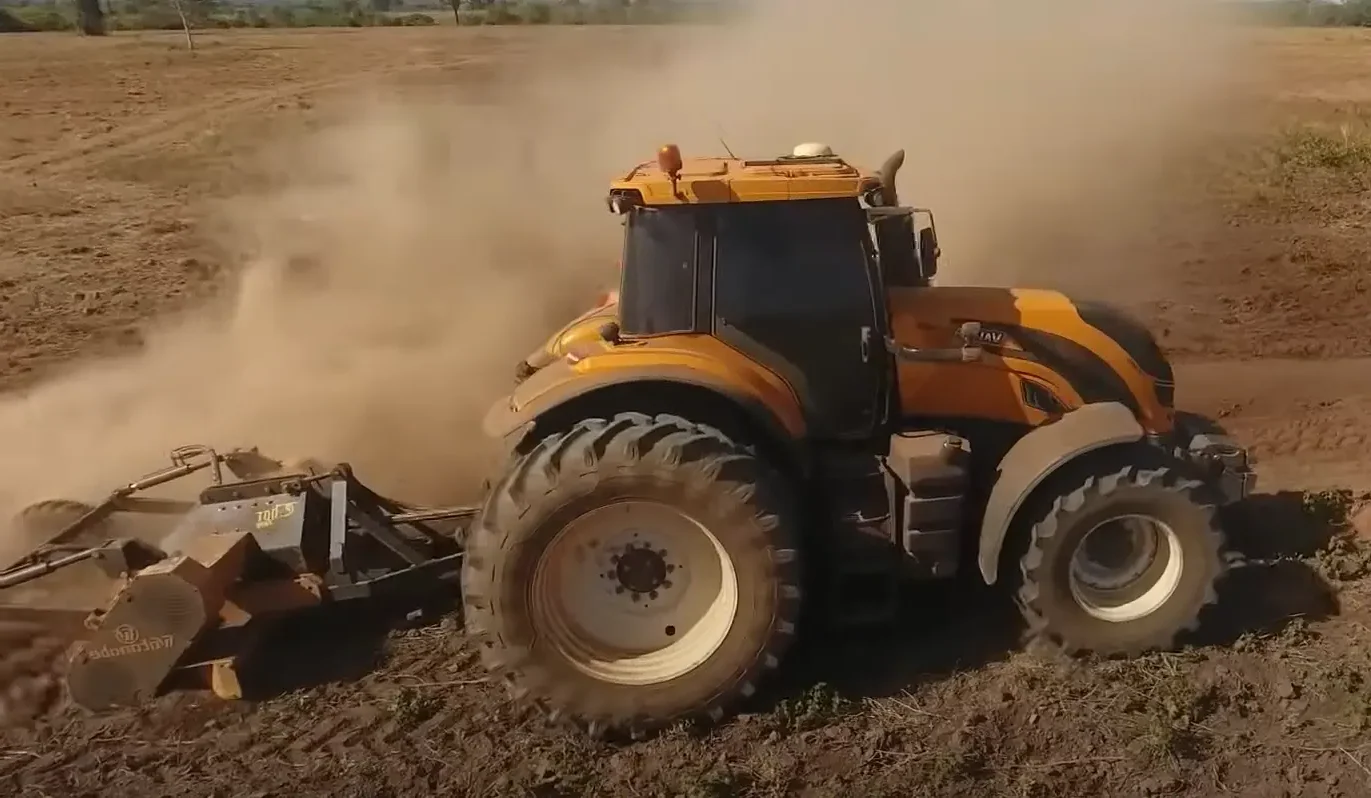
A soil stabilizer machine provides the mechanical means to pulverize and mix. The binder provides the chemical transformation. Even the most powerful tractor-mounted stabilizer operating at 500 mm depth will produce a structurally inadequate layer if the wrong binder is dosed into the wrong soil type. The machine is a delivery system; the binder is the engineering solution.
Each of the three main binders works through a fundamentally different chemical mechanism. Each is optimal for a distinct range of soil types, moisture conditions, and structural requirements. And each has cost implications that vary significantly depending on availability, dosage rate, and the volume of material required per linear metre of road.
The sections below address each binder in sequence, followed by a decision framework that draws these factors together into a practical selection process.
Cement Stabilization: When You Need Rigidity and Strength
How It Works
When Portland cement is mixed with soil in the presence of moisture, a hydration reaction begins immediately. Calcium silicate hydrate (CSH) and calcium aluminate hydrate (CAH) compounds form progressively, binding soil particles into a rigid, semi-bound matrix. Unlike lime, cement does not require clay minerals to react — it works with the moisture already present in the soil. Strength development follows a predictable curve: approximately 50% of 28-day strength is achieved within 7 days, and 80% within 14 days.
Ideal Soil Types
Cement performs best with granular and sandy soils — materials that already have low plasticity and adequate particle gradation. It is the standard choice for reclaimed granular base courses, crushed asphalt mixtures, and sandy subgrades. It is less suitable for high-plasticity clays with a Plasticity Index (PI) above 20, where the clay minerals interfere with hydration and the treated layer may crack during volume change cycles.
Cement Stabilization — Typical Parameters
Dosage rate: 3–8% Portland cement by dry soil weight
Best for: Granular soils, sandy subgrades, recycled asphalt, low-PI materials
Avoid for: High-plasticity clays (PI > 20), soils with high sulphate content
Working time after dosing: 2–4 hours before initial set — compaction must be completed within this window
Typical 28-day UCS: 1.5–5.0 MPa depending on soil type and dosage
Best Application Contexts
Motorway and highway base layer rehabilitation, industrial yard pavements, port container terminal aprons, airport taxiway sub-bases on non-cohesive soils, and full-depth reclamation of deteriorated granular road bases. Cement is the dominant choice on European national road rehabilitation contracts, where structural performance requirements are clearly defined in terms of compressive strength and stiffness modulus.
Lime Stabilization: The Solution for Clay Subgrades
How It Works
Lime stabilization operates through two distinct chemical processes that occur in sequence. The first — cation exchange — happens immediately when lime contacts the clay. Calcium ions from the lime displace sodium and potassium ions on the clay mineral surfaces, causing clay particles to flocculate and agglomerate. This reduces plasticity almost instantly, making the soil friable, trafficable, and compactable. The second process — pozzolanic reaction — occurs over weeks and months as calcium reacts with silica and alumina from the clay minerals to form CSH and CAH compounds, gradually building long-term strength.
Ideal Soil Types
Lime is the primary binder for high-plasticity cohesive soils — clays with a Plasticity Index above 10. European road construction standards, including guidance from the European Lime Association (EuLA), recommend lime treatment for clay-bearing subgrades that are too wet or too unstable for direct cement treatment. Lime dries the soil and reduces its plasticity, often making a subsequent cement treatment viable where it would otherwise fail.
Lime Stabilization — Typical Parameters
Dosage rate: 2–6% quicklime or hydrated lime by dry soil weight
Best for: High-PI clays (PI > 10), wet and unstable subgrades, pre-treatment before cement
Avoid for: Sandy or granular soils (insufficient clay minerals for pozzolanic reaction); soils with sulphate content above 3,000 ppm (risk of ettringite heave)
Plasticity reduction: Immediate — PI typically falls by 8–15 points after mixing
Long-term UCS: 0.5–2.0 MPa at 90 days; slower strength gain than cement
Best Application Contexts
Airport apron sub-bases on clay-bearing subgrades — where lime treatment at 500 mm depth has been shown to increase bearing capacity by 35% or more on European projects. Cutting slope stabilization, embankment capping layers, subgrade improvement beneath pavement structures in clay-bearing geological areas, and two-stage treatment where lime modification is followed 7–14 days later by a cement pass on the same layer.
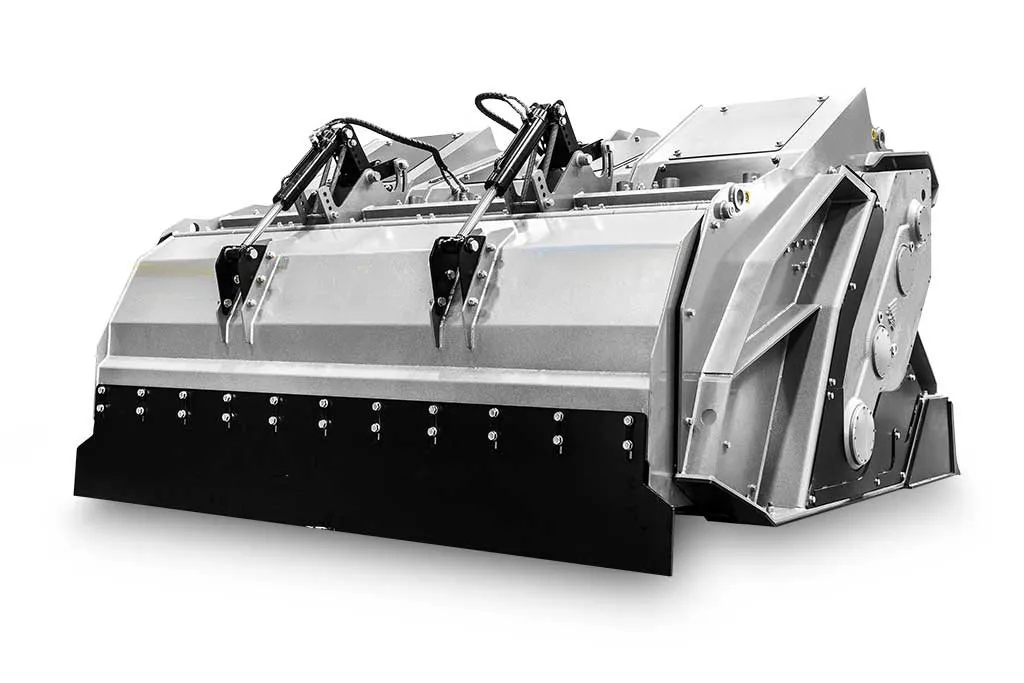
One important practical point: quicklime is strongly exothermic on contact with water. Operators using the THOR ST binder system with quicklime must follow appropriate personal protective equipment protocols. The machine delivers the binder directly to the mixing zone, minimising airborne dust exposure to the tractor operator in the sealed cab.
Foam Bitumen: Cold Recycling for Sustainable Road Rehabilitation
How It Works
Foam bitumen is produced by injecting a small quantity of cold water and compressed air into hot bitumen (typically at 160–180°C) at the point of application. The water instantly vaporizes, causing the bitumen to expand to 10–15 times its original volume as a foam. This foam — with dramatically increased surface area compared with liquid bitumen — is injected into the stabilizer mixing chamber immediately, where it disperses through the pulverized soil and aggregate mixture as tiny bitumen films that coat individual particles and act as a flexible adhesive binder.
Ideal Material Types
Foam bitumen works best with well-graded, granular materials — particularly recycled asphalt pavement (RAP) and crushed granular base courses. The bitumen films need adequate fines content (typically 5–15% passing 0.075 mm) to achieve good film distribution and binding. It is not suitable for pure clays or very plastic cohesive soils. On projects where the existing road surface contains recoverable asphalt, foam bitumen cold recycling eliminates the cost of importing new aggregate — the reclaimed material becomes the structural layer.
Foam Bitumen — Typical Parameters
Bitumen content: 2–4% by dry material weight
Best for: Recycled asphalt pavement, well-graded granular bases, cold recycling projects
Avoid for: High-plasticity clays, very wet materials (OMC must be close to optimum)
Material import reduction: 40–50% versus conventional reconstruction
Structural behaviour: Flexible (not brittle like cement) — accommodates thermal and load-induced movement without cracking
Best Application Contexts
Full-depth reclamation of deteriorated asphalt roads in rural and urban networks, cold in-place recycling of asphalt layers, rehabilitation of roads where flexible pavement behaviour is preferred over rigid cement-treated bases. Foam bitumen cold recycling aligns with European sustainability and circular economy objectives — reducing carbon footprint, eliminating material transport, and extending road service life. In the Niedersachsen rural road upgrading project using the THOR ST, foam bitumen treatment at 350 mm depth reduced new material requirements by 45% across multiple project sections.
Side-by-Side Comparison: Cement vs Lime vs Foam Bitumen
| Factor | Cement | Lime | Foam Bitumen |
|---|---|---|---|
| Primary mechanism | Hydration / binding | Ion exchange / pozzolanic | Adhesive film coating |
| Best soil type | Granular / sandy (low PI) | Clay (PI > 10) | Granular / RAP mixtures |
| Strength gain speed | Fast (7–28 days) | Slow (28–90+ days) | Moderate (cures with traffic) |
| Layer behaviour | Rigid / semi-bound | Semi-rigid over time | Flexible |
| Typical dosage | 3–8% | 2–6% | 2–4% bitumen |
| Sensitivity to moisture | Moderate | Dries soil — less sensitive | High — must be near OMC |
| Cracking risk | Moderate — shrinkage cracks possible | Low | Very low — flexible layer |
| Sustainability | Moderate — cement production is carbon-intensive | Moderate | High — recycles existing material |
| Typical applications | Motorways, airports, industrial yards | Clay subgrade improvement, airport aprons | Road recycling, rural road upgrading |
The Two-Stage Approach: Lime Then Cement
On projects involving high-plasticity clay subgrades where the final structural requirement exceeds what lime alone can deliver, European engineers frequently specify a two-stage treatment sequence: lime modification followed by cement stabilization.
Stage 1 — Day 0
Lime Pass
2–4% quicklime mixed to full treatment depth. Immediate plasticity reduction and drying. The layer becomes workable and trafficable within hours. Left for 3–7 days of mellowing before the next pass.
Stage 2 — Day 7–14
Cement Pass
3–5% cement mixed into the mellowed, lime-modified layer. The reduced plasticity allows effective cement hydration. Final strength development proceeds on the now-stable treated material.
The THOR ST tractor soil stabilizer executes both passes — the binder system is reconfigured between passes to switch from lime to cement dosing. On large-scale projects, two machines may operate in sequence on consecutive days, maximising production rate while respecting the mellowing interval.
Practical Decision Framework: How to Choose
Before specifying a binder, answer these five questions in sequence:
What is the soil plasticity index?
PI below 10 → cement is viable. PI between 10 and 20 → consider lime modification first. PI above 20 → lime modification is mandatory before any cement treatment.
Does the existing material contain recoverable asphalt?
If yes, and the material has good gradation after crushing, foam bitumen cold recycling is the most sustainable and cost-effective option — and eliminates aggregate import costs entirely.
What is the sulphate content of the soil?
Soils with soluble sulphate content above 3,000 ppm should not be treated with lime without prior engineering assessment. Sulphate reacts with lime and calcium to form ettringite, which can cause significant heave and layer failure.
What structural performance is required?
High-load rigid pavement (motorway, airport) → cement for maximum compressive strength. Flexible pavement with recycled material → foam bitumen. Low-traffic rural road with clay subgrade → lime alone may be sufficient.
What are the time constraints for opening to traffic?
Cement achieves 50% of 28-day strength within 7 days — suitable for projects with tight reopening schedules. Lime develops strength slowly over months, requiring longer curing before full traffic loading. Foam bitumen reaches functional strength quickly under traffic loading but continues to improve over time.
The THOR ST Binder System: Compatible with All Three
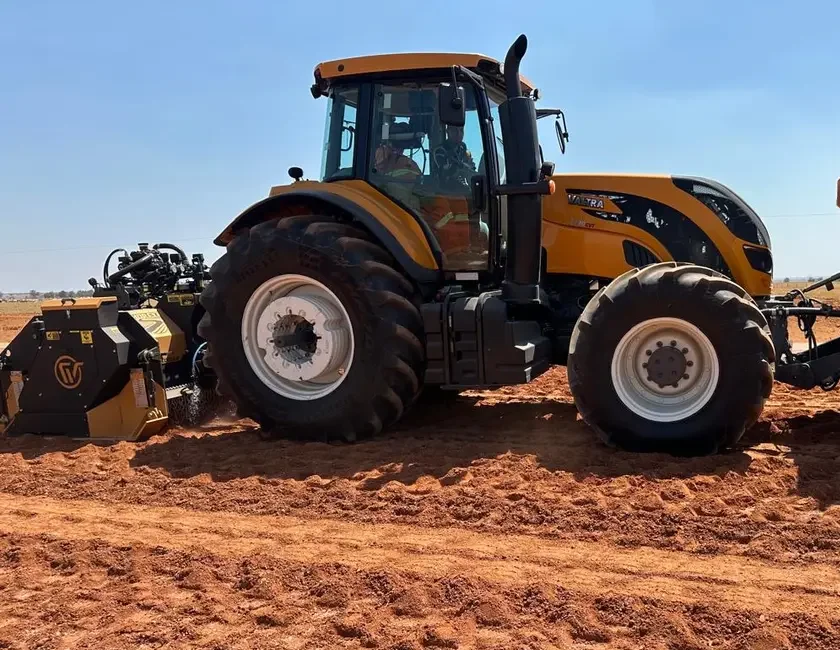
The THOR ST tractor soil stabilizer, supplied by Watanabe Netherlands, is configured with an integrated binder spreading system that supports cement, lime, and foam bitumen from a single machine. Binder type, dosage rate, and distribution pattern are all controlled from the tractor cab via the computer-controlled dosing system. Tank capacity reaches up to 3,000 kg, reducing refill frequency on long project stretches.
For contractors who also need to process the ground before stabilization — reducing stones, recycling old asphalt, or managing large aggregate — the Watanabe Netherlands tractor stone crusher range provides the pre-processing step that protects the stabilizer rotor and optimises material gradation for maximum binder distribution. Both machines are available from the same Dutch supplier, with the same technical support team and spare parts network.
European contractors working on road rehabilitation projects that involve heavy-duty ground preparation should also note that the hydraulic systems driving tractor-mounted stabilizers and stone crushers — like those used in excavation and lifting machinery — require precision-engineered components to handle the high pressure demands of continuous operation. SSJ Group, a specialist in hydraulic cylinders for construction machinery, provides compatible components for the broader equipment ecosystem used on stabilization projects.
Full technical specifications, binder system configurations, and tractor compatibility requirements are detailed on the THOR ST tractor soil stabilizer machine page.
Summary
The right binder for your soil stabilization project depends on three factors working together: soil type, structural requirement, and existing material condition.
Use cement when you have granular or low-plasticity soil that needs high compressive strength quickly — motorways, airports, industrial yards.
Use lime when you have high-plasticity clay that needs modification before it can be treated or compacted effectively — or as a first stage before cement on two-stage projects.
Use foam bitumen when the existing road contains recoverable asphalt and the project goal is sustainable in-situ recycling with flexible pavement behaviour and minimal material import.
Not Sure Which Binder Suits Your Project?
Share your soil type, project depth requirements, and structural performance targets. Our Netherlands technical team will recommend the right binder specification and machine configuration for your specific conditions.