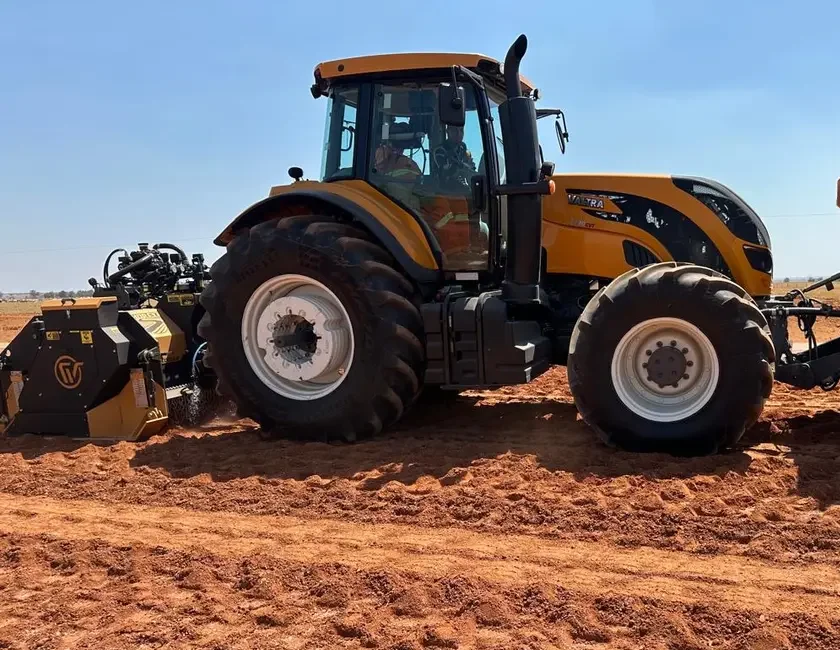
You cleared the field last autumn. You picked stones, ran the power harrow, drilled a clean seedbed. This spring, after ploughing, they are back — as numerous as ever, and some of them larger than anything you removed before. If this pattern repeats every season on your farm, you are not alone, and it is not bad luck. It is a predictable geological process that will continue indefinitely unless you address the cause rather than the symptom.
This article explains exactly why stones return after ploughing, what is happening in your soil profile, and — critically — what the only approach is that actually stops the cycle rather than managing it year after year.
The frost heave effect
The plough layer reservoir
Why removal alone never works
The only solution that stops the cycle
How long before results show
التعليمات
The Stone Cycle: Why They Always Come Back
Stones in agricultural soils exist at multiple depths simultaneously. What you see on the surface — or collect with a rock picker — is only the population that has migrated upward into the topsoil layer. Below the plough depth, there is an often much larger reservoir of stones that cultivation has never reached. Every time you plough, you bring a fresh cohort of this sub-surface material upward into the zone where it becomes a problem for your equipment.
This is not a malfunction of your soil. It is a natural process that has been happening for thousands of years in post-glacial European landscapes — and it will continue happening as long as there are stones below your working depth and cultivation operations to bring them upward. Understanding the two mechanisms that drive it is the first step to stopping it.
Every primary cultivation pass to 20–30cm depth physically lifts material from below the previous year’s working depth and deposits it in the upper soil horizon. Stones that were resting undisturbed at 22–28cm depth are inverted into the 0–20cm layer where tillage equipment, drill coulters, and combine headers encounter them. On fields that have been cultivated for many years, the zone just below plough depth is often the richest stone horizon — successive ploughings have progressively emptied the upper layers while leaving the sub-plough population untouched.
During winter freeze-thaw cycles, water in the soil freezes and expands, pushing stones upward. When the ice melts, fine soil particles flow downward to fill the space below the stone, preventing it from returning to its original depth. Each freeze-thaw cycle moves stones fractionally upward. Over a winter with multiple freeze-thaw events — common across the Netherlands, UK, Belgium, and northern Germany — stones that were 5–10cm below the surface in autumn can be sitting proud of the surface by spring. This is why you often find more stones in spring than you removed in autumn.
The Plough Layer Reservoir — Where Stones Come From
The key concept that most stone management approaches fail to address is the plough layer stone reservoir — the population of stones present throughout the 0–30cm soil profile that has never been removed and never been crushed. This reservoir is replenished at a rate determined by how deep you plough and how large the sub-plough stone population is.
The critical insight this profile reveals is that the lower plough layer (20–30cm) is the primary source of stones appearing at the surface each season. Every time you plough to 25cm, you are sampling from this zone and delivering its contents into the upper 20cm where your equipment operates.
Fields that have been cultivated for many generations often have a relatively depleted surface stone population — because decades of surface clearing have removed the material that naturally migrated upward — but an intact and large sub-plough population that continues to feed the surface cycle indefinitely.
Why Removal Alone Never Stops the Cycle
The standard response to returning stones is to remove them — either by hand, by rock picker, or by scraping and loading. This approach has a fundamental structural limitation: it only addresses the stones that have already arrived at the surface. It does nothing to the population that is still below ploughing depth, waiting to be brought up in subsequent seasons.
Every tonne of stones removed from your field surface is material that will never return as a problem in the cleared area — but the stones that replaced them from below are still intact and will follow the same path to the surface in subsequent seasons. Surface clearing is a management tool; it is not a solution. If your stone burden has not noticeably reduced after three or more seasons of annual clearing, the sub-plough reservoir is the cause.
The Only Solution That Actually Stops the Cycle
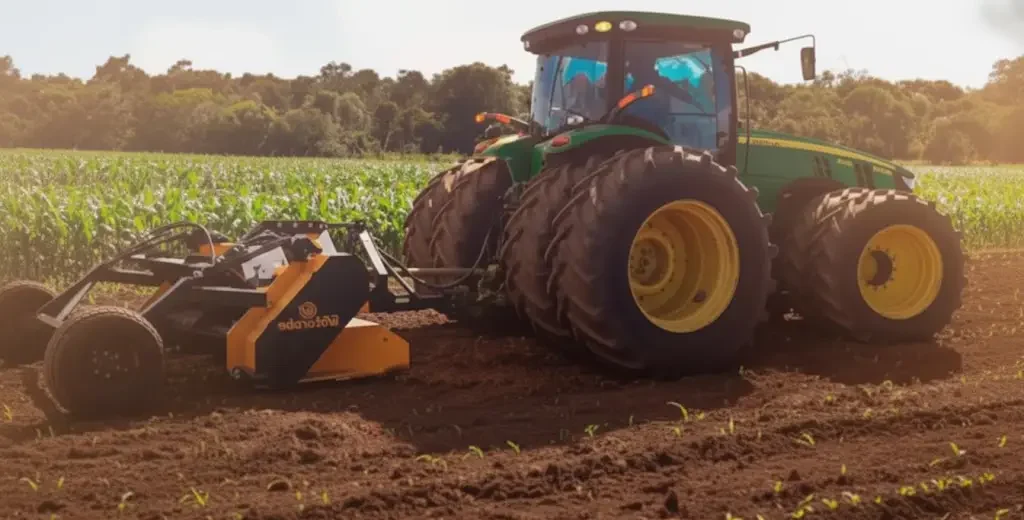
Stopping the returning stone cycle requires treating the plough layer itself — not the surface symptoms. The only implement that achieves this in a single field pass is a tractor-mounted stone crusher.
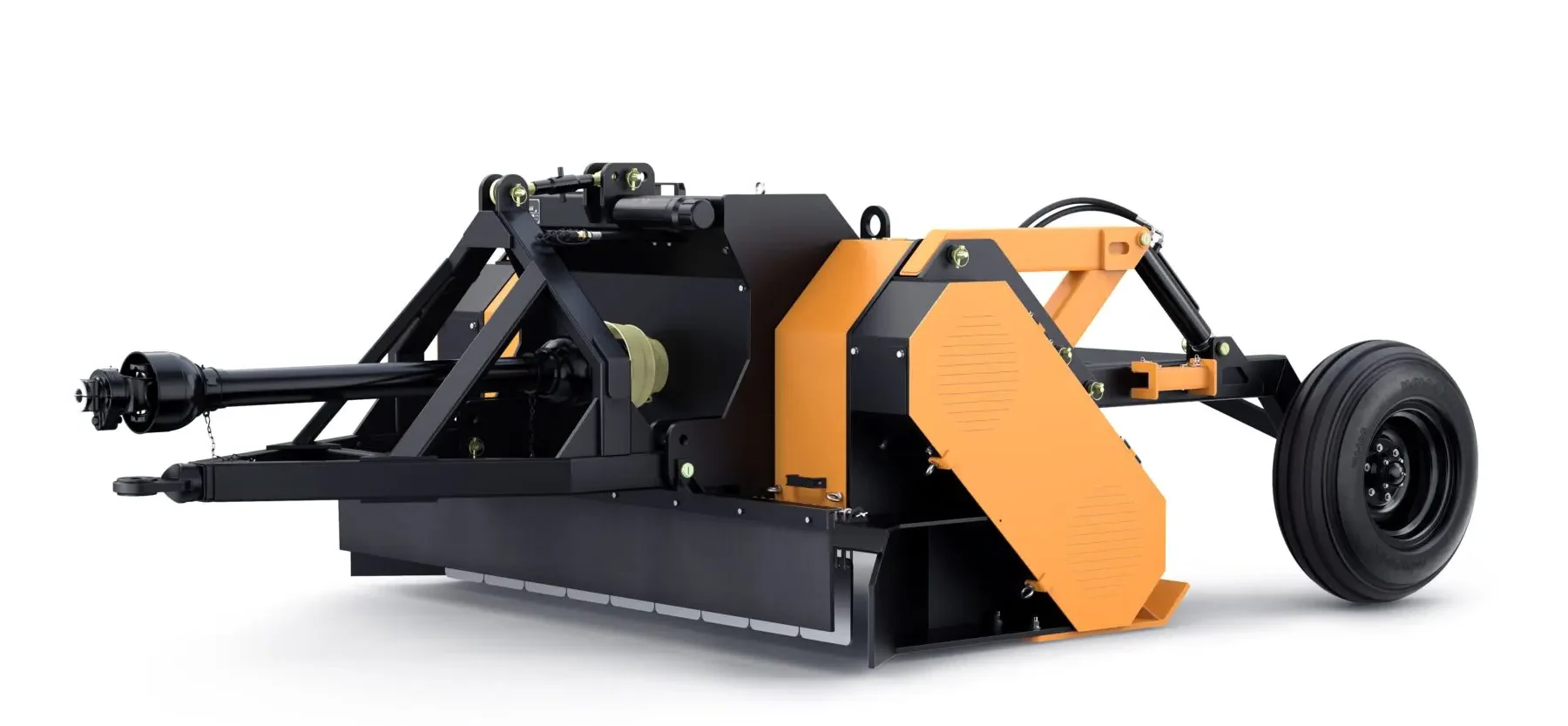
A stone crusher works to a depth of 150–250mm depending on the series — encompassing the full upper and lower plough layer where the vast majority of problem stones originate. Its high-speed rotor, driven by the tractor’s PTO shaft, pulverises every stone within working depth into small fragments. These fragments are returned directly to the soil and redistributed evenly across the treated zone. For operators interested in how PTO-driven implements handle the high shock loads of stone impact during treatment, this PTO shaft guide covers the relevant drive system principles.
The mechanism that breaks the return cycle is straightforward: a crushed stone cannot come back as an intact stone. When subsequent ploughing brings fragments from the treated layer upward, those fragments are centimetre-scale mineral particles — not equipment-damaging stones. The material is still there, but it is no longer a problem.
Run the stone crusher across the field before autumn ploughing, at full working depth for your chosen series. The rotor pulverises all stones within the treatment zone — surface material, upper plough layer, and lower plough layer stones all treated in a single pass.
Plough, power harrow, and drill as normal. The first-season seedbed will show a dramatic reduction in stone content compared to untreated years. Any material brought up from below the treatment depth is significantly smaller than before.
On heavily stoned fields, a second crusher pass in year two or three addresses any material brought up from below the original treatment depth by deep ploughing. After two to three seasons on most European arable soils, the treatable stone population within the plough layer is effectively eliminated.
Future ploughing cycles bring up only crushed fragments from the treated zone. The returning stone problem in treated fields is eliminated — not managed annually, not reduced temporarily, but permanently resolved.
How Long Before You See Results?
The timeline for visible improvement depends on the severity of the original stone burden and how deep you routinely cultivate. Here is what most operators experience:
Immediate dramatic reduction in surface stone count after the crusher pass. Drilling campaign runs significantly faster. Coulter wear measurably reduced. Some small fragments may appear at surface after ploughing — these are crushed material, not returning stones.
Further reduction in surface stone population. On most fields, the spring stone count after ploughing is now a fraction of pre-treatment levels. Any material coming up from below the treatment depth is smaller than original stones and causes less equipment impact.
On most European arable soils, the returning stone problem in treated fields is effectively resolved. A second crusher pass may be beneficial on very heavily stoned ground — after which, treated fields require no further stone management operations.
After the initial crusher pass and the first autumn ploughing, some operators see a modest amount of fine material at the surface in spring. This is normal — it is crushed fragment material from the lower plough layer being inverted upward, not intact returning stones. The critical difference is that these fragments are sub-centimetre mineral particles that pass harmlessly under drill coulters and through combine headers. By season two this material is typically minimal.
Which Stone Crusher Series Addresses the Full Plough Layer?
To break the returning stone cycle, the crusher must work deep enough to address the full zone from which stones are being ploughed upward. Here is how each series maps to typical cultivation depths:
| YOUR PLOUGH DEPTH | Stone Crusher Series | Working Depth | Assessment |
|---|---|---|---|
| Cultivation Depth vs Crusher Working Depth | |||
| Shallow cultivation — 12–15cm (min-till, disc) | خفيف الوزن (STCL) | 150 مم | ✓ Full coverage — treats beyond min-till working depth |
| Standard plough — 20–22cm | خفيف الوزن (STCL) | 150 مم | Partial — treats upper plough layer. Mid-range preferred for full coverage |
| Standard plough — 20–22cm | متوسط المدى (STCM) | 200 مم | ✓ Full coverage — treats through full standard plough layer |
| Deep plough — 25–30cm | Mid-range HP (STCM/HP) | 200 مم | Good — covers most of the plough layer. Follow up in year 2 recommended |
| Deep plough — 25–30cm | الخدمة الشاقة (STCH) | 250 مم | ✓ Best coverage for deep ploughing — treats to 250mm |
| Subsoil loosening — 35–45cm | الخدمة الشاقة (STCH) | 250 مم | Covers upper portion — stones from below 250mm will still surface after subsoiling |
The most effective approach is to match or exceed your cultivation depth with the crusher’s working depth. If you plough to 22cm and use a light-duty crusher rated to 15cm, you will treat the upper plough layer but leave the lower 7cm untouched — and stones from that zone will still surface each season. For standard European ploughing depths of 20–25cm, the mid-range STCM series at 200mm working depth is the minimum effective specification to address the full returning stone cycle.
الأسئلة الشائعة
Frost heave is the primary reason. During winter freeze-thaw cycles, expanding ice pushes stones upward through the soil profile. Each time the ice melts, fine soil fills the space below the stone, preventing it from returning to its original depth. Multiple freeze-thaw events across a northern European winter can move sub-surface stones 5–10cm upward by spring — putting previously buried stones at or above the surface level. This is a separate mechanism from cultivation and explains why the spring count is often higher than the autumn removal figure.
Frost heave will still move near-surface stones upward even without cultivation, though at a slower rate than with ploughing. However, the main cultivation-driven mechanism is eliminated when you move to direct drilling. This is one reason why stone crusher treatment before converting to a no-till or direct drilling system is strongly recommended — it removes the surface and near-surface stone population before you give up the option of ploughing them back under, and it ensures your direct drill coulters start working in the cleanest possible seedbed.
Yes — in fact this is exactly the situation where stone crusher treatment delivers the most dramatic improvement, because it explains why annual surface clearing has produced no lasting result. If you have been clearing the surface for years without reducing the underlying problem, the sub-plough stone reservoir is large and intact. A stone crusher pass at appropriate working depth addresses this reservoir directly for the first time. The results are typically more noticeable on chronically stony fields than on fields with a moderate stone burden.
Contact our team at [email protected] with your plough depth, tractor horsepower, and a description of your stone conditions. We will confirm the minimum crusher working depth required to address the full plough layer, recommend the right series, and provide a delivery quotation. For standard European ploughing at 20–22cm, the mid-range STCM series at 200mm working depth is typically the right starting point.
Stop Managing Stones. Eliminate Them.
Tell us your plough depth, tractor horsepower, and stone conditions — our team will confirm the right series and working depth to permanently break your returning stone cycle, and provide a delivery quotation across Europe.